
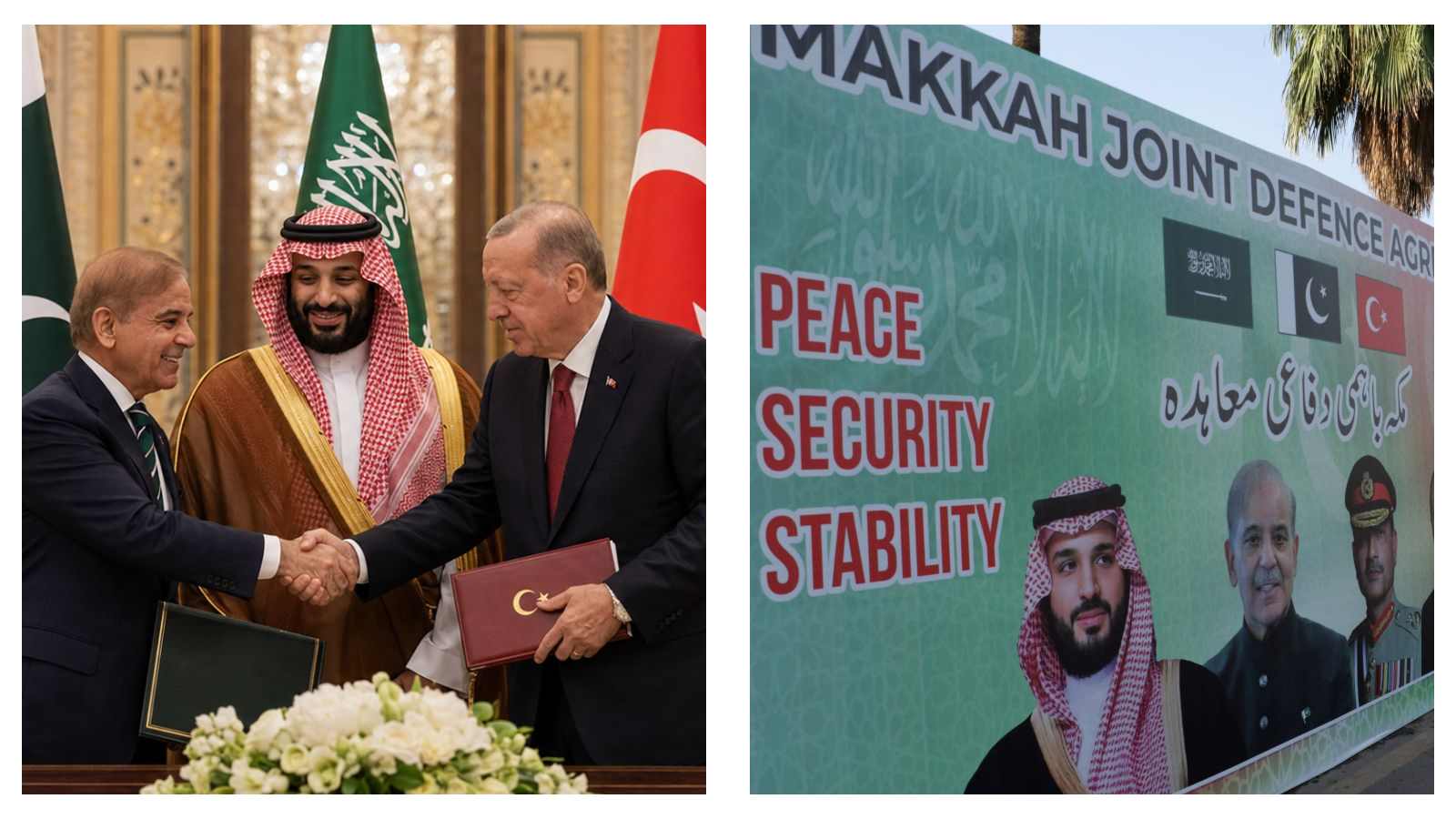
The Turkish parliament on Thursday ratified a defence agreement with Saudi Arabia and Pakistan, formalising a trilateral Islamic military alliance in a move that could reshape regional security alignments and military co-operation.
With 279 votes in favour and 119 against, the parliament approved the Mecca Joint Defence Agreement, which commits Ankara to a three-way security arrangement with Riyadh and Islamabad.
This agreement is expected to boost Turkey’s military influence in the Middle East, expanding its strategic reach across the Gulf and South Asia, while establishing a new layer of deterrence to emerging security threats.
YOU MAY ALSO LIKE: Turkish-Libyan maritime deal draws flak from Mediterranean neighbors
‘An attack to one, an attack to all’
The agreement establishes the Mecca Defence Alliance.
Also known as the Mecca Pact, the alliance forms a cross-governmental security network that allows Muslim-majority countries to enter a collective defence agreement.
It was established on August 7, 2026, by Saudi Arabia, Pakistan and Turkey.
Modelled after Article 5 of the North Atlantic Treaty Organisation’s defence provision, the agreement considers an attack on one of the three member countries as an attack on all.
It builds on the pre-existing Strategic Mutual Defence Agreement between Saudi Arabia and Pakistan, which was signed on September 17, 2025, to formalise the longstanding defence relationship between the two countries.
At present, the alliance comprises only its three founding members.
However, its proponents have indicated an openness to expanding membership, with Syria reportedly expressing interest in joining the security arrangement.
Defence development
The agreement, consisting of 16 provisions, will also streamline an intelligence-sharing mechanism by establishing a secure communication channel among the three countries’ military personnel.
Under the pact, the three countries will be given the opportunity to hold regular security consultations to co-ordinate security and counter-terrorism efforts in the region.
Logistical assistance, joint training programmes and defence development support will also be provided.
“Through joint activities, they [Saudi Arabia, Pakistan and Turkey] will also work to strengthen their defence capabilities and cohesion of their armed forces through robust defence, industry co-operation, joint technology development and production,” the Pakistani foreign office said in a statement.
Opposition weighs consequences
The agreement was ratified in the backdrop of the ongoing conflict between Saudi Arabia and Yemen’s Iran-backed Houthis.
Riyadh on Thursday said that it intercepted a ballistic missile fired by the rebel group towards Saudi Arabia’s Medina City, the second-holiest city in Islam after Mecca.
With this development, Turkish opposition lawmakers have expressed concern over whether the agreement could draw Ankara into a conflict beyond its immediate national security interests.
“They brought this agreement to send Turkish soldiers to the deserts of Yemen,” opposition lawmaker Murat Emir stated.
He warned that the mutual-defence commitment could eventually require Turkey to deploy troops to Yemen, potentially exposing Turkish soldiers to a conflict in which Ankara has no direct stake.
READ NEXT: Turkey fires up diplomatic pursuit amid rising Mideast tension
 Elan Castanares
 Kamille Q. Cabreza
 Carmela Calling