
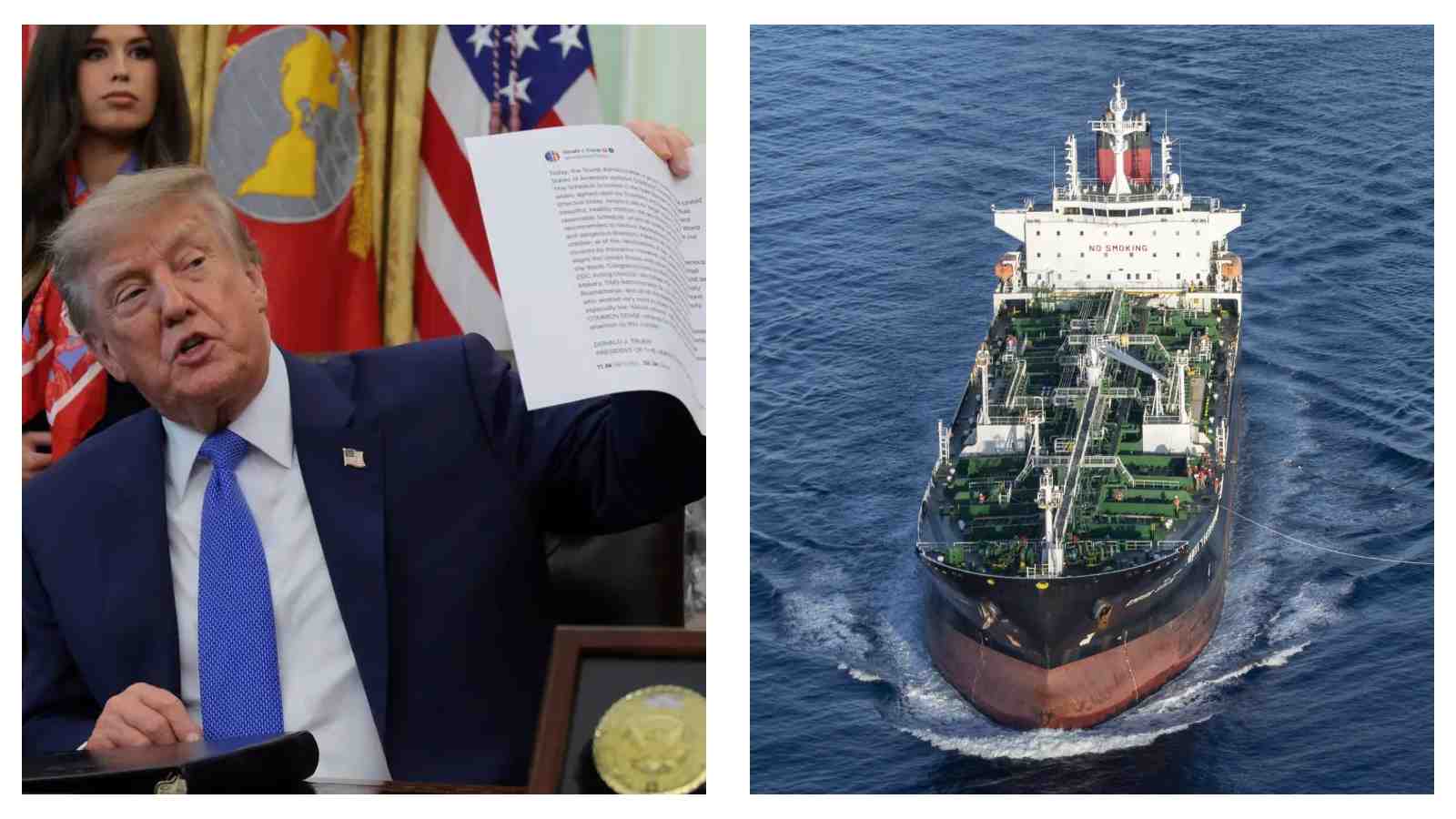
US maritime groups have criticized the Trump administration’s decision to extend a waiver of the Jones Act for an additional 90 days.
According to the Offshore Marine Service Association (OMSA), the policy has hurt American workers and businesses while failing to lower fuel prices.
OMSA president and chief executive officer Aaron Smith denounced the extension, claiming that US consumers have not received the relief promised by the waiver.
“The administration extended a waiver that has already failed,” Smith was quoted as saying by The Maritime Executive.
“Months in, Americans still aren’t seeing a dime of relief at the pump. Meanwhile, American mariners, vessel operators, and shipyards keep paying the price for a policy that was never going to work and has never worked. Every extra day this waiver stays in place is another day of work shipped overseas and another day of uncertainty for the U.S. maritime industry.”
READ MORE: Jakarta becomes latest Southeast Asian city to welcome Cong Ca Phe

Dissatisfaction with the extension
The American Waterways Operators also expressed dissatisfaction with the extension, arguing that the waiver’s record over the past five months shows that it has failed to meet its intended goals.
“We are deeply disappointed that the waiver has been extended when the public record over the last five months makes clear that the waiver has not been driven by military needs (the statutory standard), has not reduced the price of gasoline for U.S. consumers, and has allowed foreign vessels, including those linked to U.S. adversaries like China and Russia, to take work from Americans,” the statement read.
The White House announced on Monday that the waiver would be extended for another 90 days, bringing the total period covered by the waiver to 240 days.
The waiver, introduced in March amid disruptions to global energy supplies following the war with Iran and the closure of the Strait of Hormuz, allows certain foreign-flagged vessels to transport eligible goods between US ports without having to comply with some Jones Act requirements.
Administration defends extension decision
The administration has defended the extension, saying the waiver has increased domestic deliveries of essential products.
“The waiver has driven a significant increase in domestic deliveries of essential products such as gasoline, diesel, and jet fuel,” a White House spokesperson said in a statement, referring to it as a “commonsense” measure.
However, Smith disputes the policy’s effectiveness and argues that the benefits have not reached American consumers.
The Maritime Executive also reported that many economic analysts, as well as organizations that support the Jones Act, believe the waiver has had little effect on consumer prices, with much of the economic benefit accruing to refiners and commodity traders rather than end users.
Supporters of the waiver, meanwhile, argue that it has created new opportunities to use domestic energy within the US.
One example cited is the transportation of liquefied petroleum gas on gas carriers, a vessel class that is not currently part of the Jones Act fleet.
Stricter conditions
The latest extension introduces tighter conditions, though.
Rather than maintaining a broad exemption, the Pentagon will consult with the Maritime Administration on individual shipments to determine whether a Jones Act vessel is available and whether a waiver should be granted.
The list of commodities eligible under the waiver has also been narrowed.
READ NEXT: 30 years later, Tupac’s murder trial begins as accused killer’s memoir takes center stage
 Ian Trinidad
  Eugene Nicklaus S. Laqui
  Newsjustnews writers