
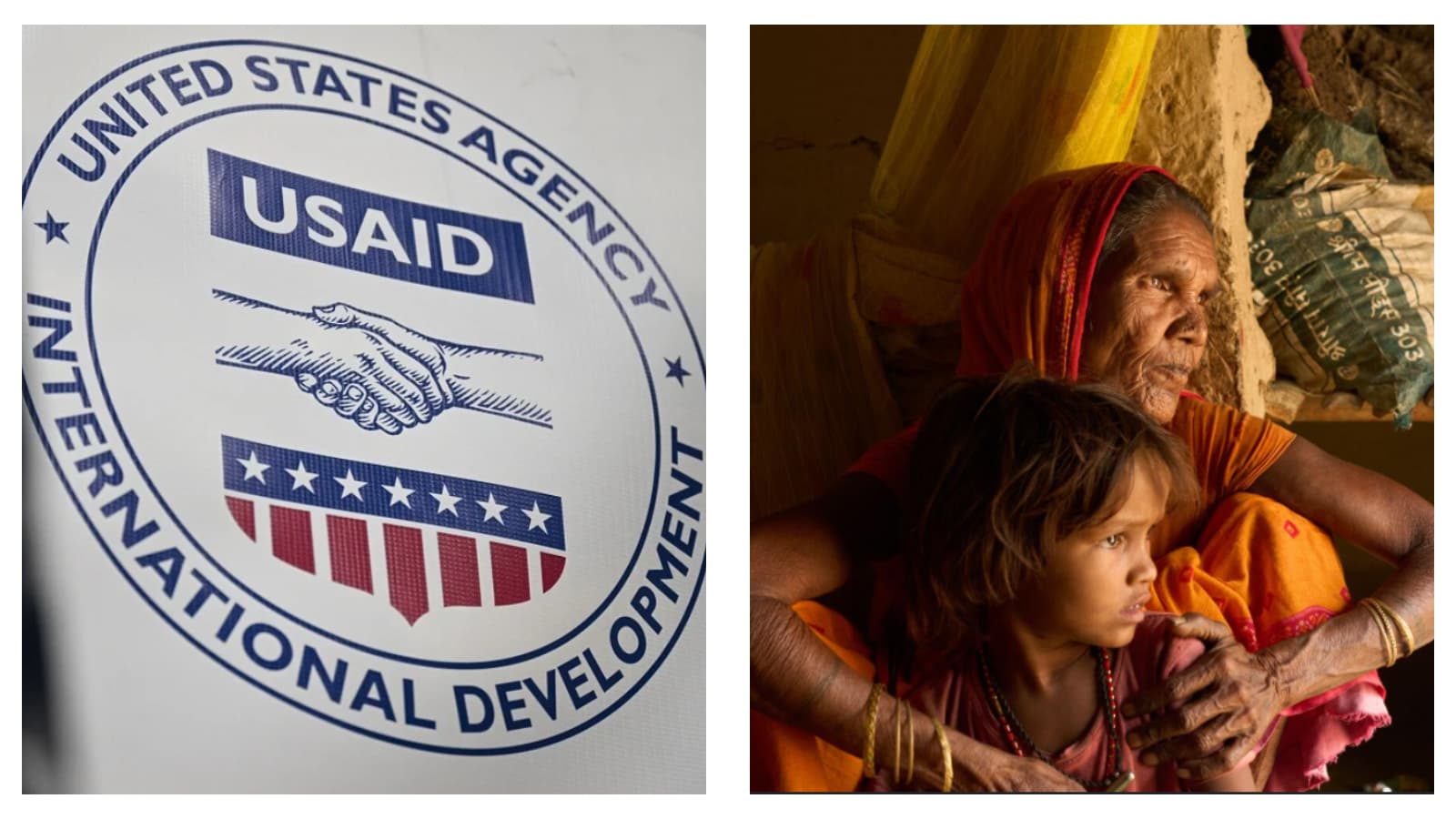
The fallout from the United States’ decision to dismantle the US Agency for International Development (USAID) is increasingly being felt beyond the loss of foreign-aid projects in Nepal.
As reported by the Associated Press, jobless aid workers are turning to precarious work in the aftermath of the agency’s closure.
The funding cuts have also threatened the state of public health in the country, with vulnerable groups losing access to services that once helped protect their lives.
Aid workers turn to sex work
The funding cuts have left an estimated 35,000 aid workers in Nepal without jobs, said Arjun Bhattarai, president of the NGO Federation of Nepal.
Among them are members of marginalised communities who have few alternatives in a country already struggling with unemployment.
In a report, AP revealed that at least 100 LGBTQ+ former aid workers have turned to sex work after losing jobs in HIV-prevention programmes.
“I thought it was a strong example of how the funding cuts have proven destructive not just for the people the funding once helped, but for the helpers themselves,” reporter Kristen Gelinau said.
Gelinau covered this story for AP as part of her investigation into the impacts of USAID funding cuts across Asia.
According to her, many of these workers had spent years providing testing, counselling, condoms and HIV-prevention medication to the same communities they now serve as sex workers.
“As I looked into it further, I realised this was not an isolated incident and that LGBTQ+ aid workers across the country were in this situation,” added Gelinau.
“Health officials also began telling me they were concerned this would lead to an increase in HIV prevalence.”
READ MORE: Myanmar rejects ASEAN call to release Aung San Suu Kyi
HIV treatment hit hard by cuts
The consequences extend to public health.
The Blue Diamond Society, which received 85 per cent of its funding from USAID, lost 262 of its 350 employees and shut services that had provided pre-exposure prophylaxis (PrEP), HIV testing and other support.
As a result, more than 1,200 of its clients lost access to PrEP.
A study by the Columbia University School of Public Health revealed that a reduction in HIV-prevention programmes in Nepal could see rising cases of new and untreated HIV infections.
This could lead to more health complications.
“Those who fail to seek [HIV] treatment fall vulnerable to TB (tuberculosis) and other life-threatening diseases, which contribute to high mortality rates,” the study quoted one of Nepal’s health stakeholders as saying.
“The government of Nepal cannot do everything alone.
“The donor organisations have been providing support to our work – as soon as they pull out, our system will collapse.”
YOU MAY ALSO LIKE: Greenwashing in the UK: A problem that we can fix?

Mothers and infants most at risk
Maternal- and child-health programmes have also been disrupted.
The funding cuts shut down a USAID-backed initiative that reached 100,000 women and girls in Nepal.
This led to a drop in nutritional assistance and support for birthing centres.
Health workers on the ground said that the effects are already visible.
Following a maternal-health programme’s cancellation, five newborns reportedly died between December 2025 and March 2026 in the village of Rautahat.
The village had recorded no neonatal deaths in 2024 after the programme was introduced.
“The number of deaths of mothers, young mothers, during delivery has increased,” Mona Sherpa, director of the Nepali aid programme CARE, told AP during its investigation.
“The expected number within a year is happening within four to six months.”
The funding cuts have likewise weakened the systems that track such deaths, making the full impact difficult to measure.
“There must be more [infant deaths] than that,” admitted Campaign Nepal executive director Shatrudhan Singh.
“We just can’t identify them.”
READ NEXT: Local court hands ousted Syrian dictator Bashar Assad with death penalty
 Ian Trinidad
  Eugene Nicklaus S. Laqui
  Newsjustnews writers