
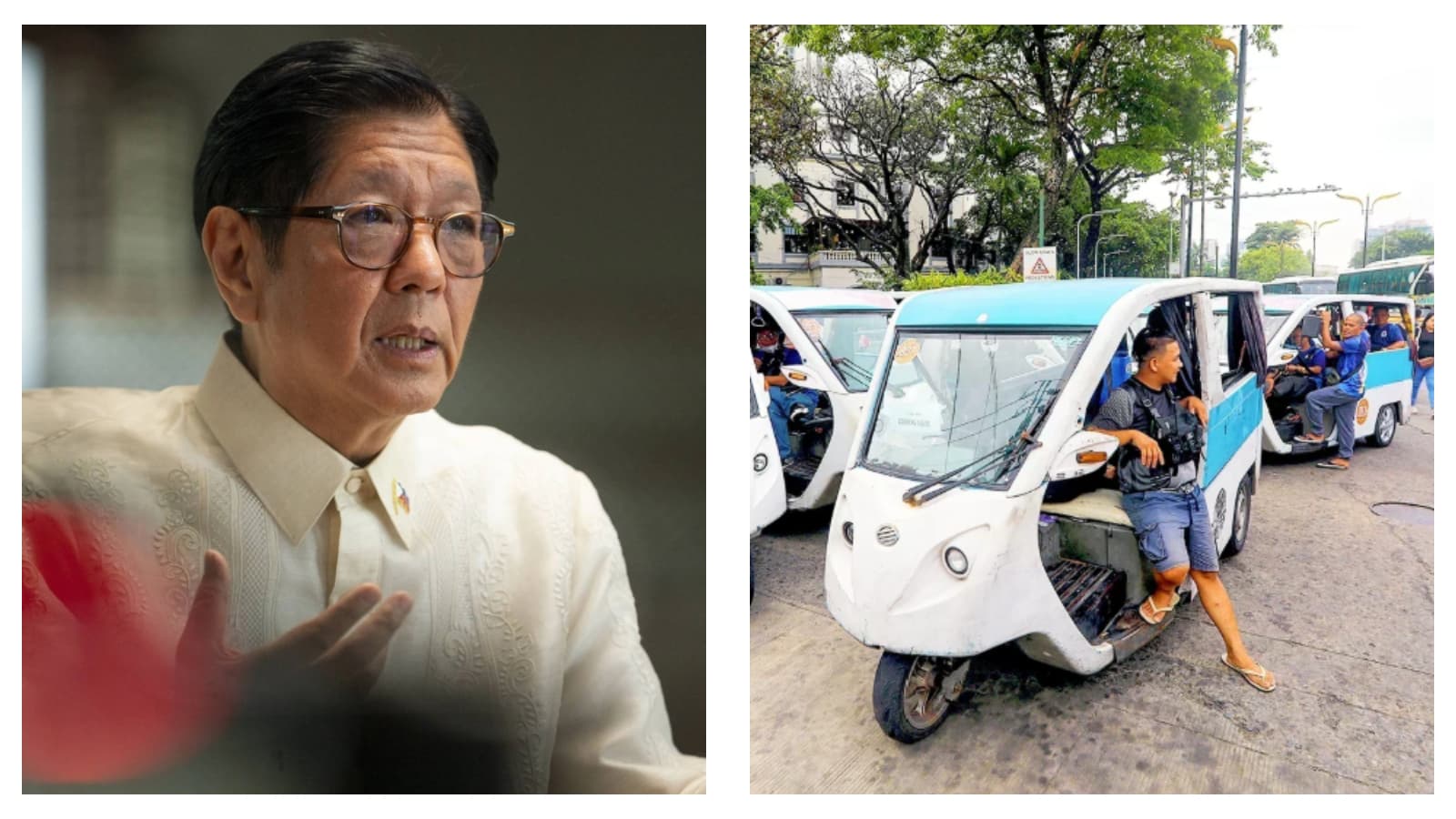
Philippine president Ferdinand Marcos Jr renewed his government’s push for an all-Filipino electric tricycle (e-trike) this week.
The decision comes even as the industry faces withdrawn investment, infrastructure challenges and warnings that the country risks falling behind its Southeast Asian neighbours.
EV hopes
Marcos Jr visited auto parts manufacturer MD Juan Enterprises, a beneficiary of a DOST e-mobility programme, to assess what additional equipment and support the firm would need to begin producing electric vehicles (EV) locally.
He said officials were mapping existing capabilities against what remained lacking so the national government could help close the gaps.
“That is why we are examining the facilities, what is already available, what is lacking and what the DOST [Department of Science and Technology] and the national government can support so that we can manufacture electric vehicles here in the Philippines,” he said in an interview with the Philippine News Agency.
“And together with our technical consultants, I believe that we will soon be seeing a Filipino electric vehicle tricycle.
“And maybe down the road, we will be able to produce an electric jeepney.”
READ MORE: Philippines, Malaysia strengthen ASEAN labour co-operation

Investment challenges
In January 2026, Marcos Jr vetoed PHP92.5 billion in unprogrammed budget appropriations, sweeping up PHP4.57 billion earmarked for two flagship local manufacturing incentive schemes – the Comprehensive Automotive Resurgence Strategy (CARS) and the Revitalising the Automotive Industry for Competitiveness Enhancement (RACE).
Industry figures warned the move could unsettle investors who had built long-term plans around those incentives.
According to a report by the South China Morning Post, Electric Vehicle Association of the Philippines president Edmund Araga said: “Reinstating support for CARS and RACE is a critical step towards ensuring that the country remains competitive in both automotive manufacturing and electric mobility.”
He argued that the country “can only offer skilled personnel with English proficiency” and not “materials”, “bulk orders” or “sufficient power lines that are cheap”.
Infrastructure gaps
Everyday infrastructure for EV ownership remains thin.
The Philippines has only around 1,600 registered charging stations, mostly concentrated in Luzon, against the government’s target of 7,000 by the end of 2028.
A Deloitte survey found charging access remains the leading reason Filipino consumers hesitate to switch, ahead of battery costs and range anxiety, as reported by One News.
Regulatory friction persists too as the government was forced earlier this year to clarify that e-bikes and e-trikes face no blanket ban, only restrictions on national highways, after transport groups said commuters had been confused by the policy’s rollout, as per The Philippine Daily Inquirer.
YOU MAY ALSO LIKE: Dolly Parton, country music legend, dies at 80

Moving forward
The Manila Times reported that BYD chairman Wang Chuanfu, who recently visited the country to inspect facilities and meet with dealers and customers alike, said the Philippines is “one of the most exciting and promising markets” within the Chinese company’s regional plans – a sign that “industry giants can no longer afford to ignore the market” despite its small scale.
Marcos Jr’s recent visit to MD Juan Enterprises follows through on a call he first made during his 2026 State of the Nation Address last July 27, when he urged the EV industry to support the government’s “clean and green policy” and transport modernisation efforts.
Whether it’s e-trikes or electric cars, the steps remain small by global standards.
But the push to boost the Philippine EV industry’s development is gaining real momentum.
READ NEXT: Social media addiction lawsuits: Are you more addicted to your phone than you realise?
 Liam McLaughlan
  KC Maderia
  James Mario Ajero