
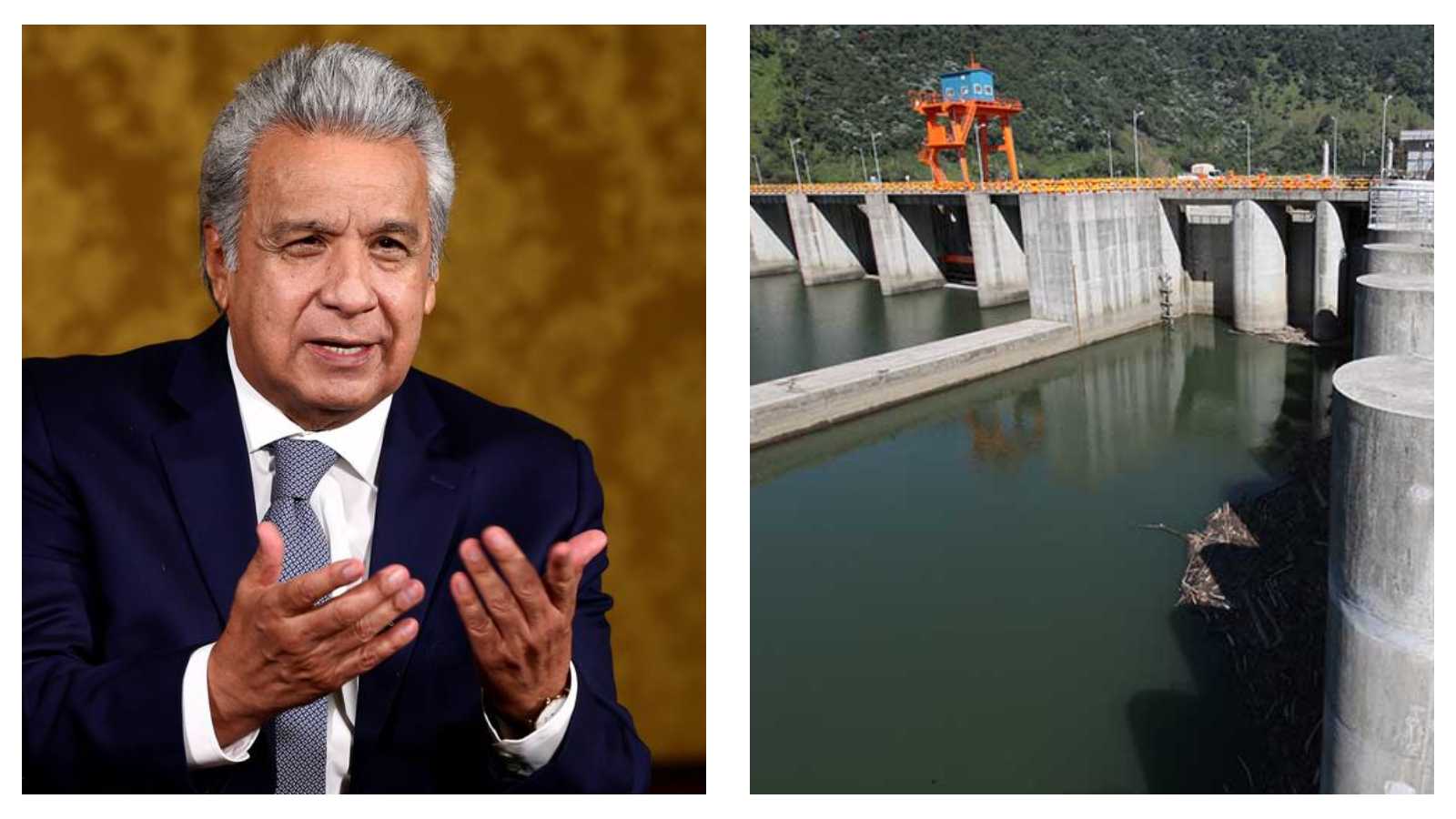
Former Ecuadorian president Lenin Moreno insisted that he is innocent after a court found him guilty of bribery in a case linked to the construction of the country’s largest hydroelectric dam, known as the Sinohydro case.
Judge Manuel Cabrera, head of the National Court of Justice Tribunal, announced the guilty verdict against Moreno over bribery linked to the controversial Coca Codo Sinclair project, which was designed to generate 1,500 megawatts of electricity from the Coca River.
“Lenin Moreno’s conduct is consistent with the charges brought by the prosecution: the crime of bribery attributed to a public official,” Cabrera said while delivering the verdict, as quoted by Al Jazeera.
Moreno, who served as president from 2017 to 2021, is the third former Ecuadorian leader to be sentenced for corruption, following Rafael Correa Delgado and Jamil Mahuad.
Moreno sentenced to five years in prison
The court also sentenced Moreno to five years in prison and barred him from holding public office, finding him a direct participant in the bribery scheme during his tenure as vice president from 2007 to 2013 under the Correa administration.
However, Moreno will serve his sentence under house arrest due to his age and physical disability that prevents him from walking, NBC News reported.
Nineteen others were also found guilty of corruption for allegedly receiving tens of thousands of dollars from the scheme.
They included Moreno’s wife, daughter, two brothers and brother-in-law, as well as former plant managers, Sinohydro representatives and a Chinese ambassador to Ecuador.
Moreno’s wife and daughter were each sentenced to 30 months in prison, while all those convicted were ordered to repay triple the amount they illicitly received within 90 days.
Moreno remains defiant
Meanwhile, his lawyer, David Meza, announced that they were preparing to appeal the ruling against Moreno.
Meza said the defence plans to pursue both an ordinary appeal and, if necessary, an extraordinary cassation process, adding that his client will remain in Ecuador, the Cuenca Dispatch reported.
The 73-year-old also denied all bribery allegations during the court hearing, insisting that he had no role in signing or overseeing the controversial project.
“You’re looking in the wrong place. Look at those who signed the contracts, at those who had the habit of demanding kickbacks,” he said.
YOU MAY LIKE: Bolivia’s diesel crisis drags on as farmers rally for solution
Shifts the blame on Correa regime
Moreno also shifted the blame to former president Correa, citing his contractual responsibility for the dam project and allegations of “revenge” stemming from their bitter political rivalry.
He claimed that Correa had signed off on the project and that he immediately launched an investigation into issues with its construction after assuming the presidency.
“The one who signed the contract is Rafael Correa Delgado. He made a government-to-government contract….At what moment did I intervene? In the construction? No,” he said, as quoted by Democrata.
“The construction was done, by order of Rafael Correa, by Jorge Glas and paradoxically the moment they finished the construction…I have not received a single cent from Sinohydro,” he added.
Symbol of systemic corruption
His insistence and denial came as prosecutors alleged that Sinohydro, which is owned by the Chinese state, paid $76.1 million to secure the construction of the hydroelectric dam, BBC reported.
Investigators also claimed that the funds were routed through overseas bank accounts and shell companies in tax havens to Moreno’s family and close business associates.
The accusations emerged after the Ecuadorian government launched legal proceedings against Sinohydro in 2021 following cracks appearing in the dam, alongside other technical failures.
Located in Napo province, the Coca Codo Sinclair project was designed to reduce the Andean nation’s dependence on imported diesel.
Although the project remains a critical asset that generates a large portion of the country’s power supply, it has become the centre of a major bribery scandal and criticism over corruption in Ecuador.
READ NEXT: France first to impose levy targeting ultra-fast fashion
 Angelica N. Hall
  Kamille Q. Cabreza
  Geoffrey H. Latayan