
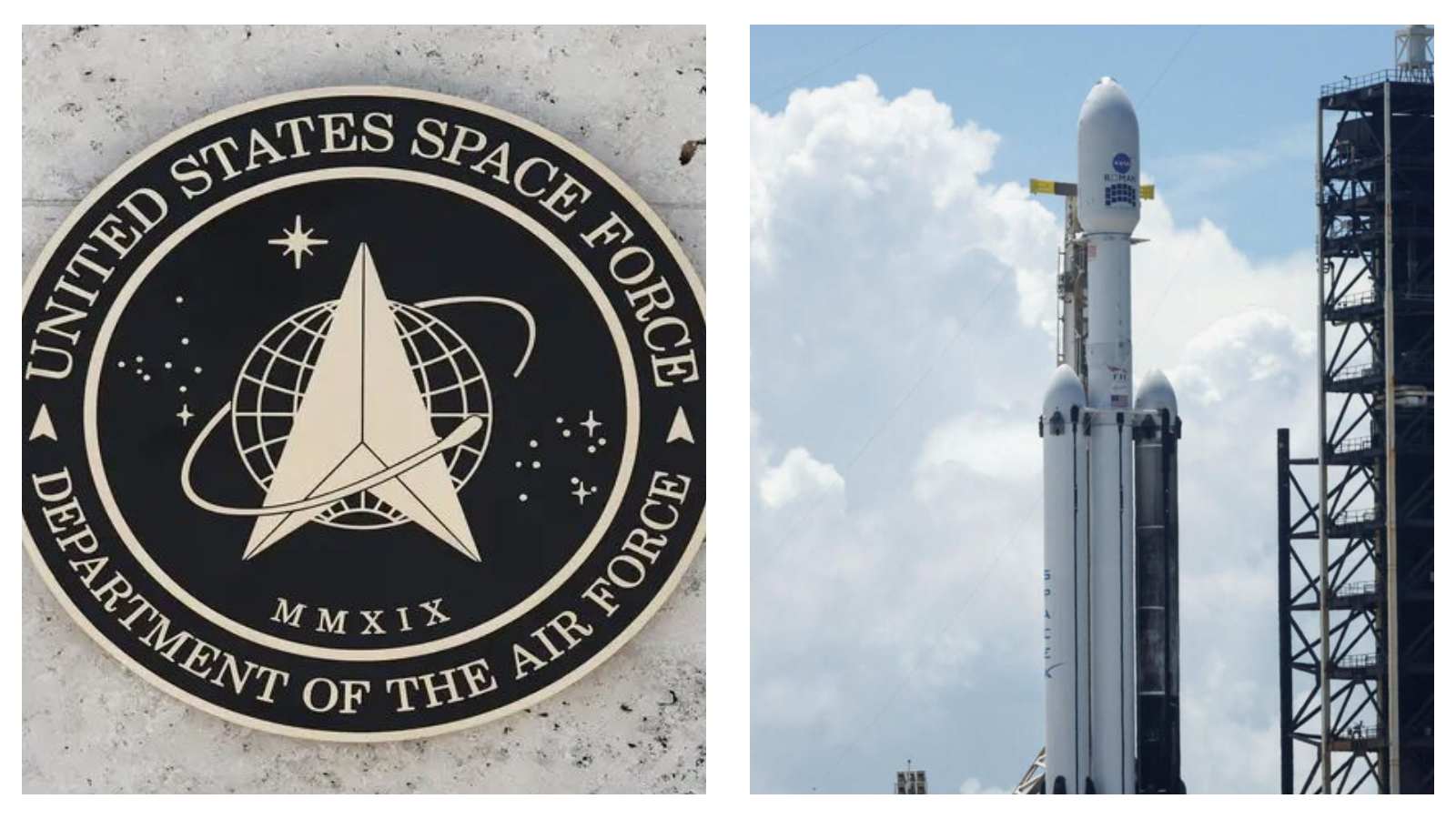
China has called on the United States to halt what it described as the militarisation of outer space, warning that the deployment of space-based weapons could increase the risk of conflict beyond Earth.
Speaking at a regular briefing in Beijing, Chinese Foreign Ministry spokesperson Guo Jiakun urged Washington to stop preparations for warfare in space.
The remarks followed public acknowledgments by senior American defence officials regarding the deployment of operational capabilities designed to provide space control.
The dispute reflects growing strategic competition between the world’s major military powers over access to and control of space-based infrastructure.
Satellites play a central role in military communications, missile warning systems, navigation, intelligence gathering and battlefield surveillance, making them increasingly important to national security.
Rising competition in space
China’s warning comes as the United States and other major powers continue developing capabilities designed to protect their own satellites and potentially disrupt those of adversaries.
Space-control systems can include a range of technologies, from ground-based electronic jamming and cyber capabilities to directed-energy systems and anti-satellite weapons.
Such technologies could be used to interfere with satellite communications, navigation, or surveillance without necessarily physically destroying a spacecraft.
The growing focus on these capabilities has raised concerns that a conflict involving major military powers could increasingly extend into orbit, potentially affecting both military and civilian space infrastructure.
YOU MAY ALSO LIKE: Four sinister solutions to the Fermi paradox

Legal and strategic challenges
The 1967 Outer Space Treaty prohibits countries from placing nuclear weapons or other weapons of mass destruction in orbit and establishes principles governing the peaceful use of outer space.
However, the treaty does not prohibit all conventional military activities or weapons-related technologies in space.
That distinction has contributed to ongoing debates over the legal status of emerging counter-space capabilities, including electronic warfare, cyber operations and other systems that can interfere with satellites.
The United States, China and other spacefaring nations have continued to invest in resilient satellite networks, space-domain awareness and technologies intended to protect critical orbital infrastructure.
Impact on military operations
Modern armed forces increasingly depend on satellites for communications, navigation, intelligence and precision targeting.
Disrupting those systems could therefore affect military operations on the ground, at sea and in the air.
The development of space-control capabilities could also shorten decision-making timelines during a conflict by enabling forces to interfere with an adversary’s communications or surveillance systems.
China’s latest statement underscores the growing diplomatic and military competition surrounding the security of outer space.
As major powers expand their space capabilities, efforts to establish clearer rules governing military activities in orbit are likely to remain an important international security issue.
READ NEXT: Donald Trump boasts ‘topline’ US Space Academy at NASA ceremony
 Carmela Calling
  Kamille Q. Cabreza