
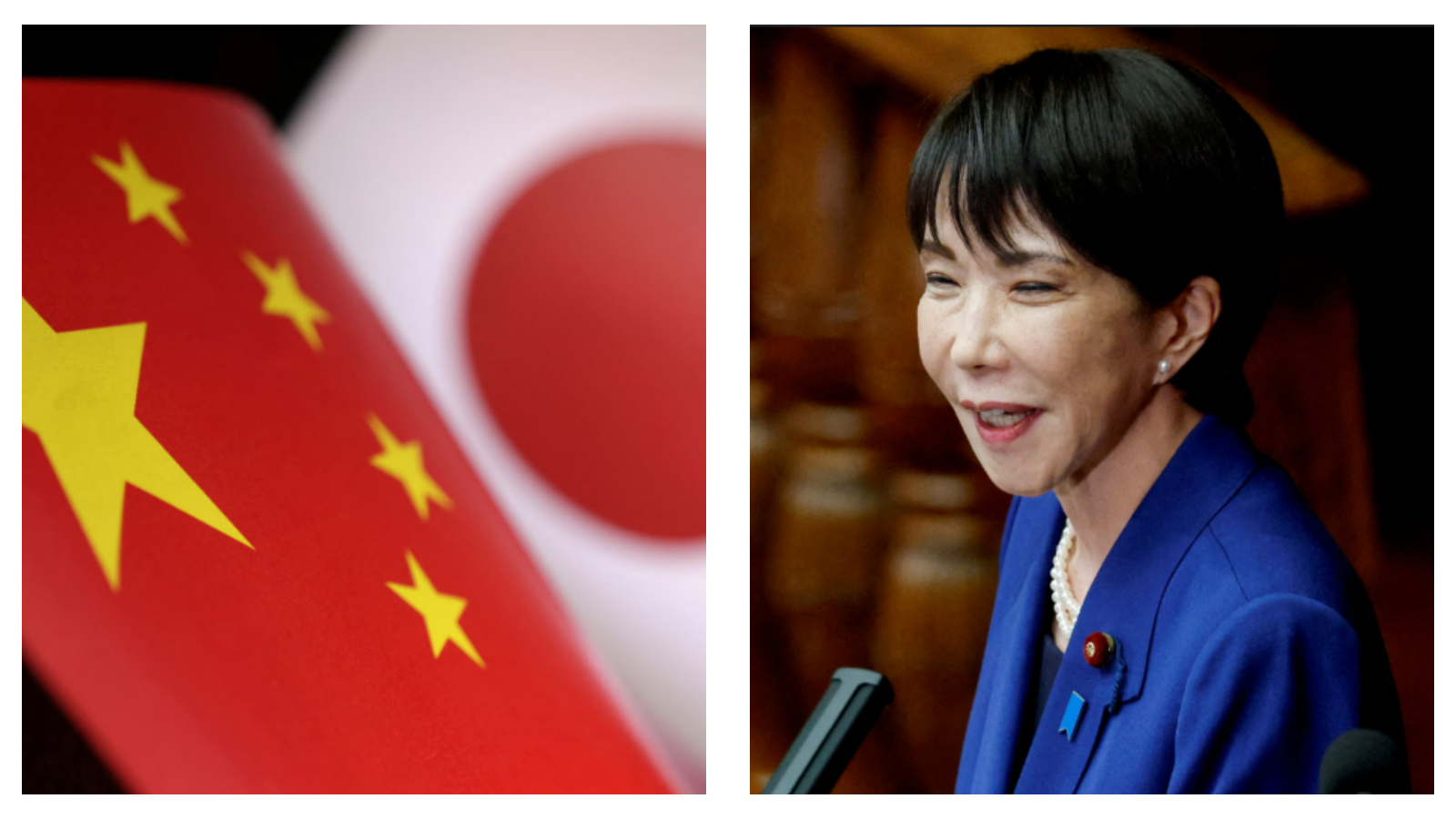
The Chinese government has issued a travel warning, telling their citizens not to visit Japan due to security concerns, following Japanese Prime Minister Sanae Takaichi’s remarks of a military response should China use force against Taiwan.
In a published travel advisory by China’s Ministry of Culture and Tourism, the government cited rising concerns over the safety of Chinese citizens in Japan, pointing to Takaichi’s statement.
“Recently, Japanese leaders have made blatantly provocative remarks regarding Taiwan, severely damaging the atmosphere for people-to-people exchanges,” the Chinese embassy in Japan added in a WeChat post, as reported by Agence France-Presse.
The diplomatic row stemmed from Takaichi’s comments on November 7, when she told Japanese lawmakers that an attack by China against Taiwan would trigger a military response from Japan as it also threatened Japan’s survival.
Taiwan was controlled by Japan for half a century until 1945, while China has not ruled out the use of force to take back the self-governing island.
Beijing lashes out at Tokyo
Takaichi’s statements led to outrage on Chinese media and amongst its citizens according to AFP, with Chinese consul general in Osaka Xue Jian threatening to “cut off that dirty neck” in a post on X when referring to Japan’s first female prime minister.
The consul general was summoned by Tokyo and the post was eventually deleted.
Apart from the condemnation expressed by Chinese netizens and official publications, the country’s defence ministry also warned that Japan would “pay a painful price” should it “overstep” on the Taiwan issue.
Since the dispute started, Japan’s tourism numbers have dropped as China – Japan’s biggest source of tourists – has told its citizens to avoid Japanese tourist spots.
Japanese cosmetics and retail companies have also noted declines in their shares, with Shiseido falling by nine per cent, Mitsukoshi by 11.3%, and Don Quijote by 5.3%.

Dispute shows fragile regional peace
Taiwan has subsequently called out Beijing for “severely” impacting peace in the Asia-Pacific region.
President Lai Ching-te told the country on Monday to “show restraint, act like a major power, and not become the troublemaker”.
Japan, meanwhile, has sent Foreign Ministry official Masaaki Kanai to China to mitigate the tension and meet with his counterpart, Liu Jinsong, according to Reuters.
The Kyodo news agency reported that Kanai is there to reassure China that Japan’s security stance remains unchanged as well as call on Beijing to avoid actions that could further strain relations.
The feud between the two countries is likely influenced by historical grievances, with some dating back to before World War II.
Japanese troops notably committed numerous massacres, acts of rape, and looting sprees in Nanjing for six weeks in 1937 during the Sino-Japanese War.
Then, in 2005, Japan’s decision to approve revised historical textbooks caused much Chinese anger, resulting in 10,000 individuals protesting and throwing rocks and eggs at the Japanese embassy.
Additionally, Takaichi, who is seen as a ‘China hawk’, has frequently visited a shrine that commemorates Japan’s war dead, including convicted World War II criminals.
Beijing, in turn, sees these visits as a “grave provocation”.
YOU MAY ALSO LIKE: Turkish President Recep Erdogan’s rival Ekrem Imamoglu faces 2,000-year jail term
 Carmela Calling
  James Mario Ajero