
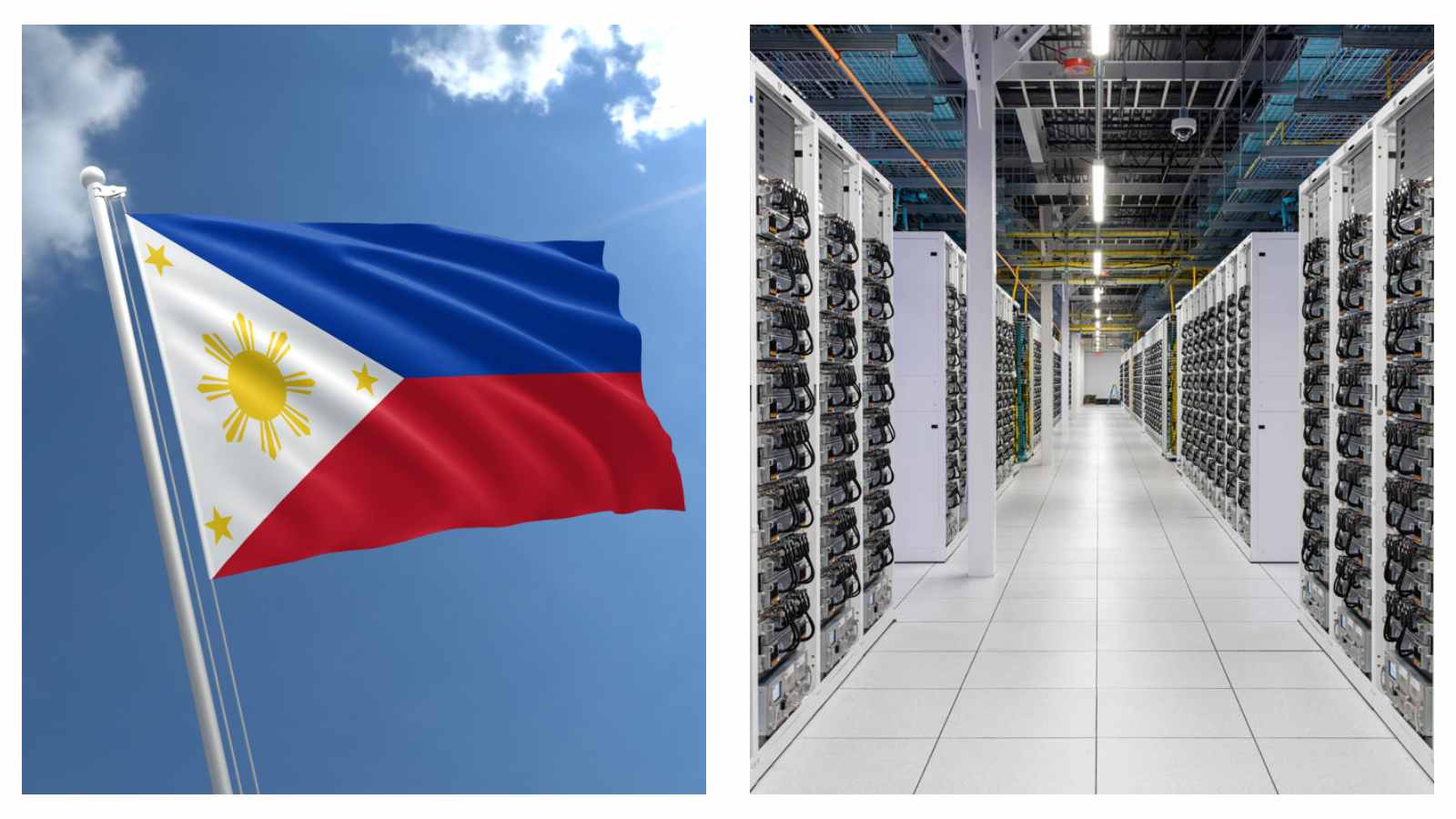
The Philippine government has allowed the establishment of a major artificial intelligence (AI) hub on its soil, as part of its commitment to the United States-led Pax Silica coalition, sparking strong contentions from environmentalists, scientists and farmers.
The Southeast Asian country officially entered the landmark grouping in April, joining dozens other nations, including nine founding members US, Japan, South Korea, Singapore, United Kingdom, Israel, United Arab Emirates and Australia, in the effort to counter China’s dominance in the global microchip and AI supply chains.
With every member expected to bring something to the table, Manila has agreed to the construction of AI hubs, data centres and rare earth mineral processing facilities in the country, eyeing to create more jobs, elevate infrastructure development and enhance the economy.
4000-acre land for AI
Central to the Pax Silica initiative is the establishment of a 4000-acre AI industrial hub in Tarlac Province, north of Manila – within the Luzon Economic Corridor (LEC) – a trilateral initiative of the US, Japan and the Philippines, designed to connect four key areas in the region and turn them into a globally competitive manufacturing and logistics hub.
According to the Bases Conversion and Development Authority (BCDA) of the Philippines, a framework deal for the AI hub is already in the works, with the Philippines and the US expected to sign the document in November.
“Should US President Donald Trump come here as part of the ASEAN (Association of Southeast Asian Nations) Summit in November, it’s one of the big announcements that they will make as part of the 80th year of the Philippines-US relationship,” BCDA Chief Executive Officer Joshua Bingcang told local broadcaster ANC.
“We are under pressure to make sure that we deliver that,” he said.
Once built, the giant facility will serve as the “first AI-native industrial acceleration hub under Pax Silica,” according to the US Department of State.
The project, the Department said, “can leverage the Philippines’ geographic centrality in the Indo-Pacific, its young and technically skilled workforce and its deepening alliance with the United States.”
YOU MAY ALSO LIKE: Manila angered by China’s AI-generated video depicting Filipinos as monkeys

Experts weigh in
But environment experts and advocates have been opposing the plan, citing serious risks it poses to the country’s natural resources.
Speaking with The Manila Times, Dr. Giovanni Tapang of the University of the Philippines College of Science said the planned AI hub may lead to the exploitation of minerals in the country without providing real benefits to Filipinos.
Tapang explained that while the project could provide a temporary boom of jobs during the construction phase, the operational phase of the site requires minimal human intervention.
“And how many people do you think [will be given jobs]? Maybe in the construction phase, yes. But the problem is, after the construction, what will we give to the people who will be going in there? It’s one big building that’s probably automated,” he said.
A group of Philippine farmers have also criticised the proposed infrastructure, saying the project could intensify land grabbing, resource extraction and militarisation in rural areas.
“To be honest, this is war production disguised as ‘so-called development’,” the Kilusang Magbubukid ng Pilipinas (KMP) said in a statement.
“The government is opening our mountains and ancestral lands to more destructive mining and industries that serve foreigners rather than the Filipino people,” it lamented.
On July 13, a coalition of scientists, environmentalists and farmers marched toward the US Embassy in Manila to further express their opposition to the Pax Silica AI hub, claiming that local farmers in Tarlac are being asked to leave to make way for the construction of the 4000-acre facility.
READ NEXT: Malaysia overhauls century‑old maritime rules with new legal framework
 Angelica N. Hall
  Kamille Q. Cabreza
  Geoffrey H. Latayan