
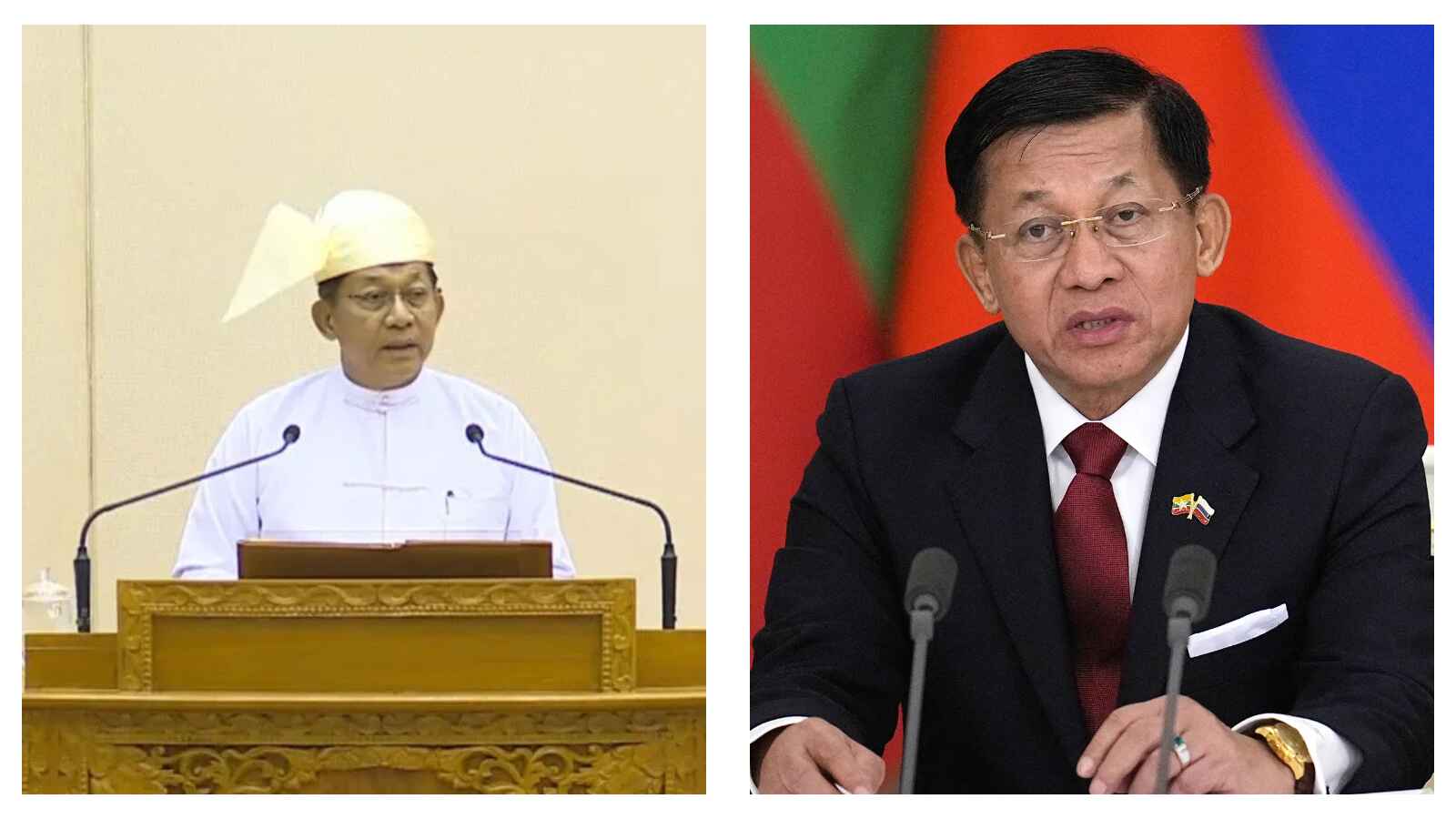
Min Aung Hlaing officially ascended to the Myanmar presidency on April 10, following a contentious swearing-in ceremony in the capital Nay Pyi Taw, which marked yet another turning point in the tumultuous political landscape of the Southeast Asian nation.
The presidency extends Aung Hlaing’s strong hold on the national government, a power he’s been possessing for more than five years since leading the 2021 coup as the Commander-in-Chief of the Myanmar Armed Forces.
On March 30, he stepped down as head of the military to enter the presidential election process, which followed the widely-criticised general elections between December 2025 and January 2026.
On April 3, he was elected the 11th president of Myanmar by a military-dominated Parliament, with 429 votes out of 584 cast by members of the bicameral legislature.
A promise of a ‘better future’
Friday’s swearing-in ceremony saw Aung Hlaing and members of his Cabinet take oaths before Union Parliament Speaker Aung Lin Dwe, with the MPs, other government officials and international delegations in attendance.
The development signalled the beginning of a five-year term under a formal government, in succession to the reign of the National League for Democracy (NLD) of Nobel laureate Aung San Suu Kyi, which the military toppled half a decade ago.
Grounds for the takeover include layer upon layer of corruption allegations and claims of election fraud, which NLD supporters and pro-democracy activists denounced as “politically motivated.”
“Myanmar has returned to the path of democracy and is heading toward a better future,” Aung Hlaing said in his speech, after reading aloud the presidential vow on Friday.
Outlining his government’s key policies to rebuild the country, the 69-year-old leader stressed that the new administration would pay less attention to what one “wants,” and would focus on what is “appropriate” and prioritise what is “achievable,” informs a report by Global New Light of Myanmar, a state-run newspaper.
“If we rebuild with unity and solidarity, I am confident that we will reach the new nation we envision, with stability and peace, in the very near future,” he was quoted as saying.
YOU MAY BE INTERESTED IN: Vietnamese travelers among Asia’s top food explorers
Nationwide armed conflict
Addressing the persisting nationwide armed conflict that emerged from the 2021 putsch, Aung Hlaing insisted on the continued implementation of the National Ceasefire Agreement (NCA).
It is a peace deal signed in 2015 between the Myanmar government and several ethnic armed organisations fighting for autonomy in their respective regions and states.
After the military snatched power from the NLD five years ago, many of the signatories pulled out of the agreement to join the uprising.
“Resorting to armed conflict to resolve disagreement, demands and grievances is entirely unacceptable,” the newly installed president said, calling on resistance forces across the country to “seek solutions through dialogue and negotiation.”
Aung Hlaing has also presented development plans for various economic sectors, including the enhancement of agro-based industries, promotion of the micro, small and medium enterprises and making the domestic supply of edible oil sufficient.
No mentions of fuel crisis, Suu Kyi
Based on latest reports published by state media, Aung Hlaing failed to address in his inaugural speech as the President of Myanmar the persisting fuel scarcity in the country, which has emerged from the ongoing war in the Middle East.
Since March, people in Myanmar have been grappling with shortages of gas supplies, following Iran’s closure of Strait of Hormuz, a key waterway for global trade, in response to the unprecedented United States and Israel attack in late February.
As of the first week of April, Nay Pyi Taw said the country’s petrol reserve may last for 40 days, while the diesel is good for 50 days, noting that “arrangements have been made to import 26 tankers” this month.
Meanwhile, locals on the ground keep queuing for the limited and expensive powersource, with several refilling stations in the central region temporarily shutting down their services due to shortages, according to reports.
In the context of politics, Aung Hlaing made no direct mentions of NLD’s Suu Kyi, the 2016-appointed State Counsellor, jailed by the military during the 2021 takeover.
He, however, vowed to “grant appropriate amnesties to support social reconciliation, justice and peace.”
Suu Kyi, declared by the opposition and rights group as a “political prisoner” is currently serving a 27-year prison sentence across numerous charges tried in closed courts.
Several pro-democracy groups have long called for her immediate release, along with other detained NLD leaders and “political prisoners.”
READ NEXT: Vietnam’s party chief To Lam wins presidency in unanimous vote
 Carmela Calling
  James Mario Ajero