
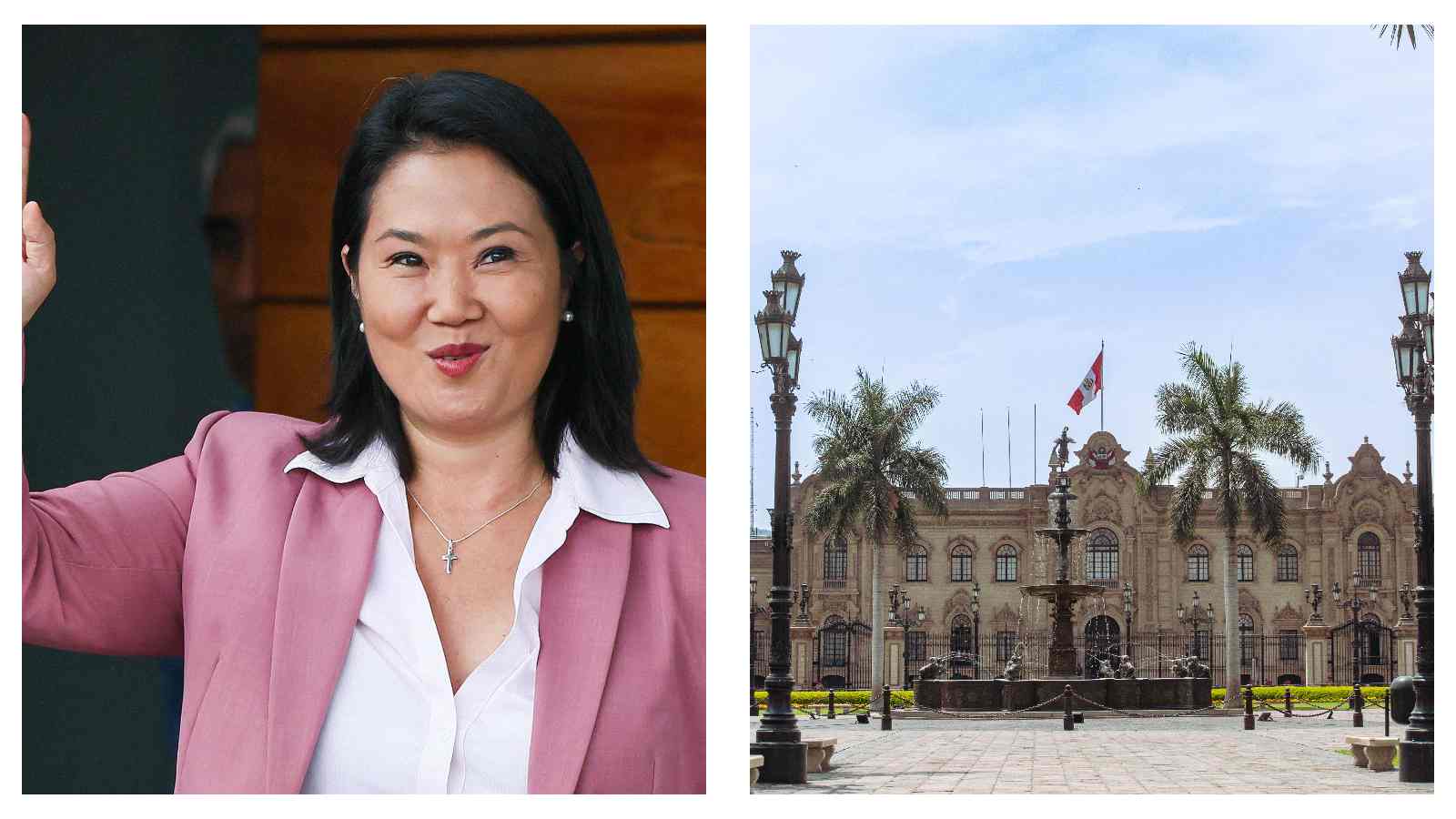
It was fourth time’s the charm for right-wing candidate Keiko Fujimori as she won Peru’s tight presidential run-off on her fourth attempt, marking the return of a familiar surname to the country’s highest office.
The National Jury of Elections (JNE) officially declared Fujimori, daughter of late former president Alberto Fujimori, as the winner of the June 7 run-off election after she secured 50.135% of the vote, or 9,223,000 votes, compared with her left-wing rival Roberto Sanchez, BBC reported.
“I proclaim Miss Keiko Sofia Fujimori Higuchi as president of the republic and Mister Luis Fernando Galaretta Velarde as first vice president of the republic,” election chief Roberto Burneo said at a ceremony in Lima.
The 51-year-old from the Fuerza Popular party secured the presidency by a razor-thin margin of about 50,000 votes, making the contest one of Latin America’s closest presidential elections in recent years.
She secured the victory with strong support from voters in the capital, Lima, and overseas ballots after suffering narrow defeats in the 2011, 2016 and 2021 elections.
YOU MAY ALSO LIKE: Surge in crime fuels Peru’s political collapse
Fujimori vows to restore order, unite Peru
Following her victory, Fujimori pledged that she would assume the presidency “with responsibility, humility and a deep sense of duty.”
She also said she would prioritise restoring order in the streets, public institutions and across the state, acknowledging the immediate need for action to boost the Andean nation’s economy.
The president-elect further vowed to unite the deeply divided country after years of political turmoil and combat rising crime.
“Each day of this transition process is an opportunity to listen, engage in dialogue and prepare at the start of the new government,” she said.
During the campaign, Fujimori pledged to revive her father’s law-and-order approach and free-market economic model, promising to confront rising insecurity and organised crime while attracting more foreign investment.
Sanchez concedes after ‘fraud’ accusations
Meanwhile, Sanchez has conceded defeat to Fujimori in the presidential race, days after the JNE declared her the winner of last month’s run-off.
In a statement, Sanchez and his Together for Peru party said they “recognised that the National Elections Jury has officially proclaimed the electoral results,” as cited by Anadolu Agency.
Despite the acknowledgement, Sanchez stressed that accepting the institutional verdict did not mean abandoning claims of electoral fraud and other alleged irregularities.
“However, this does not imply renouncing the right to point out and denounce the irregularities that occurred during the electoral process, which have been public knowledge and which, in our opinion, affected the electoral process.”
The concession marked a notable U-turn for Sanchez, who had previously rejected the election results showing Fujimori narrowly ahead.
“We will not recognise that government and will declare a state of political and social struggle – a movement of popular and patriotic measure,” he wrote in a social media post.
Allegations of electoral manipulation
Earlier, Sanchez, who is viewed as former president Pedro Castillo’s political heir, accused officials of manipulating overseas votes to favour Fujimori and alleged electoral fraud.
The 57-year-old also escalated his objections by taking his case to the Inter-American Commission on Human Rights.
He requested the annulment of overseas votes cast through 119 consular offices, alleging there had been a “change of rules in the middle of the electoral process” that prevented the digitalisation of tally sheets for votes cast abroad during the run-off.
“The electoral process has been seriously affected by the changes introduced at the request of the executive branch (foreign ministry), specifically in the presidential run-off,” he claimed, without providing evidence.
However, electoral officials denied Sanchez’s accusations, and the JNE rejected his request to invalidate the overseas votes, arguing that his claims were unfounded.
READ ALSO: US faces authoritarian warning as global democratic decline reaches 40-year low

Another rightward shift in Latin America
The return of the Fujimori name to Peru’s highest office also reinforces the broader rightward shift across Latin America after right-wing politician and lawyer Abelardo de la Espriella clinched a narrow victory in Colombia’s election in late June.
De la Espriella secured 49.7% of the vote, while his left-wing rival, Senator Ivan Cepeda, won 48.70%, with 99.9% of ballots counted, Al Jazeera reported.
Experts and analysts attributed De la Espriella’s slim victory to United States President Donald Trump’s endorsement of the political outsider, who had never held elected office or served in a cabinet post.
Other conservative leaders in Latin America, including Argentina’s Javier Milei, Chile’s Jose Antonio Kast and El Salvador’s Nayib Bukele, also congratulated Fujimori.
New chapter for Peru under familiar surname
Fujimori is expected to be sworn in on July 28, opening a new chapter in Peru’s turbulent political history, which has been marred by repeated impeachments, as she is set to become the country’s ninth president in a decade.
She will succeed interim leader Jose Maria Balcazar and govern until 2031, with many hoping her experience and campaign promises will help end Peru’s long-running political instability, reduce crime and boost economic development.
However, her surname also evokes painful memories for many Peruvians, as her father’s rule was marked by economic stabilisation alongside authoritarian crackdowns, widespread corruption and grave human rights violations.
READ MORE BY JHERULEENE RAMOS: Study raises concerns over early digital exposure among Malaysian children
 Kamille Q. Cabreza
  Wendellyn Mateo