
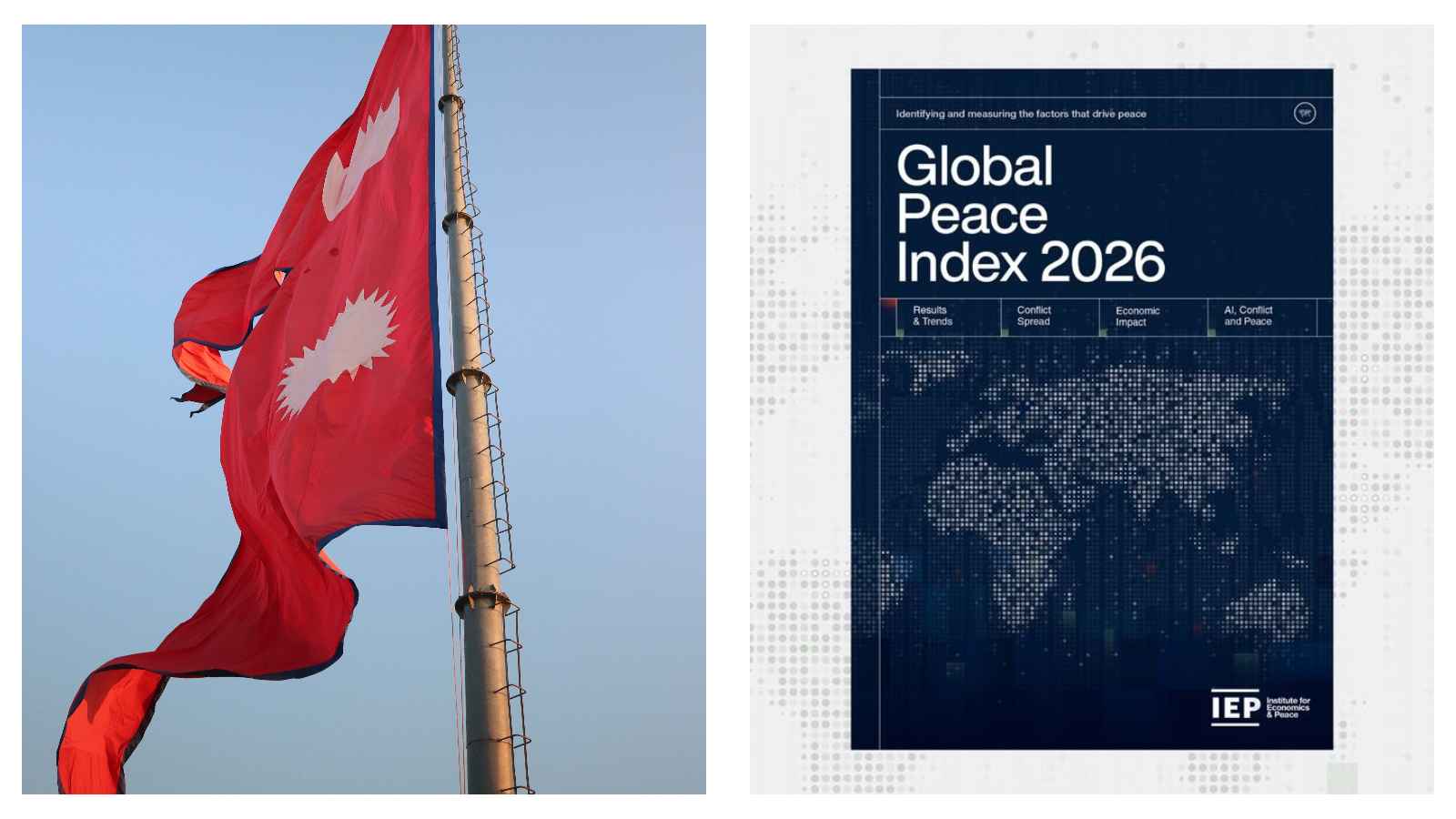
Nepal has experienced a significant deterioration in its peacefulness as the Himalayan country fell to its lowest ranking in the 2026 Global Peace Index (GPI).
According to the index, Nepal ranked 111th out of 163 countries, dropping 26 places from the previous year to its lowest position since 2008, the Kathmandu Post reported.
The index said the country’s overall peacefulness score declined by 9.1%, marking the largest decrease recorded by any country this year, ahead of Oman and the Republic of the Congo.
Mike Koslowski, senior communications adviser at the Institute for Economics and Peace, said such a decline in a single year is “relatively uncommon.”
“A 9.1% deterioration in a single year is relatively uncommon. Most countries move only marginally from year to year,” he said.
Generation Z-led protests drive decline
The report said the deterioration was primarily driven by the Ongoing Conflict domain, which worsened by 23.4%, particularly the intensity of internal conflict indicator, which deteriorated by 100 per cent and the violent demonstrations indicator, which worsened by 45.5%.
It said these deteriorations outweighed notable improvements in other indicators, such as violent crime and the impact of terrorism, which improved by 22.8%.
The global index largely attributed the dramatic decline to the Generation Z-led protests on September 8 and 9, which killed at least 76 people and injured more than 2,000.
The youth-led movement erupted following a brief ban on 26 social media platforms, including Facebook, YouTube and Instagram, as well as growing public frustration over corruption
Reflection of institutional weakness
However, several researchers and experts argued that the September protests were not the sole reason behind the deterioration in the country’s peacefulness.
Peacebuilding expert Ajay Das said the dramatic decline in the GPI reflected the country’s institutional weaknesses, despite considerable progress since the end of the armed conflict in 2006.
He noted that although Nepal had reduced poverty, expanded access to basic services and strengthened political inclusion over the years, inequalities and governance weaknesses persisted.
“The scale of loss of life, injuries and destruction of property during the protests was among the worst in Nepal’s modern history. The unrest did not emerge overnight,” he said.
Other experts also said persistent governance weaknesses, declining public trust and fragile democratic institutions were the primary drivers of the decline.
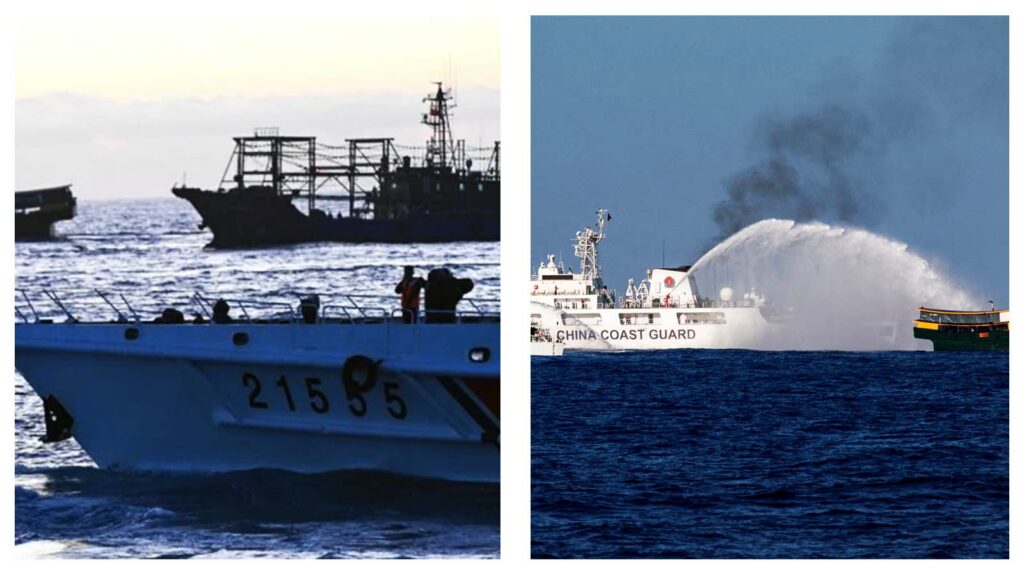
YOU MAY ALSO LIKE: Philippines accuses China of water-cannon attack in disputed shoal
Calls to regain public trust, reforms
To reverse the downward trend, experts urged the government and relevant authorities to rebuild public trust, strengthen institutions, and enhance transparency and accountability.
Kuldeep Niraula, a senior researcher at King’s College Nepal, said the government and state institutions must act as “service providers” to improve peacefulness nationwide.
“As long as elected representatives and government institutions act as gatekeepers rather than equitable and just service providers, peacefulness is hard to prevail among citizens in Nepal,” Niraula said.
Meanwhile, Sagar Khadka, a programme officer at Global Peace Foundation Nepal, said authorities must tackle key national issues such as corruption and unemployment to prevent public frustration from escalating into political instability
South Asia records worst deterioration
Nepal was not the only country in South Asia to record a decline in peacefulness, as the region experienced the worst deterioration in the GPI 2026, with its average overall score declining by 2.3%.
The report also showed South Asia ranked seventh out of the eight GPI regions, with five of its seven countries deteriorating and only two improving.
Afghanistan remained the least peaceful country in the region, ranking 157th, followed by Pakistan (152nd), India (127th), Bangladesh (117th) and Sri Lanka ranked 67th.
Bhutan remained the region’s most peaceful country, ranking 16th globally, making the landlocked kingdom a regional outlier.
The decline in South Asia’s overall peacefulness came as global peace also deteriorated, with 99 countries becoming less peaceful over the past year, while only 62 improved, marking the 12th consecutive annual decline.
Compiled annually by the Institute for Economics and Peace, the GPI is the world’s leading measure of peacefulness, covering 99.7% of the global population and based on 23 qualitative and quantitative indicators.
READ NEXT: Indian Prime Minister Modi makes first public response as youth protests rock New Delhi
 Angelica N. Hall
  Kamille Q. Cabreza
  Geoffrey H. Latayan