
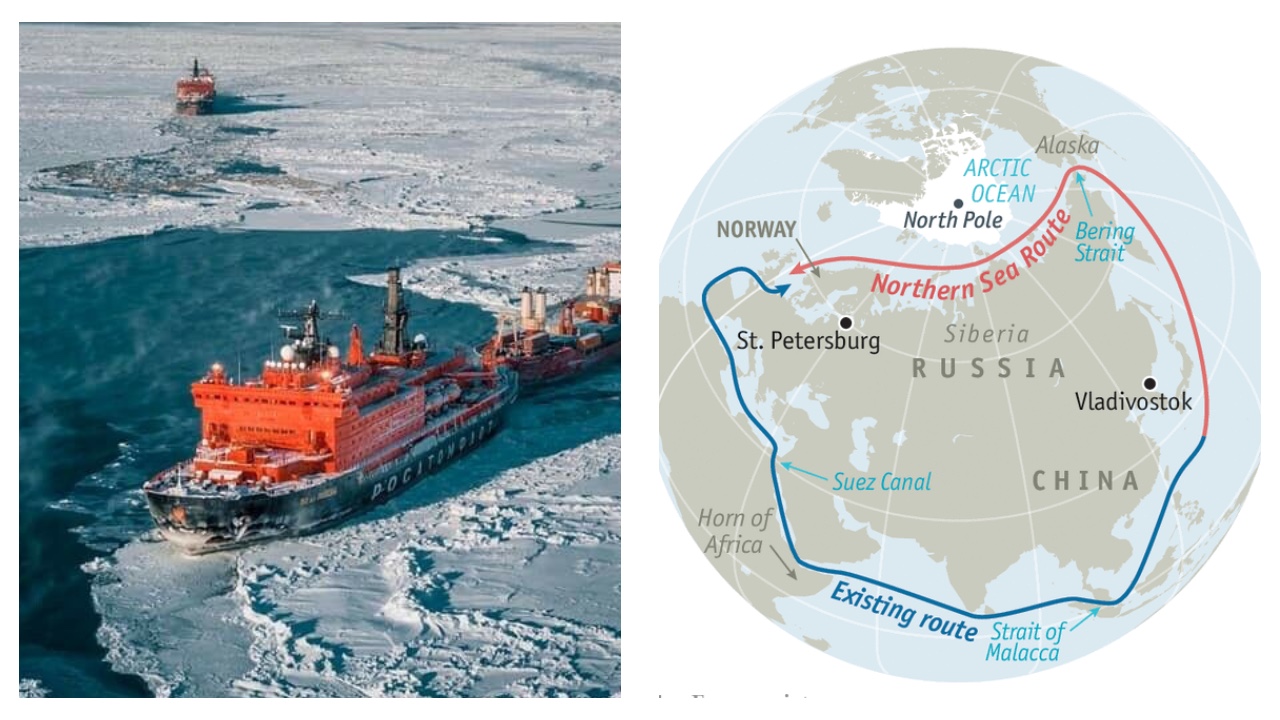
The Northern Sea Route (NSR) recorded a new high in transit traffic in 2025, with 103 voyages, according to a new analysis by Danish Shipping on increasing maritime activity in the Arctic.
The number of transit voyages rose by around 6% from 2024, while the volume of cargo transported increased by around 3%, the analysis said.
Russian-Chinese commodity shipments, including crude oil, oil products, coal and other bulk cargo, accounted for the bulk of traffic along the route in 2025, according to the report.
Still far from major international shipping routes
However, the NSR remains far from matching the scale of major international shipping routes.
In contrast, the Cape of Good Hope is traversed by over 2,000 deep-sea cargo ships each month.
Accordingly, a day and a half of traffic around the Cape of Good Hope is equivalent to the record level of traffic on the NSR in 2025.
“We are seeing increasing maritime activity along the Northeast Passage. But in terms of volume, it remains a very long way from matching the major international shipping routes,” Jacob K. Clasen, deputy chief executive officer of Danish Shipping, was quoted as saying.
“And when you also consider that the vast majority of ship traffic is to or from Russian ports, the conclusion is that the Northeast Passage has very limited relevance to international shipping today and for the foreseeable future,” he said.
The melting of Arctic sea ice has opened the possibility of shorter shipping routes between Europe and Asia, creating potential opportunities for the maritime industry.
However, the changing Arctic environment also brings risks to security, the climate and the region’s fragile ecosystem, Danish Shipping said.
READ NEXT: US, Denmark, Greenland ink new defence pact after year of tension
 Levi Mora
  Wendellyn Mateo
  Geoffrey H. Latayan