
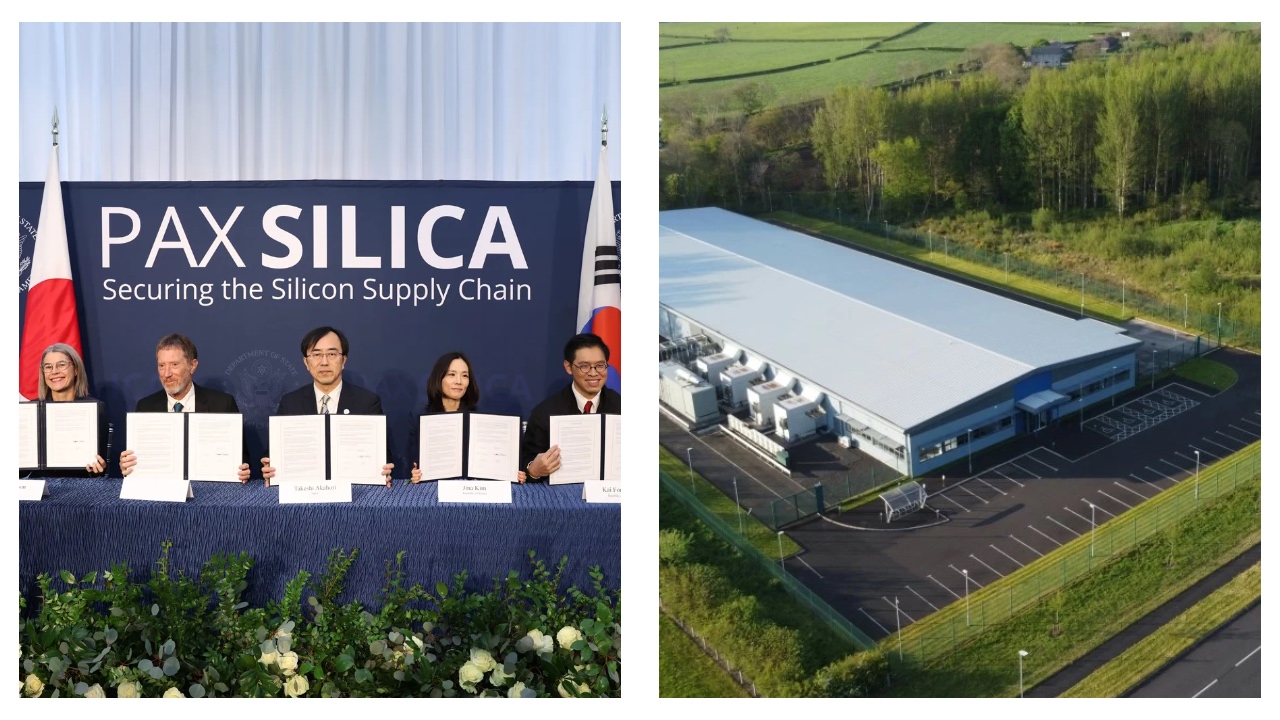
As AI continues to take the spotlight on the global stage, many countries and organizations are leading the initiative to introduce more AI hubs around the world with the promise of more jobs, investment and a place in the global technology supply chain.
Such is the supposed promise of Pax Silica, a US-led initiative launched in December 2025 to strengthen supply chains for semiconductors, critical minerals, and AI technologies.
In April 2026, the Philippines joined the initiative, with government officials calling the project a “generational” opportunity for foreign investment, jobs, and economic growth.
Building the Philippines’ AI future
Under the project, the Philippines will designate 4,000 acres of land inside New Clark City in Capas, Tarlac, on land administered by the Bases Conversion and Development Authority (BCDA).
Described as the first “AI-native industrial acceleration hub,” the site is expected to accommodate semiconductor assembly, testing and packaging, advanced manufacturing, and AI infrastructure.
The government said the sole purpose of the AI hub is mainly economic and geopolitical, as it aims to attract foreign capital, create employment, and move the country toward higher-value technology industries.
READ MORE: Philippine city sets deadline for research funding tied to press freedom pioneer’s legacy

The government’s vision
According to Malacañang, the project will protect the country’s national interest, the environment, and its host communities.
In his State of the Nation Address, Marcos stated that the project will bring quality jobs, boost tech competitiveness, and revitalize the economy.
The BCDA also said the infrastructure plan of the project will comply with local environmental laws.
Communities raise concerns
Despite the positive statements made by government officials over the project, vulnerable communities and advocacy groups are raising concerns over the possible displacement of communities near the area where the project will be built.
For them, the promise of an AI future comes with a more immediate concern.
As the project covers about 4,000 acres of land administered by the BCDA, farmers and Aeta communities in Capas are worried about their possible displacement and claim that the project will threaten agricultural livelihoods.
According to advocacy groups, an estimated 20,000 residents and 15,000 farmers could be displaced if the project pushes through.
MORE INTERNATIONAL NEWS: US Senate approves tougher sanctions bill against Russian energy

The defensive response
In their defense, the government and the BCDA said zero residents or farmers will be displaced as the site is already government-owned public land.
BCDA President and CEO Joshua Bingcang assured that direct displacement will affect only a tiny fraction of agricultural plots, and does not overlap with titled ancestral domain lands.
Besides land concerns, environmental advocates also raised alarm on the supply of water in Capas as the proposed industrial hub could increase pressure on local supplies.
Dr Giovanni Tapang of the University of the Philippines College of Science warned that large data centers have high water demands, saying such facilities can consume millions of gallons daily for cooling.
In response, officials insisted that water supply in Capas is sufficient and assured local communities that their needs will still be prioritized.
As water concerns were raised, so were food concerns, as groups argued that converting agricultural and coastal land into industrial and mining corridors could affect local food supplies.
A growing call for reconsideration
Worried about the possible effects on their communities, farmers and the Aeta community in Capas recently launched a petition to prevent Pax Silica from being materialized.
As of August 6, the petition had gathered nearly 400,000 verified signatures, with Aeta chieftain of Sapang Kawayan Petroniza Capriz-Munoz saying they will stand their ground in opposing the project.
Meanwhile, a resolution initiated by Senator Raffy Tulfo, was filed before the Senate to assess the impacts of Pax Silica.
Balancing progress and inclusion
Both the government and the communities in Capas have their own perspectives on the project.
As the country moves toward innovation and economic growth, it is also important to acknowledge and address the concerns of the communities that may be affected.
Growth and innovation should not come at the expense of people’s livelihoods and communities.
True progress means creating opportunities for development while ensuring that no one is left behind as the country plans for its future.
READ NEXT: US maritime group criticizes extension of Jones Act waiver
 Ian Trinidad
  Eugene Nicklaus S. Laqui
  Newsjustnews writers