
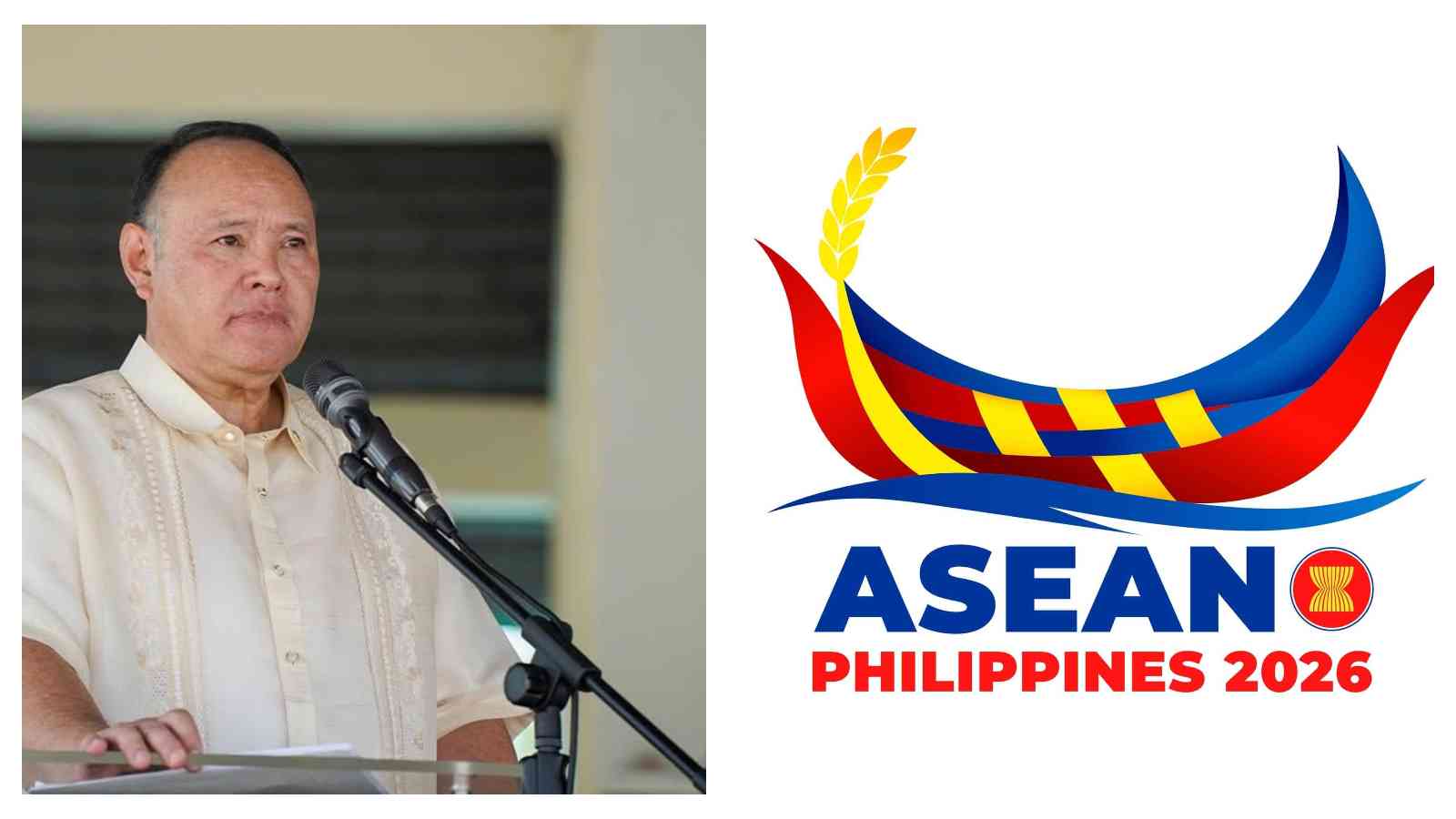
Philippine National Defense Secretary Gilberto Teodoro Jr. has urged member states of the Association of Southeast Asian Nations (ASEAN) to actively support Manila’s 2016 arbitral ruling.
Teodoro framed the defense of international law as a collective necessity rather than a solitary national interest.
Speaking at 37th United States Pacific Command (USPACOM) Annual International Military Law and Operations Strategic Engagement (MILOPS) in Kuala Lumpur, Teodoro stressed that enforcing maritime entitlements under the United Nations Convention on the Law of the Sea (UNCLOS) directly safeguards the economic and security interests of the entire regional bloc.
Shared instrument for regional convergence
Teodoro highlighted that the landmark 2016 Permanent Court of Arbitration ruling should function as an instrument of convergence rather than division among Southeast Asian nations.
ABS-CBN news reported that Teodoro noted that by standing firm against aggressive maritime conduct and upholding UNCLOS, the Philippines is doing the regional bloc a vital service by preserving a rules-based international order amidst daily threats to its sovereign rights.
The defence chief pointed out that ASEAN relies on the Philippines’ archipelagic position to maintain unimpeded trade and navigation access into the Pacific Ocean.
By extension, safeguarding Manila’s sovereign rights and maritime entitlements directly reinforces ASEAN’s collective resilience and strategic connectivity.
READ MORE: Japan begins construction of world’s next biggest destroyer
Broader national security alliances
Teodoro earlier cautioned against relying solely on traditional ASEAN diplomatic relations for national security.
The Secretary, while re-affirming Manila’s commitment to Southeast Asian solidarity, emphasised that the Philippines must simultaneously cultivate robust bilateral and multilateral defence partnerships.
This type of action is intended to counter increasingly coercive, disruptive and hybrid security challenges in the West Philippine Sea.
He rejected the notion that ASEAN should remain a passive “zone of neutrality” when international legal norms are openly defied.
He cited historical examples of fellow member states, such as Malaysia and Singapore, successfully utilising independent international tribunals to settle complex territorial disputes, proving that adherence to legal mechanisms reinforces peace.
Teodoro concluded that transparent, lawful responses remain the most credible defence against external aggression and disinformation campaigns targeting the Indo-Pacific region.
The members of ASEAN are Brunei, Cambodia, Indonesia, Laos, Malaysia, Myanmar, the Philippines, Singapore, Thailand, Timor-Leste and Vietnam.
READ NEXT: Food, transport costs drive significant price surge in Sri Lanka
 Carmela Calling
  James Mario Ajero