
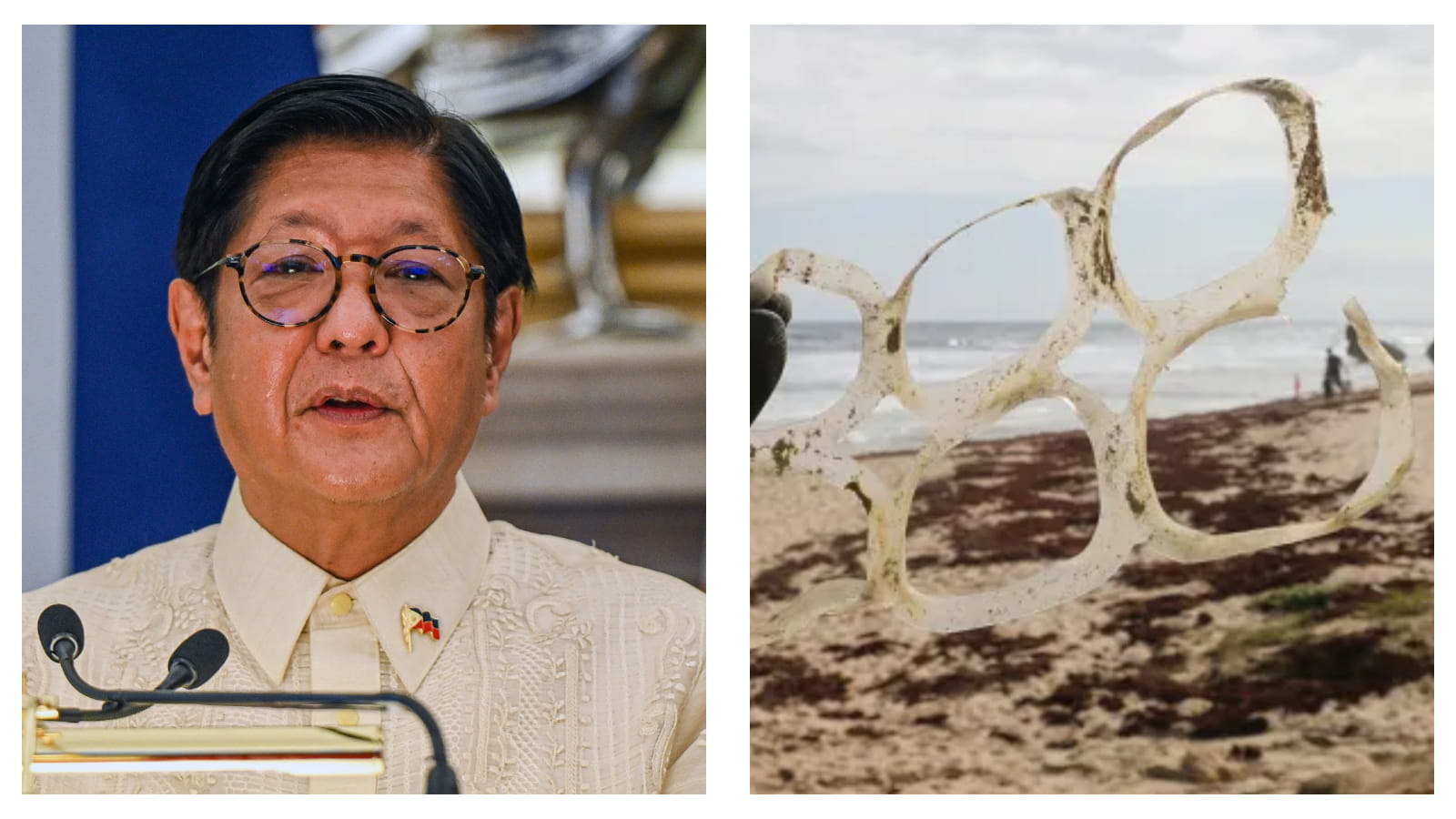
The Philippines is advancing the use of nuclear technology to address plastic pollution, with President Ferdinand Marcos Jr highlighting domestic initiatives that convert plastic waste into durable construction materials.
At a recent forum, Marcos drew attention to the Post-Radiation Reactive Extrusion of Plastic Wastes Project (PREx).
PREx uses radiation to alter polymer properties in low-value plastics, transforming them into commercially viable building materials.
“It is providing a solution, a very important solution to a very difficult problem that we face, not only here in the Philippines, but in the rest of the world,” Marcos said in an interview with the Philippine News Agency.
The project is a collaboration between the Philippine Nuclear Research Institute, the Industrial Technology Development Institute, and private partner Envirotech.
A prototype house has been constructed to demonstrate how the technology can repurpose waste plastics for industrial applications.
READ MORE: Ancient tomb unearthed in Vietnam’s Quang Ninh
Monitoring pollution and regulatory frameworks
Alongside technological innovation, the Philippines has strengthened its scientific capacity to study marine pollution.
With support from the International Atomic Energy Agency (IAEA), the University of the Philippines Marine Science Institute has established a laboratory to monitor microplastics in marine environments, providing precise data on the impact of plastic pollution on ecosystems.
Marcos also launched the NUTEC Plastics Investment and Partnership Brochure in collaboration with the IAEA.
This collaboration outlines opportunities for governments and private sector actors to invest in nuclear-based environmental solutions.
ASEAN leadership and regional collaboration
Marcos emphasised that science and sustainability will form central pillars of the country’s regional leadership.
He pledged to expand the Association of Southeast Asian Nations (ASEAN) Network of Regulatory Bodies on Atomic Energy to improve nuclear literacy and strengthen coordination on regulatory practices across the region.
The forum was attended by IAEA Director General Rafael Mariano Grossi and Asian Development Bank President Masato Kanda, signalling international support for the Philippines’ integration of nuclear science into environmental and industrial innovation.
READ NEXT: Japan climate report flags urgent risks to food security, disaster resilience
 Kamille Q. Cabreza
  Diana Mae Y. Cleto
  Hazel Camba