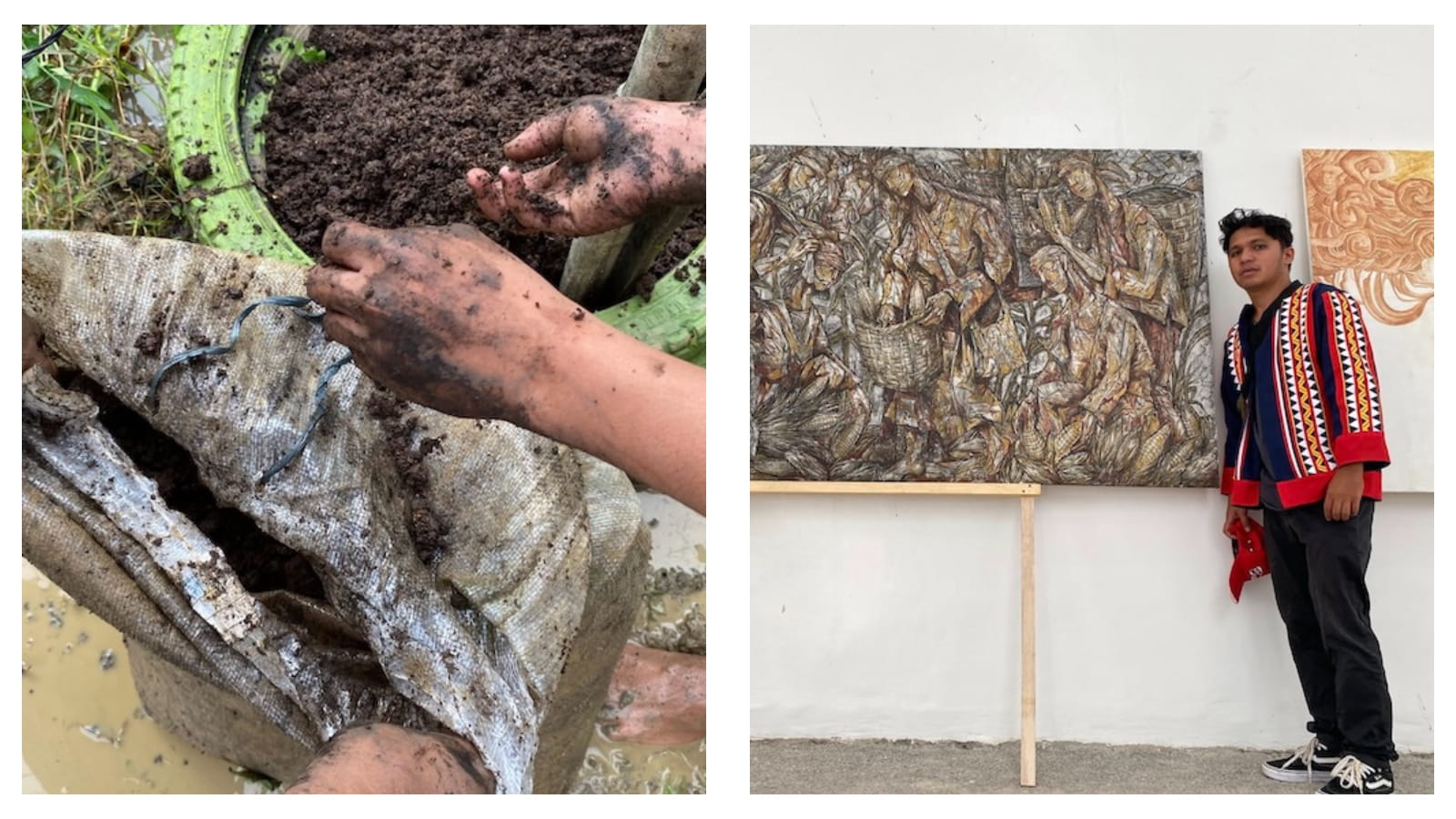
In the southern Philippine province of Bukidnon, artists are turning to soil as both medium and message, using earth-based materials to depict Indigenous life and reinforce cultural memory.
The works, presented during the province’s first Soil Painting Competition, formed part of the “Hulagway sa Yuta” exhibition at the Bukidnon Centre for Culture and the Arts.
The initiative brought together professional and amateur artists, many of whom drew directly from their communities’ daily experiences, translating them into images shaped not by conventional pigments but by soil and water.
Art rooted in lived experience
The competition centred on a medium that demands both technical skill and familiarity with natural materials.
Artists worked with soil textures and tones to create images that reflect farming practices, rituals, and community life, themes closely tied to the province’s Indigenous heritage.
Datu Makayuba Renato Sumbongan, a Higaonon leader and newly selected Provincial Indigenous Peoples Mandatory Representative, said several entries captured scenes grounded in lived experience.
These included depictions of agricultural work and communal traditions, offering insights into how communities interact with their environment.
“Several pieces captured scenes of farming, rituals, and community life that reflect our lived experiences, reinforcing the role of art in educating younger generations and promoting respect for Indigenous traditions,” he said in an interview with the Philippine Information Agency.
READ MORE: Solar power reshapes small bakery operations in the Philippines
The use of soil as a primary material also carries symbolic weight.
Beyond its practical application, soil reflects a longstanding relationship between Indigenous communities and the land, where the environment is both a source of livelihood and a repository of cultural meaning.
Senator Juan Miguel Zubiri, who supported the initiative, said the artworks conveyed aspects of the province’s identity.
He noted that the pieces illustrate how land and culture are closely intertwined, with the medium itself reinforcing this connection.
“These artworks are detailed and expressive portrayals of Bukidnon’s story and culture. They show the beauty of our land and the identity of our people,” he said.
Art as community narratives
For participants, working with soil presented a different set of challenges compared with conventional painting.
Artists relied on layering techniques and an understanding of natural materials to achieve contrast and detail, often requiring careful control of moisture and texture.
Top prize winner Phel Picao Salmasan drew on personal experience for his entry.
He based his work on his role as a “manghagdaway”, or one who gathers leftover grain after harvest, incorporating corn into the composition to represent agricultural practices and communal life.
His piece received the competition’s top prize of PHP100,000.
The process behind such works, according to sculptor and judge Kublai Millan, is not immediately visible to viewers.
He said the finished pieces reflect years of discipline and persistence rather than a single moment of creativity.
“What people see are the finished pieces, but behind them are years of struggle, discipline, and dedication. These artists did not just succeed, they surpassed what was expected of them,” he said.
READ NEXT: Philippines launches new website to strengthen disaster preparedness
 Carmela Calling
  James Mario Ajero