
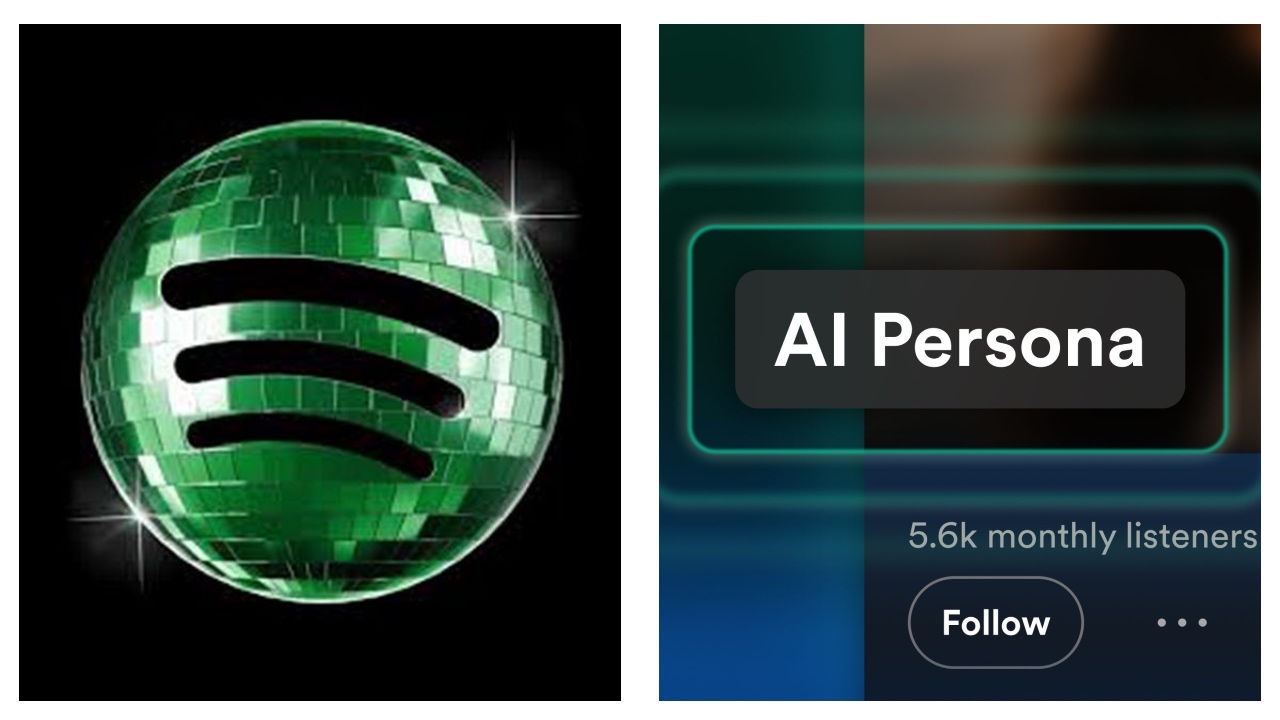
As AI gradually creeps its way into human creative works, Spotify is taking steps to ensure that everything remains transparent.
The streaming giant announced the AI Persona badge on August 11, allowing listeners to identify whether an artist’s identity is AI-generated and does not represent a real person.
“True artist-fan connection can only be built on a foundation of trust and authenticity,” Spotify said.
“In music, that means listeners need to be able to trust that the artist behind the music is who they say they are.”
According to the Swedish company, listeners will begin to see the new badge in mid-September on artist profile banners and About sections, in Search, and on track rows across playlists.
The platform also said it will indicate whether an artist voluntarily disclosed that they are an AI Persona or whether Spotify had to review the profile and make its own determination.
Supporting ‘real’ artists
Despite allowing AI Personas on its platform, Spotify said it would continue to prioritise human creativity by excluding AI Personas from editorial and algorithmic recommendations by default.
This means that listeners will not see music from AI Personas in their personalised recommendations unless they choose to follow them.
“While we believe all artists have creative choice in determining how they present themselves, Spotify’s programming is focused on elevating music from authentic artists building careers in music,” the platform stressed.
This is Spotify’s latest effort to protect the creativity and identities of human artists.
Since the beginning of the year, the platform has launched Verified by Spotify, SongDNA, AI Credits and Artist Profile Protection to provide listeners with greater transparency about the artists and the music they encounter on the platform.
READ MORE: Disney embraces fan content in ‘first-of-its-kind’ deal with TikTok
‘Controversial’ use of AI
Ever since the emergence of artificial intelligence in the entertainment industry, its use has been met with both criticism and approval.
Some artists argue that it undermines human creativity, while others have shown support by incorporating AI into their craft.
SZA, the singer-songwriter behind hit songs ‘Kill Bill’ and ‘Snooze’, was among the artists who called out the use of AI in music, especially after she found out that more than 200 of her songs had been used to train AI.
“Checked and music AI has trained off 238 of my songs. I’m certain some unreleased. If you’re a musician and you support this degenerate shit? You’re disgusting and there’s NOTHING YOU COULD EVER SAY TO ME TO MAKE THIS OKAY. I hope u have the life u deserve,” the Grammy winner said in an Instagram story cited by EuroNews.
SZA not alone
Other major artists who have raised concerns over the use of AI include Billie Eilish, Nicki Minaj and Zayn Malik, as well as the estate of Bob Marley.
The artists were among the signatories of a 2024 open letter calling on AI developers and technology companies to stop using artificial intelligence to “infringe upon and devalue the rights of human artists”.
“We believe that, when used responsibly, AI has enormous potential to advance human creativity and in a manner that enables the development and growth of new and exciting experiences for music fans everywhere,” the letter reads.
“Unfortunately, some platforms and developers are employing AI to sabotage creativity and undermine artists, songwriters, musicians and rightsholders.”
Embracing change in music
On the contrary, some artists have embraced the changes brought by AI in music and incorporated the technology into their craft.
American singer and rapper Tyga admitted in an interview with Mikey Fresh of Vibe that he used AI on his latest album, $tarface, viewing the technology as another tool for artists to adopt.
“We definitely used AI as a [tool]. And I know people are going to be mad about me saying this, but it’s where technology is going. It’s no different than when Auto-Tune came out. Some people were opposed to it, but real artists took it and used it,” the 36-year-old artist told the Vibe, as cited by Pitchfork.
READ NEXT: KATSEYE’s Sophia takes break from spotlight to focus on mental health
 Levi Mora
  Zdravko Yazhikov
  Kamille Q. Cabreza