
By Emily Hodson
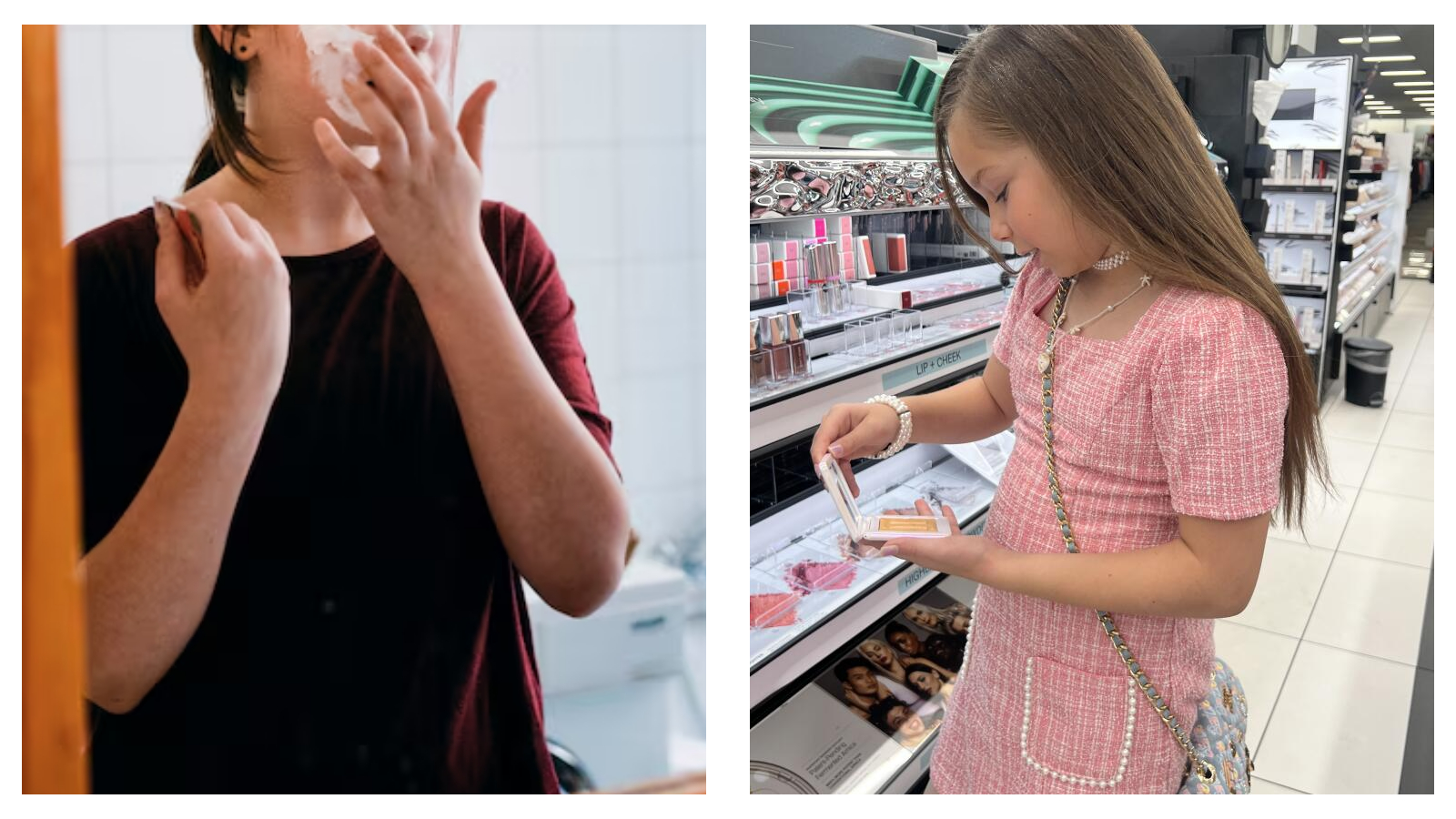
Young girls are increasingly trading toys for toners, acids and serums.
As social media becomes a normal part of childhood, so does the pressure to look perfect.
Alongside physical harm to delicate young skin comes the potential for mental harm.
How is this beauty craze affecting how our children see themselves and the world around them?
Physical harm
Girls as young as eight are using skincare products created for adults.
Paediatric dermatologist Dr Tess McPherson told Sky News in 2024 that she treated girls as young as eight or nine who had developed eczema after using harsh products.
Active ingredients such as chemical exfoliants and acids can cause allergic reactions and irritation to children’s fragile skin barriers.
She argued that more children need to be educated on products that are anti-ageing and may damage sensitive skin.
For children who once played dress-up with their parents’ makeup, complex skincare routines are becoming part of their everyday lives.
READ MORE: Vietnam’s domestic sectors struggle with labor shortages

Social media
Within Ofcom’s 2025 report on children’s social media use, 55% of 3-12-year-olds in the UK used at least one social media site or app in 2024.
Older children’s social media use is even more extensive.
Social media videos including makeup and skincare now appear alongside other entertainment content.
Academic research is starting to highlight how complex these skincare routines are becoming.
In a report published in the journal Pediatrics in 2025, 100 TikTok videos of young people aged 7-18 showcasing their skincare routines were analysed.
On average, six products were used per routine.
Obsession with perfection
In Ofcom’s Children’s Media Lives research published in 2025, the “clean girl” aesthetic featured in girls’ conversations about beauty trends.
Rooted in the expectation of looking spotless, the trend emphasises having a put-together appearance.
Instead of embracing childhood messiness, creativity and a carefree attitude, the trend encourages girls to stay presentable and clean.
MORE FOR YOU: Europe prepares for fullest solar eclipse since 1999
Appearance is the new currency
A 2025 academic study published in Body Image analysed the Instagram posts of 17 girls aged 12-18 in the UK.
79.2% of the comments on their self-images were positive comments related to their appearance.
How someone looks can become a type of social currency.
Rather than praising another girl’s morals, hobbies or achievements, attention is drawn to her appearance.
This is raising concern as to whether girls are being encouraged to focus on how they look rather than who they are.
Why is this happening?
Social media makes beauty content more readily available than ever.
Children’s entertainment is no longer just games and animations. It is 24-hour access to beauty influencers, makeup reviews and skincare routines.
Accessible at the tap of a screen, the content becomes less easy to switch off from.
Creators who foster trustworthy relationships between themselves and their viewers can be more persuasive than traditional advertising.
Rather than overtly telling viewers what to purchase, their recommendations may feel like advice from a friend they can rely upon.
For children still growing their sense of identity, constant exposure to a perfect appearance may feel like an expectation to meet rather than inspiration.
The excitement is less about owning the product and more about comparing themselves to the girl using it online.
ALSO ON NJN: TV news: ‘House of the Dragon’ season 3 finale ends in fire, betrayal and Targaryen tragedy

Has self-care become an obsession?
A child’s use of makeup and skincare is not necessarily a cause for concern.
It can become concerning, however, when it transforms from a form of play to a part of their self-worth and identity.
“Cosmeticorexia” is an emerging term describing a cultural and social obsession with achieving flawless skin through extensive cosmetic use.
Whilst it is not yet a recognised medical diagnosis, experts are discussing it more alongside concerns about beauty culture among children.
The traditional toybox has changed.
Has beauty transformed from entertainment to something children must accomplish?
READ NEXT: Former US President to host a podcast on Audible
 Kamille Q. Cabreza
  Hazel Camba
  John Christopher Aquino