
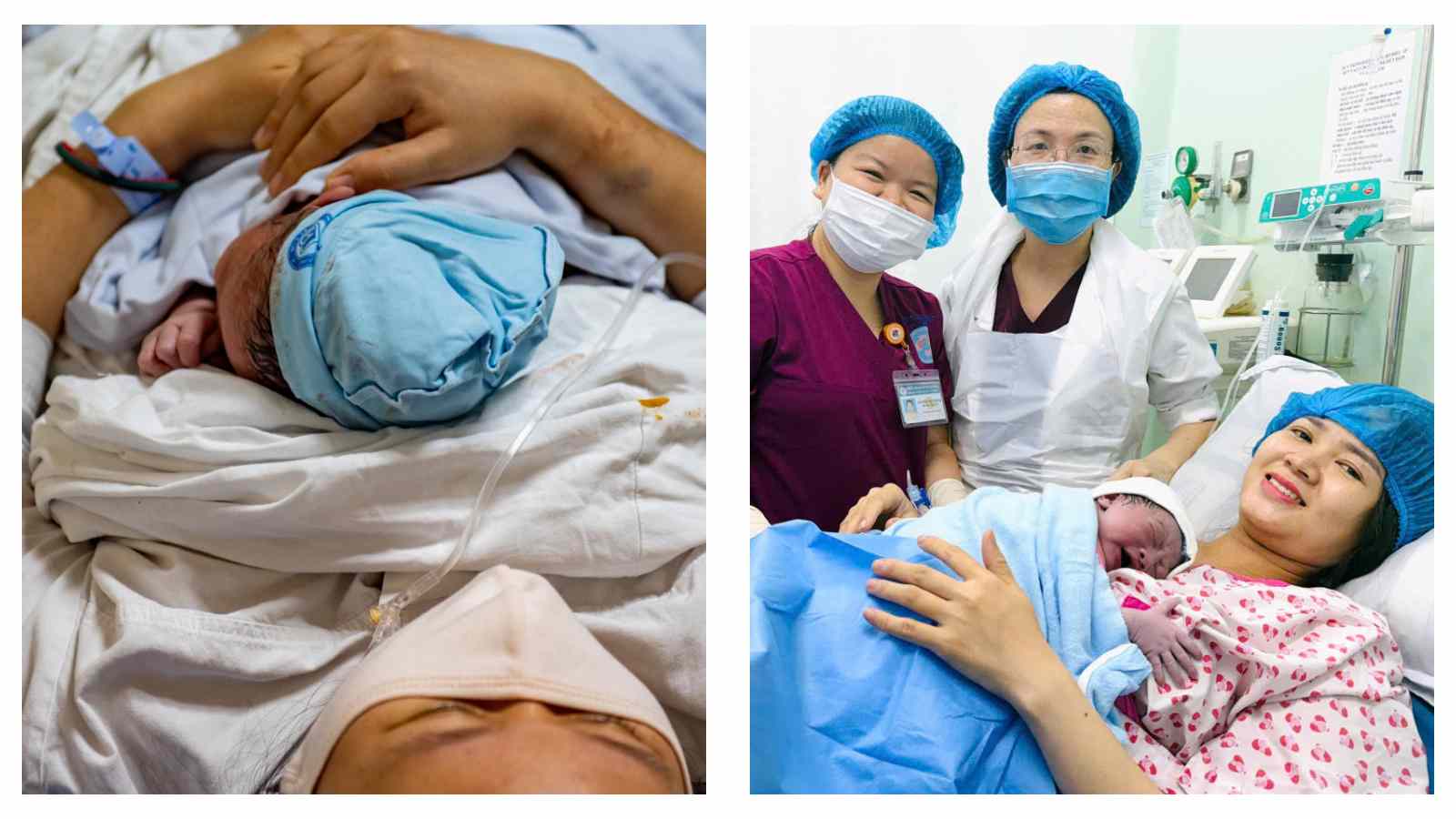
Vietnam will provide cash incentives to women giving birth to two children before the age of 35 starting January next year, according to a newly issued government decree.
Decree 168/2026/ND0CP came nearly a year after the lawmaking National Assembly abolished the decades-old two-child policy to address the Southeast Asian country’s declining fertility rates and rising ageing population.
Who is eligible for the cash incentives?
Eligible women — including members of Vietnamese ethnic groups, those from provinces with low fertility rates, and mothers with two children before the age of 35 — will receive at least VND2 million ($75.82) per birth under the National Target Programme on Healthcare, Population and Development for 2026-35, according to the decree cited by state-run Vietnam News on May 20.
They will also be entitled to state support worth VND900,000 ($34.13) for prenatal screening, focusing on major conditions: Down syndrome, Edwards syndrome, Patau syndrome, and thalassaemia.
Newborns, meanwhile, will undergo screening worth VND600,000 ($22.75) for early detection of conditions such as congenital hypothyroidism, glucose-6-phosphate dehydrogenase deficiency, congenital adrenal hyperplasia, congenital hearing impairment, and heart defects.
Funding will be shouldered by local budgets.
READ MORE: Senator Jinggoy Estrada arrested for plunder in Philippine flood control scandal

Fertility rate on the decline
Vietnam’s total fertility rate dropped from 2.11 children per woman in 2021 to 1.91 in 2024 before slightly increasing to 1.93 in 2025, according to official figures from the Ministry of Health (MoH).
In an impact assessment report, the ministry said that birth rates are even higher in regions grappling with socioeconomic challenges, including northern and north-central Vietnam.
Urban areas with developed economic conditions, such as Hanoi and Ho Chi Minh City, are dealing with considerably lower rates, with couples having fewer children or none at all.
The MoH targets to increase the country’s total fertility rate by an average of two per cent annually by 2030 through expanding reproductive health and family planning services to couples.
READ NEXT: Direct Vietnam-Philippines flights signal a push for deeper connectivity
 Angelica N. Hall
  Kamille Q. Cabreza
  Geoffrey H. Latayan