
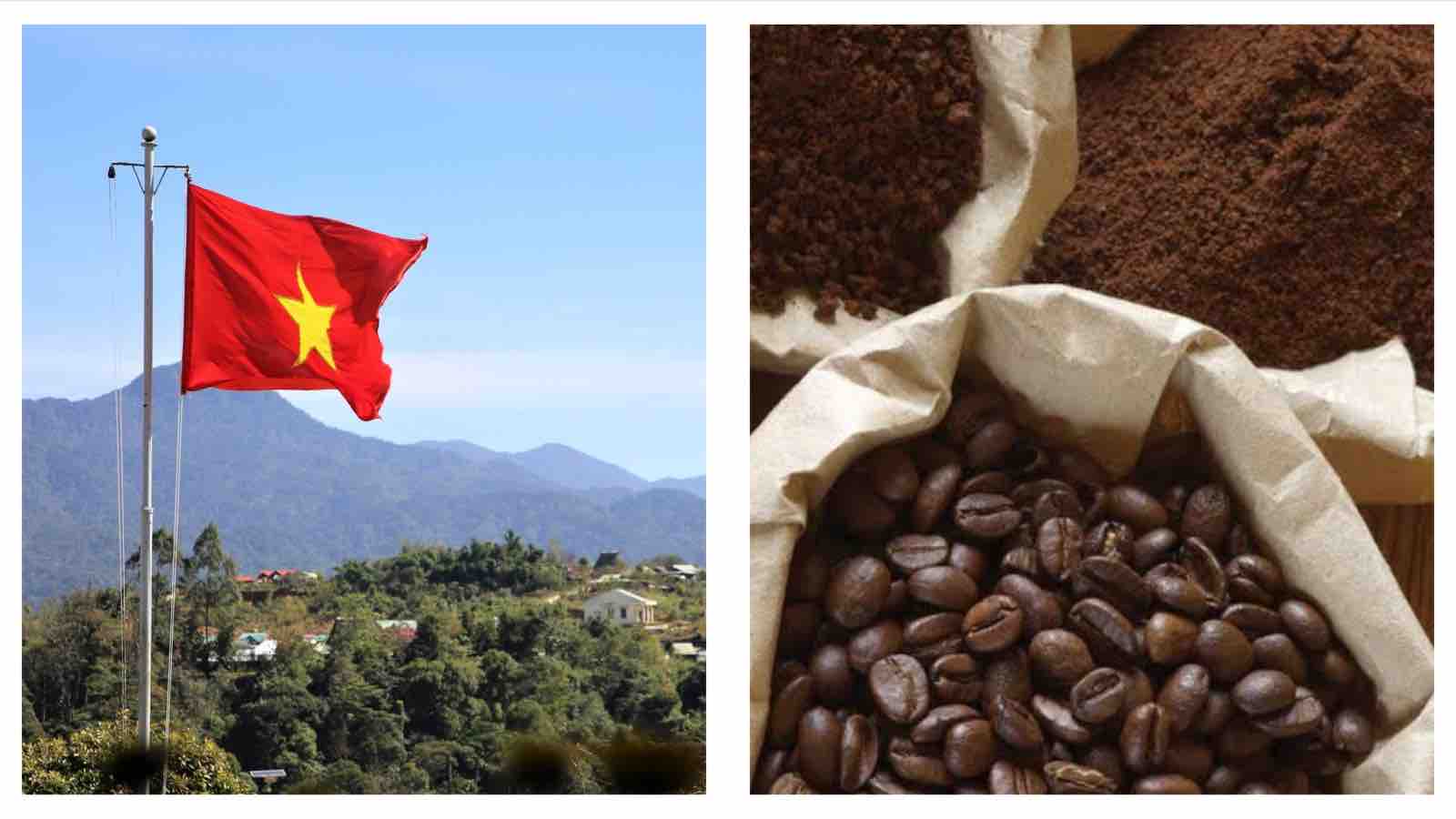
Vietnam exported about 150,000 tons of coffee worth $552.6 million in June, raising total exports in the first six months of the year to around 1.1 million tons valued at $4.78 billion.
Export volume increased 9.7% compared to the same period last year, but export earnings declined 14.4%, reflecting a sharp drop in global coffee prices, according to a VietNamNet report.
The Ministry of Agriculture and Environment said the average export price during January-June fell 22% year-on-year to $4,435 per ton.
This indicates that the high-price cycle enjoyed in 2024 and 2025 is gradually coming to an end.
The country’s major export destinations also generated lower returns.
Lower export value
Germany, Italy, and the United States remained Vietnam’s largest coffee importers, accounting for 14.1%, 7.9%, and 6.9% of total exports, respectively.
However, export value to those markets during the first five months of the year dropped by 21.7%, 9.6%, and 2.2%.
Domestically, coffee prices have recovered to above VND90,000 ($3.42) per kilogram after several weeks of volatility.
Despite the rebound, trading activity remains subdued due to limited inventories.
Oversupply clouds export outlook
The Vietnam Coffee Cocoa Association (Vicofa) said the global coffee market is becoming increasingly challenging as supply begins to outpace demand.
The rise in production has been driven mainly by Brazil.
The association expects the growing supply to keep prices under pressure in the months ahead, particularly for robusta coffee, Vietnam’s leading export variety.
Vicofa also warned that meeting this year’s export revenue target will be difficult because export prices are expected to continue to weaken.
This is because coffee shipments are typically lower in the second half of the year.
YOU MAY ALSO LIKE: Philippine tourism weathers oil price pressures despite shifts in visitor markets

Industry urged to prioritise value over volume
Vicofa said that the industry should shift its focus from increasing output to generating greater added value.
The association recommended expanding exports of premium coffee beans with sustainability certifications and increasing shipments of roasted, instant, and blended coffee products.
Around 30% of Vietnam’s coffee-growing area is now certified under sustainable production standards, providing a solid base for meeting stricter requirements in international markets.
Vicofa also called for stronger trade promotion in promising markets such as China, Russia, South Korea, Algeria, and the Nordic countries.
They also urged for the strengthening of partnerships with major retail chains across Asia and Europe to support exports of processed coffee.
READ NEXT: Vietnam achieves upper-middle income status: World Bank
 Kamille Q. Cabreza
  Jheruleene Anne Ramos
  Wendellyn Mateo