
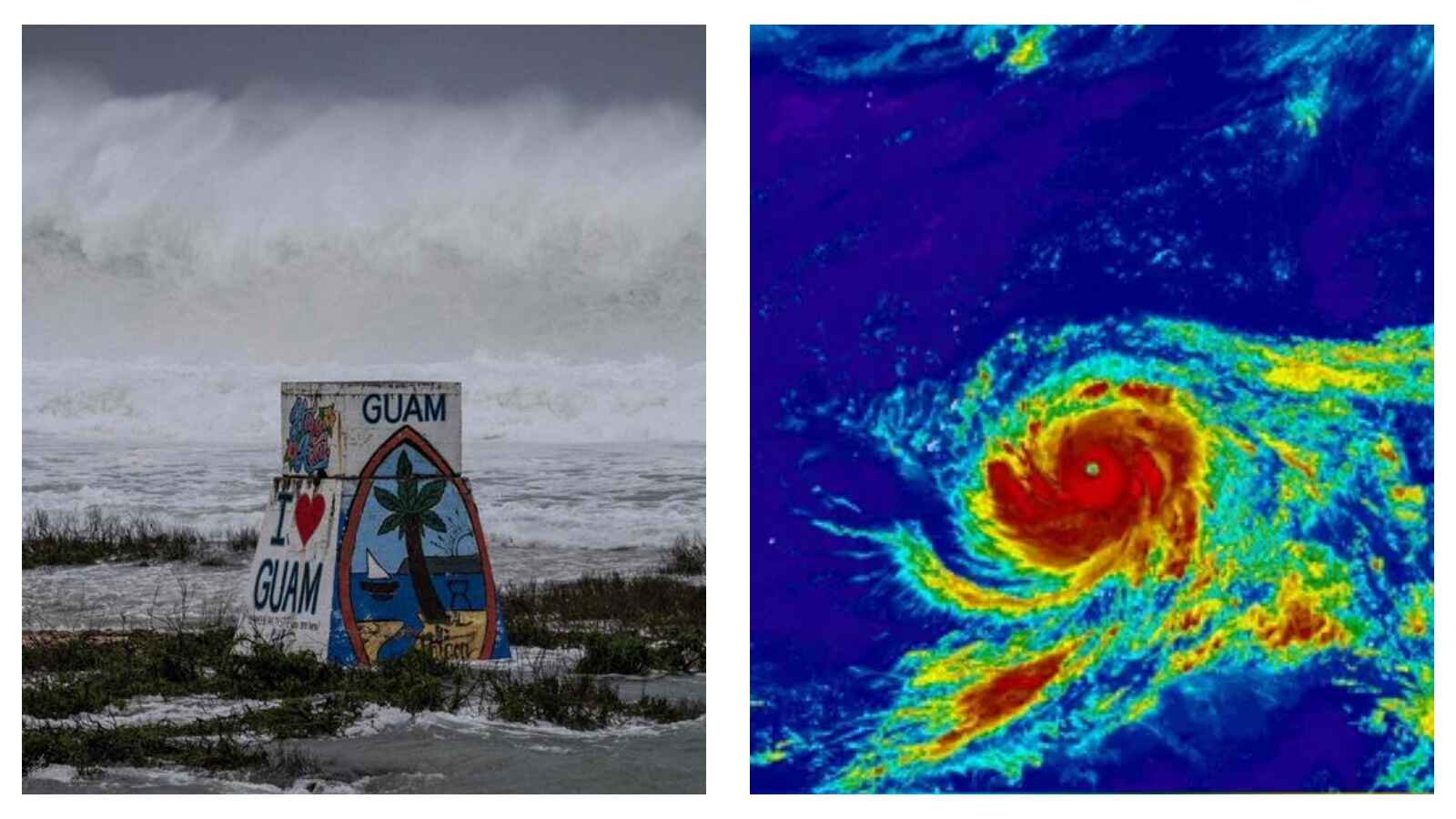
The Northern Pacific territories braced for the destructive Super Typhoon Bavi as it made landfall on the islands of Rota and Guam, leaving widespread destruction and uprooted trees as it headed westward towards the Philippines and Taiwan.
One of 2026’s strongest typhoons
According to the United States National Weather Service (NWS), Bavi made landfall on the island of Rota while packing sustained wind speeds of more than 150 miles per hour (241 kilometres per hour), leading weather experts to classify it as a “Super Typhoon” and making it one of the strongest and most destructive typhoons of 2026 so far.
The NWS added that Super Typhoon Bavi has been travelling westward across the Pacific Ocean with sustained wind speeds of 173mph (280km/h) and gusts reaching a staggering 333km/h.
Many residents of Rota and the neighbouring island of Guam sought shelter and prepared for Bavi’s landfall days in advance, but local officials warned that major damage had already been observed following the typhoon.
They added that no casualties had been reported.
In April, Rota and the neighbouring island of Guam had already endured Super Typhoon Sinlaku, a more powerful storm than Bavi, with sustained winds reaching 185mph (295km/h) and landfall wind speeds of 145mph.
YOU MAY ALSO LIKE: Vietnam coffee exports rise but lower prices cut earnings

Bavi’s possible next stop
Weather experts predict that Super Typhoon Bavi could pass through the maritime regions of the Philippines and Taiwan by Thursday and Friday.
Despite not making a direct landfall in either territory, Bavi’s powerful winds and heavy rainfall could still affect communities in both countries.
The Philippine weather service warned that wind signals could be raised as early as Tuesday, particularly in northern regions, while meteorologists in Taiwan have classified Bavi as an “intense typhoon” and linked the phenomenon to the ongoing El Niño.
By Saturday, weather authorities said Bavi could make landfall in eastern China, bringing torrential rain and widespread flooding to many communities.
READ MORE: Philippine tourism weathers oil price pressures despite shifts in visitor markets

Connection to the current El Nino
Scientists have warned that the El Niño phenomenon could bring unusual weather patterns both within and beyond the Pacific region, including stronger typhoons and prolonged droughts.
As 2026 and 2027 approach what some experts have described as a potential Super El Niño period, countries have begun preparing for worst-case scenarios involving more destructive typhoons, droughts affecting food supplies and widespread flooding caused by intense rainfall.
READ NEXT: Duncan Macmillan’s ‘People, Places and Things’ to get Manila-staged reading in August
 Kamille Q. Cabreza
  Jheruleene Anne Ramos
  Wendellyn Mateo