
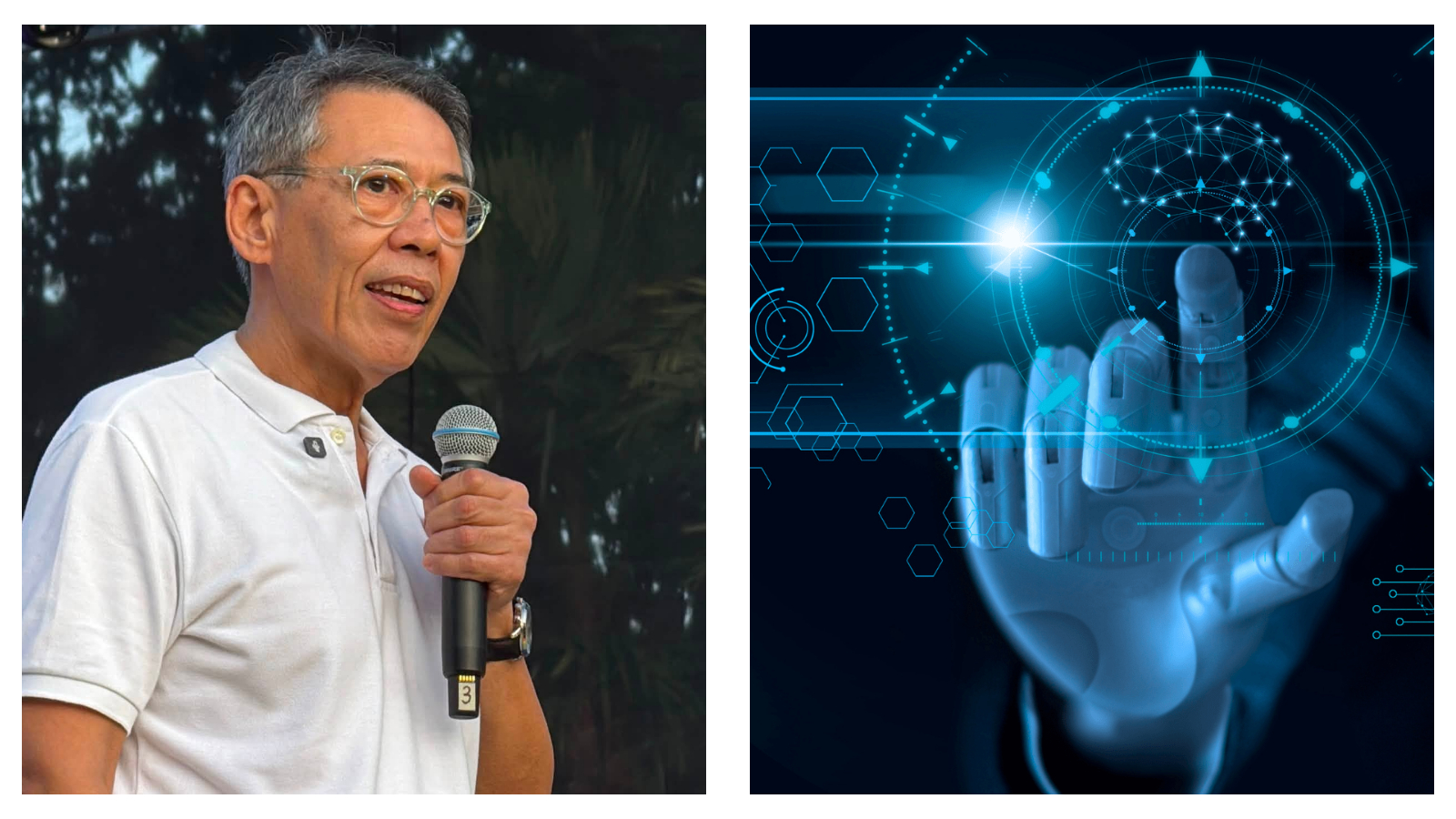
Akbayan Partylist Representative Chel Diokno once again seeks to establish AI governance in the Philippines with House Bill (HB) No 10362, or the National AI Governance Act.
The measure was authored by him and fellow Reps. Perci Cendaña, Dadah Ismula and Kaka Bag-ao.
It aims to establish a guideline for the responsible use of AI while protecting the public and workers affected by the technology.
Need for AI governance framework
Diokno filed the bill at the start of the House’s second regular session.
He cited the increasing prevalence of AI use among Filipinos, with data from the Philippine AI Report 2025 revealing that 92 per cent of local organisations have adopted the technology, while 54 per cent have been using generative AI for more than a year.
Diokno said that despite existing laws tackling online spaces, there is no unified framework that can tackle harmful AI practices in the country.
“At present, there is no unified national framework that establishes safeguards against harmful AI systems, protects workers from AI-driven displacement, guarantees transparency in automated decision-making, promotes AI literacy, establishes accountability standards, or creates institutional mechanisms for AI governance,” the lawmaker said, as reported by the Manila Bulletin.
“While we have the Data Privacy Act of 2012, the Cybercrime Prevention Act of 2012, and the Philippine Innovation Act, they only address certain AI-related issues and do not provide a complete framework for AI governance.”
READ MORE: Unsealed court documents reveal AI research company Anthropic’s destructive plans

AI Bill of Rights
The bill would establish an AI Bill of Rights to protect Filipinos from AI misuse through stronger privacy safeguards, protections against discrimination and greater accountability in the use of AI.
It would require transparency in high-impact AI systems and stronger privacy and personal data protections, including the right to be forgotten.
Additionally, the provision includes measures against discriminatory or abusive AI practices.
It would also oblige operators of AI facilities and data centres to meet environmental assessment and environmental compliance certificate (ECC) requirements.
They will also have to consult affected communities, disclose their annual energy and water consumption along with sustainability plans, and comply with infrastructure standards issued by the government agencies.
Furthermore, the measure would create an “Artificial Intelligence Multi-Stakeholder Advisory Council” to advise the government on AI policy, with members drawn from the public and private sectors, academe, labour, civil society, media and youth groups.
Offenders would face prison terms ranging from six months to six years, depending on the violation.
Public officials found liable may also be disqualified from holding public office.
ALSO ON NJN: Solar panels on UK balconies: The energy revolution we have been waiting for?

Worker protection
Meanwhile, workers affected by AI would receive reskilling and upskilling opportunities, workforce redeployment, labour transition support and social protection.
Under the bill, employers planning to deploy high-impact AI systems would have to notify affected employees and their representatives at least six months in advance.
They would also be required to explain in detail the system’s intended use, the work or business functions involved and its expected impact on employees.
The measure would also bar employers from using AI as the sole basis for evaluating or disciplining workers without human oversight.
It further prohibits the use of AI to evade labour laws covering security of tenure, minimum wage, employee benefits and the right to self-organisation.
READ NEXT: BookTok backlash: Is performative reading a problem?
 KC Maderia
  Andre Alfonso R. Gutierrez
  Rosemarie Zamora