
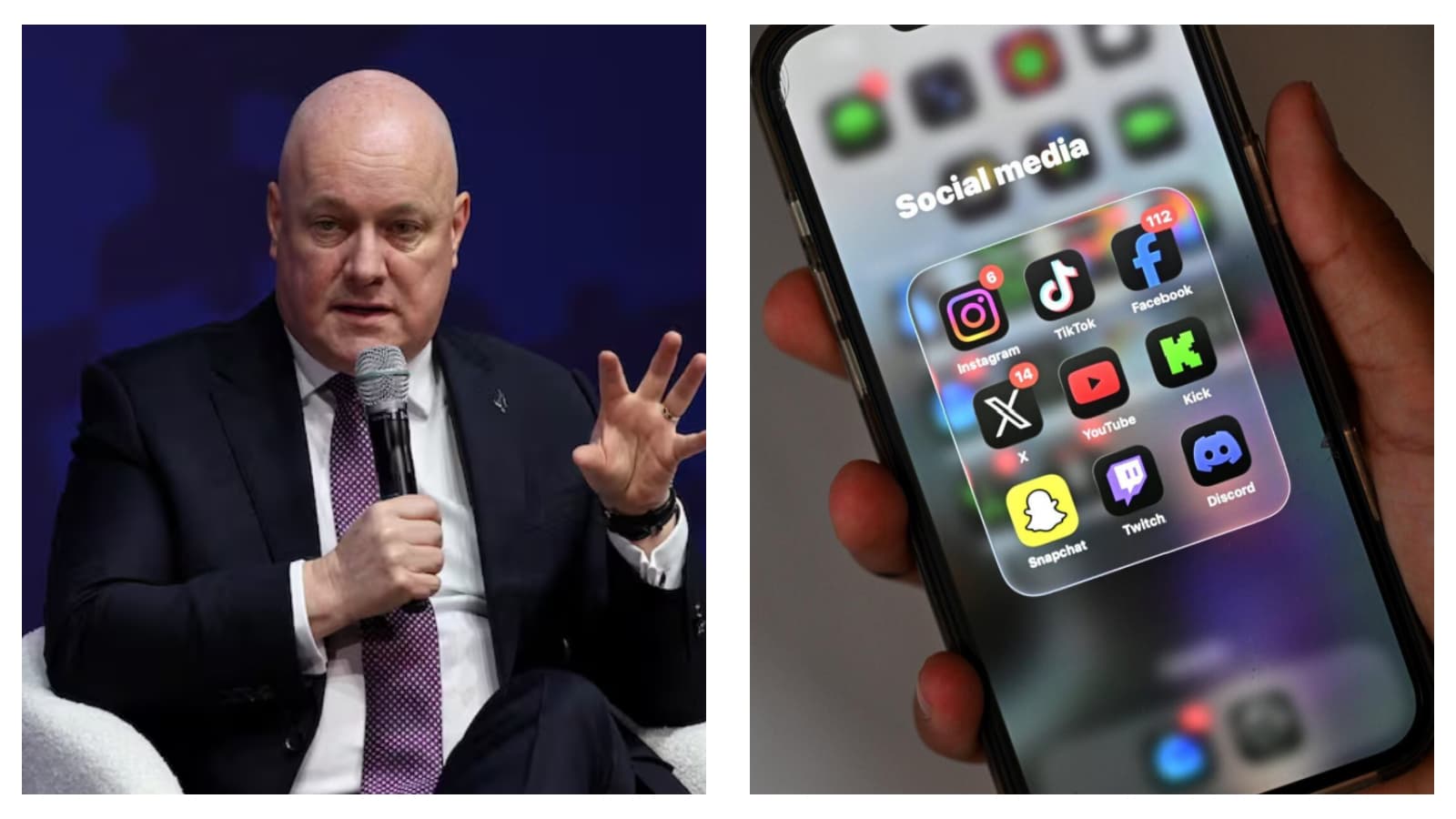
New Zealand is moving to restrict children’s access to social media, arguing that the risks posed by today’s platforms outweigh their benefits for younger users.
The government has introduced legislation that would prohibit children under 16 years old from holding accounts on major social media platforms, including Instagram, TikTok, Facebook and Snapchat.
Under the proposal, tech companies will be required to verify users’ ages and are subject to penalties of up to 10 per cent of their global revenue for non-compliance.
Why NZ wants a ban
Prime Minister Christopher Luxon said that the government could no longer ignore what it perceives as the harmful effects of social media on the younger generation.
In New Zealand, one in three teenagers aged 13 to 17 spends at least five hours a day on social media.
The government believes this exposes them to malicious content, addictive design features and pressures that affect mental health, sleep, education and family life.
How the law would work
To ensure age-limit compliance, companies would be required to take “reasonable steps” for verification, which could include existing account information, facial age-estimation technology, digital identity services and government-issued identification.
Moreover, the law would require platforms to conduct regular assessments of risks posed to children and publicly report how those risks are being managed.
The Department of Internal Affairs would oversee compliance and enforcement.
READ MORE: Social media addiction lawsuits: Are you more addicted to your phone than you realise?
Not everything online is affected
The proposed legislation does not apply to all internet services.
Instead, lawmakers suggest exemptions for services that primarily enable direct messaging, emails, phone calls, video calls, gaming, education, healthcare, music streaming, podcasts and professional networking.
The bill would, however, cover certain artificial intelligence–powered “social companions” designed to form emotional or personal connections with users.
This reflects the government’s attempts to target platforms driven by social feeds, engagement algorithms and recommendation systems.
Bill facing resistance from partners
New Zealand is following Australia’s landmark social-media restrictions that sparked debate about online safety, privacy and age limits.
Yet, the move faces significant political hurdles as both of Luxon’s coalition partners, ACT and New Zealand First, have indicated opposition.
Critics argue that teens may easily bypass restrictions and raise concerns about privacy implications tied to age verification programmes.
Main opposition party Labour has yet to commit its support to the legislation as it is reportedly seeking more details around enforcement and implementation.
YOU MAY ALSO LIKE: Film news: American filmmaker M. Night Shyamalan launches surprise YouTube channel
 Ciara Mina
  Rosemarie Zamora
  Jacinth Banite