
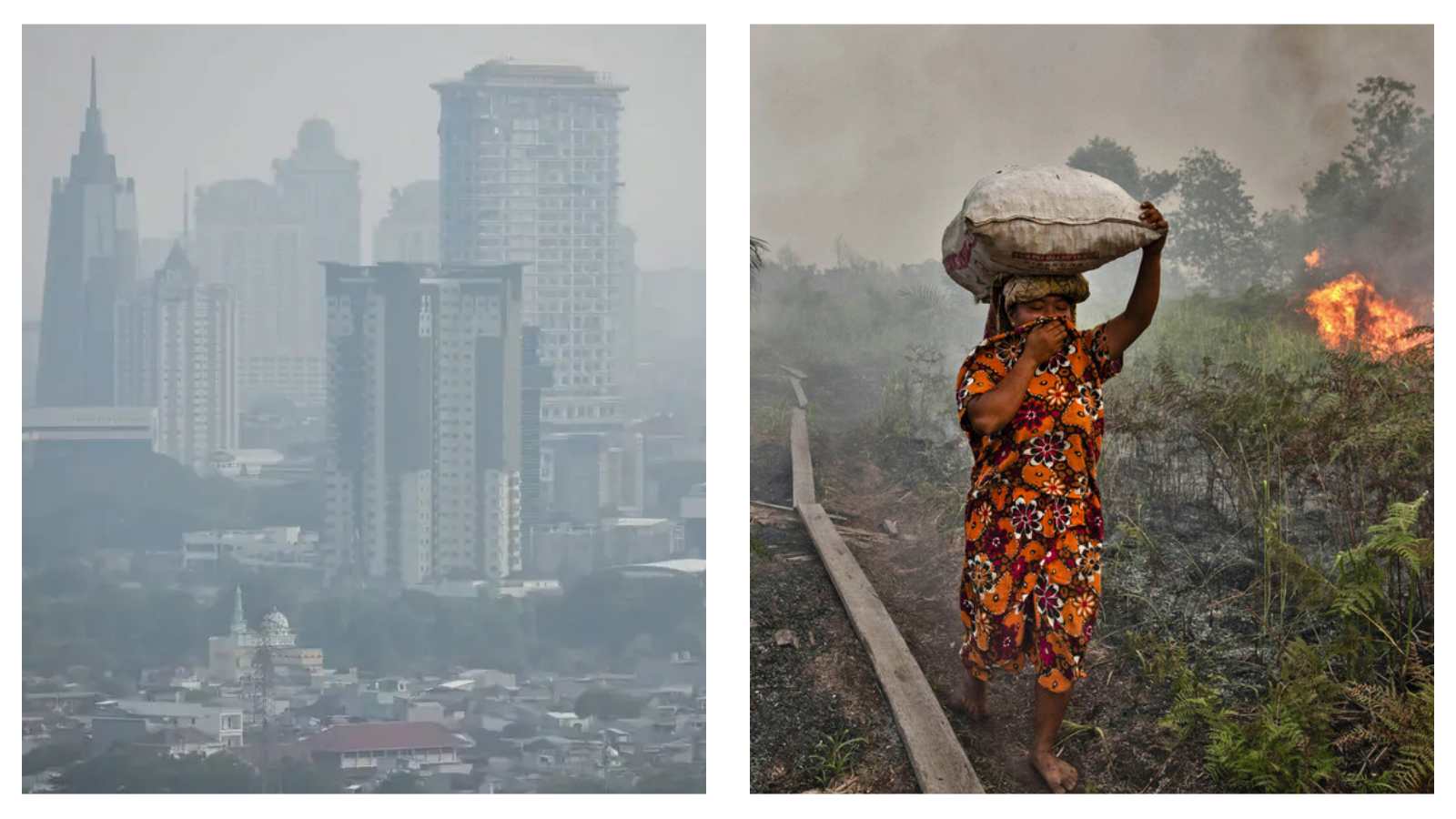
A sharp increase in respiratory illnesses has been recorded in parts of Southeast Asia, particularly in Indonesia, Malaysia, and Singapore as wildfires in Indonesia spread hazardous air pollution across the region.
How did the haze start?
The smoke and emissions from forests and peatlands in Indonesia, particularly in Borneo and Sumatra, caused the haze.
However, the widespread smoke has also affected Singapore and Malaysia, resulting in the forced closure of schools, disrupted air travel and raised concerns about the long-term health effects of exposure to polluted air.
Experts say haze crisis the ‘worst’ in Southeast Asia
The World Meteorological Organization (WMO) said the situation that the region has been experiencing is considered one of the worst transboundary haze episodes, with experts warning that the condition could persist for months unless winds and rainfall help contain the fires.
WMO’s Regional Office for Asia and the Pacific director, Ben Churchill, said the risk of wildfires in Indonesia is being worsened by the combination of dry-season conditions and El Nino, which he described as the “perfect storm” for the fires to spread.
Adding to the problem is the deforestation in the area. The clearing of forests for crops can drain underground water sources and dry out the soil, making the areas vulnerable to fires.
Respiratory illnesses double in affected Indonesian provinces
The haze that comes from Indonesia, which has also affected other neighboring countries, has led to more people suffering from respiratory illnesses as exposure to smoke continues.
In Indonesia, the Health Ministry said respiratory illness cases linked to the fires reached 283,270 across seven provinces as of October 13. The case was much higher than the 113,336 cases recorded on September 9.
Health experts stressed that prolonged exposure to haze pollutants can cause inflammation and pose a public health threat.
According to Juliana Jalaludin, a professor specializing in environmental health at Universiti Putra Malaysia, repeated exposure to pollutants could increase the burden of respiratory illnesses among future generations.
YOU MAY BE INTERESTED IN: China-North Korea border bridge to open, trade boost anticipated

Air purifier, other equipment in demand as families seek protection
As the smoke also reaches other parts of Southeast Asia, families are scrambling to buy medical equipment and other necessary tools as they try to protect themselves from the dangers of the haze.
Across the region, families are seeking appliances and equipment that can provide cleaner indoor air and support people experiencing breathing difficulties.
According to regional consumer electronics retailer Courts, more people are buying air purifiers for their homes, recording a 600% increase in sales between September 28 and October 12.
In Singapore, retailer Gain City also reported a significant rise in demand, with sales reaching nine times the level recorded at the beginning of the haze season in August.
In Malaysia, medical equipment supplier AA Alive reported a 35% increase in sales of oxygen equipment as demand for oxygen tanks and concentrators climbed.
Danger posed by the situation
The effects of the fire have extended well beyond Indonesia. In parts of Borneo and Sumatra, air pollution index readings have exceeded 1,000, far above the 300 threshold that is considered as hazardous.
In Singapore, the air quality has also deteriorated, with its one-hour fine particulate matter reading reaching 284 micrograms per cubic meter.
This entered the National Environment Agency’s “very high” band for the first time this year.
The danger caused by the haze situation has prompted authorities in Indonesia, East Timor and some Malaysian states to close schools.
Meanwhile, nearly 2,000 flights in Indonesia were also affected between August 11 and October 12.
Singapore’s Minister for Sustainability and the Environment, Grace Fu, warned that the air quality could reach hazardous levels.
READ NEXT: Nations face costly fight as El Niño threatens livelihood
 Ciara Mina
  Jacinth Banite
  Hazel Camba