
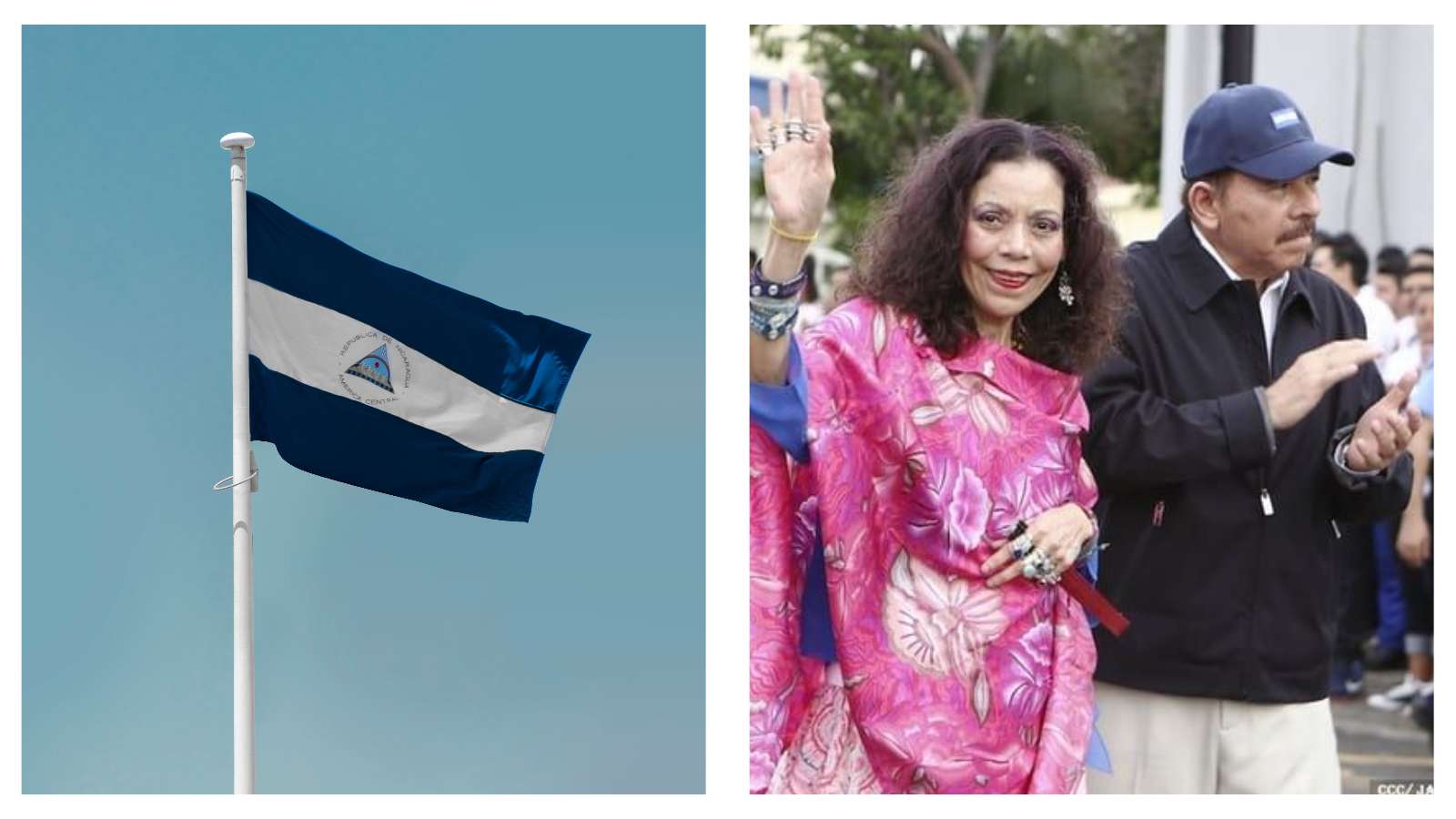
Nicaragua’s Congress approved a controversial constitutional reform in an initial vote on September 1 as part of broader efforts to consolidate the power of President Daniel Ortega and his wife, Rosario Murillo.
National Assembly leader Gustavo Porras announced that lawmakers had approved the reform “unanimously” during a special session held in front of León Cathedral.
Under the new law, the terms of co-presidents Ortega and Murillo, other elected officials, and the heads of the army and police will be extended from six to seven years, Reuters reported.
The extension effectively eliminates the election scheduled for November 2026, with the next polls postponed until 2028.
The reform will also prohibit opposition parties and opposition members allegedly involved in planning or carrying out a coup d’état, receiving foreign financing or facing international sanctions from participating in elections.
The move came after the Ortega-Murillo regime approved a prior amendment in 2025 that established the “co-presidency” and extended the presidential term from five to six years.
‘There won’t be any more elections’
The reform marks another victory for the ruling couple after Ortega declared in July that Nicaragua would not hold elections anytime soon, further signalling his efforts to extend his rule.
Speaking at an anniversary event marking the Sandinista Revolution that ousted the Somoza dictatorship in 1979, Ortega said Nicaragua would “never never never” hold future elections.
“There won’t be anymore elections. Parties put in place by the Yankees, put in place by the Somoza regime. Coming back to power – that story is over,” he said, as quoted by NPR.
The declaration dashed hopes of a democratic vote and a change in leadership in a country where most of the population has known only one president in their lifetime.
YOU MAY ALSO LIKE: Cambodia-Thailand maritime dispute heads to international mediation in Singapore
Changes show fear of dissent
Critics condemned the reform and Ortega’s remarks, saying they reflected the couple’s determination to cling to power and suppress dissent.
Juan Sebastián Chamorro, one of the government’s fiercest critics and a 2021 presidential candidate, said Ortega’s remarks reflected his plan to concentrate power within the Sandinista party.
Similarly, Tiziano Breda, a senior Latin America analyst at the Armed Conflict Location & Event Data project, said the moves demonstrated the regime’s fear of opposition parties that could threaten its authority.
“Ortega and Murillio are evidently afraid of the idea that the slightest political opening could create the conditions for dissent to manifest and threaten their grip on power,” he said.
Other Latin American countries, including Bolivia, Brazil and Chile, denounced Ortega’s remarks, describing them as another dramatic setback for democracy in Nicaragua.
US warns it will ‘isolate’ Nicaragua
Aside from mounting criticism, the United States warned that it will use the Organisation of American States (OAS) to “isolate” the Nicaraguan government following the controversial constitutional reforms.
US Secretary of State Marco Rubio said Washington would use the upcoming OAS meeting to urge member countries to stop doing “business as usual” with Nicaragua after the couple waged a “war on democracy,” Al Jazeera reported.
The warning came after the OAS agreed to convene a meeting to discuss the situation in Nicaragua, describing it as a “problem of an urgent nature and of common interest” to American states.
It remains unclear, however, whether the warning will derail Nicaragua’s constitutional reforms, which are widely expected to clear a second vote scheduled for January 18, 2027, given the current political climate.
Nicaragua withdrew from the regional body in 2022 after repeated criticism of the government over its human rights record.
Ortega-Murillo tighten grip on power
If the constitutional reforms clear the second vote, experts and analysts warn that the Ortega-Murillo regime could further consolidate its power while Nicaraguans face greater repression.
Ortega has ruled Nicaragua continuously since returning to power in 2007, while his wife has served as vice president since 2017 and was elevated to co-president in 2025.
During their tenure, the couple has targeted lawyers and civil society groups in a crackdown that has led to the closure of more than 5,000 organisations, the revocation of thousands of lawyers’ licences and the flight of thousands of Nicaraguans from the country.
Their rule has also been marked by severe human rights violations, democratic backsliding and the systematic suppression of political opposition as part of broader efforts to concentrate power within the government.
READ NEXT: Nicaragua targets lawyers in new crackdown
 Carmela Calling
  James Mario Ajero