
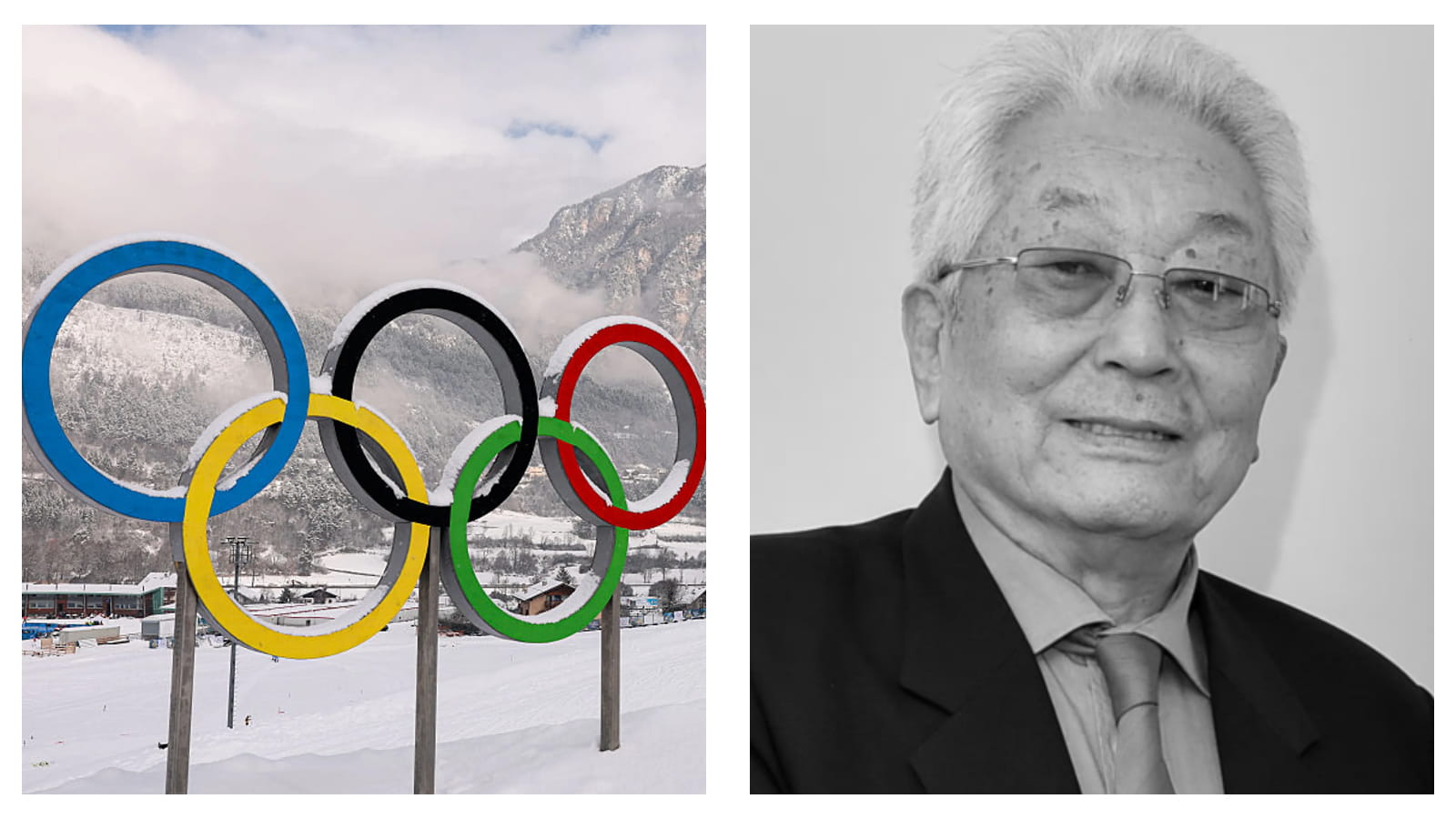
Chang Ung, the long-serving North Korean sports administrator who orchestrated the historic joint marches of North and South Korean athletes, has passed away at the age of 87.
The International Olympic Committee (IOC) confirmed his passing on Wednesday, noting that the Olympic flag would be flown at half-mast for three days at the Olympic House in Lausanne, Switzerland, in his honour.
Early career and athletic background
A graduate of the Pyongyang University of Physical Education and Sports, Chang began his career as the captain of the North Korean national basketball team from 1956 to 1967.
He then leveraged this athletic foundation into a distinguished career as a sports administrator, eventually holding key positions such as Vice Sports Minister and Vice Chairman of his country’s National Olympic Committee.
His influence reached across the region through his work as Vice President of the Olympic Council of Asia, a role that helped pave his way to becoming the nation’s sole IOC member in 1996.
READ MORE: Cycling news: Jonas Vingegaard sends warning to rivals in dominant Volta a Catalunya victory
Bridging the divide through sports
Chang’s legacy as a “bridge-builder” was defined by his ability to use sports as a neutral platform for diplomacy when official political channels were frozen.
He famously brokered the historic joint marches of North and South Korean athletes under a “unification flag” at the 2000 Sydney Olympics and the 2018 PyeongChang Winter Olympics.
As North Korea’s only-ever IOC member, he was the primary point of contact for nearly all inter-Korean sports negotiations.
After serving as an active member from 1996 to 2018, he was granted Honorary Member status upon his retirement.
In 2023, Chang was awarded the Olympic Order (the IOC’s highest distinction) in Mumbai for his extraordinary contributions to the Olympic movement.
The power of fair play
In a statement, IOC President Kirsty Coventry expressed “deep sorrow” over Chang’s passing and honoured the latter’s lifetime commitment to developing sport in the Democratic People’s Republic of Korea and fostering dialogue within the Olympic Movement.
“His efforts to promote co-operation on the Korean peninsula demonstrated the power of sport to build bridges and inspire hope,” she said, AFP reported.
In an era marked by political polarisation, Chang Ung’s work showcased sport as a catalyst for solidarity and peace.
He proved that while politics may draw lines, the spirit of fair play will always have a unique power to blur them.
READ NEXT: Stephanie McMahon makes surprise return, issues warning to Cody Rhodes
 Angelica N. Hall
  Kamille Q. Cabreza
  Geoffrey H. Latayan