
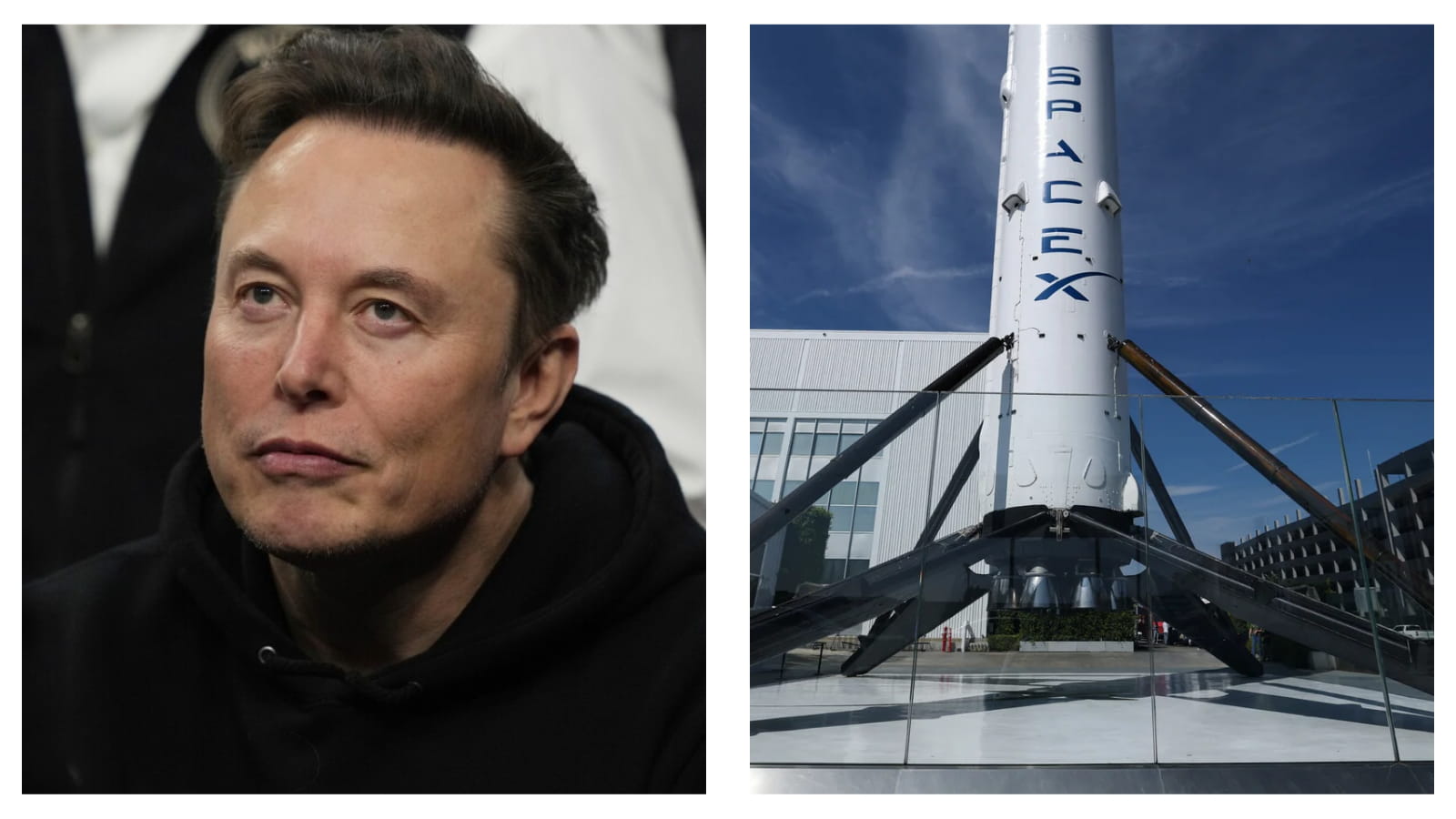
SpaceX has confidentially filed for an initial public offering (IPO) on the US market, according to reports from Bloomberg, the New York Times, the Wall Street Journal and Reuters.
Elon Musk’s rocket manufacturing and space exploration company has submitted registration documents to the US Securities and Exchange Commission (SEC), which would enable it to sell its shares on the stock market.
A “confidential” IPO allows a company to file its application with the SEC without initially disclosing sensitive information, giving it a few months to receive feedback and act on the Commission’s recommendations.
This option offers more flexibility and protects the entity against public scrutiny, speculation and privacy invasion in cases where amendments are necessary or if the IPO is no longer desired.
SpaceX breaks into trillion‑dollar valuation
According to different media outlets, SpaceX is poised to seek a valuation upward of $1.75 trillion, which would make its anticipated public debut in June one of the most significant securities listings in the world.
Bloomberg reported that SpaceX is expecting to raise as much as $75 billion — a figure set to surpass Saudi Aramco’s record-holder $29 billion market entry in 2019.
If all goes to plan, the Texas-based company would be the first to go public in a possible wave of mega-IPOs this year, ahead of rival giants OpenAI and Anthropic.
As it explored the possibility of launching an initial public offering, SpaceX acquired xAI — Musk’s artificial intelligence start-up — pushing the combined internal valuation to $1.25 trillion.
In a blog post, Musk said the merger “form[s] the most ambitious, vertically-integrated innovation engine on (and off) Earth, with AI, rockets, space-based internet, direct-to-mobile device communications and the world’s foremost real-time information and free speech platform”.
READ NEXT: US-Japan strikes multi-billion-dollar energy deal amid Pearl Harbor joke

Many believe the merger has positioned SpaceX as the world’s most valuable privately held company, encompassing the social media platform X, the xAI’s chatbot Grok, the satellite internet constellation Starlink and the self-landing rocket Starship, under its broader structure.
Over the past few years, SpaceX has established itself as a leader in the space industry through its innovative reusable rockets, designed to carry both satellites and crew, while pursuing its broader vision of reaching Mars and paving the way for human colonisation.
IPO idea driven by visionary projects
According to analysts, SpaceX’s orbital programs and multi-planetary life ambitions are key drivers behind the push for an IPO, as the company’s long‑term vision requires substantial cash flow.
“The sheer cost of compute, infrastructure, and energy is why we are seeing many… startups like SpaceX prepare to go public this year,” Emily Zheng, a senior analyst at PitchBook said.
Others believe the company has grown too much to remain private, claiming the richest person in the world would take advantage of the public’s appetite to own part of a Musk-run venture.
“Being able to participate in the leader of the space economy… generates an unknown multiple. Nobody really knows the ceiling on the space economy,” Shay Boloor, chief market strategist at Futurum explained.
YOU MAY BE INTERESTED IN: Economic shocks keep Filipino middle class on the edge of poverty

Despite all the hype around Musk, Reena Aggarwal, an IPO expert and Georgetown University professor, believes SpaceX would still need a steadier market climate that is receptive to new listings to successfully launch its public offering.
“You can have a great company, with great fundamentals and a lot of investor interest — and an IPO can still flop if the markets have turned south, if there’s too much volatility,” she added.
Recently, the war in Iran has unsettled global equities, sending oil prices soaring to levels not seen in the last couple of years.
Aggarwal hopes that the geopolitical pressure will subside by June, reducing the overall uncertainty to allow for a smoother IPO.
READ NEXT: Air Canada CEO steps down after criticism over condolence statement
 Carmela Calling
  James Mario Ajero