
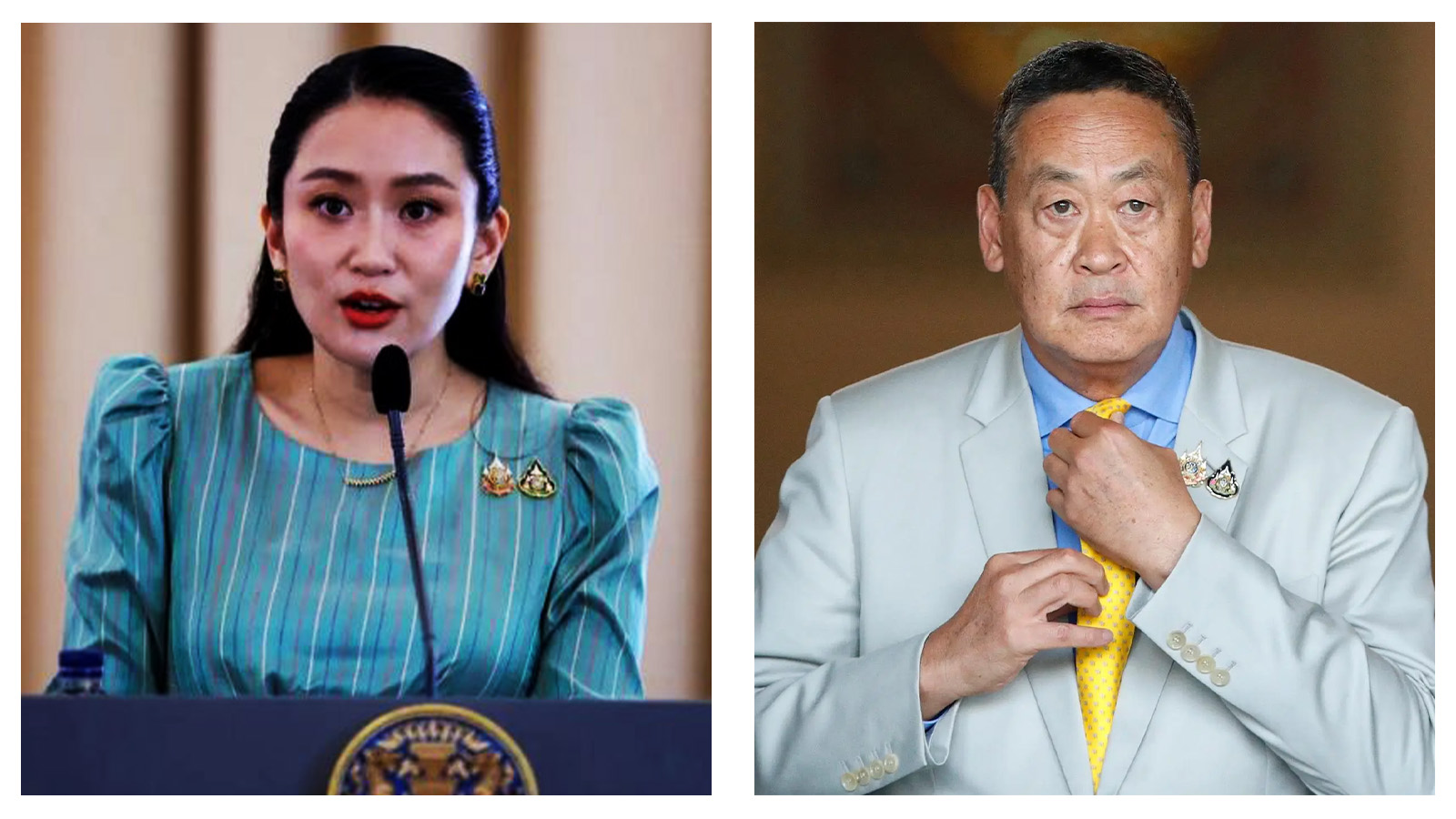
It was little more than a year ago when Paetongtarn Shinawatra rose to power as Thailand’s youngest and second-ever female prime minister at just 38.
But just like her father Thaksin and aunt Yingluck, Paetongtarn’s tenure came to an abrupt end – this time over an ethics case connected to a controversial phone call with former Cambodian prime minister Hun Sen.
Constitutional Court verdict
By a 6-3 vote, Thailand’s Constitutional Court ousted Paetongtarn from office on August 29 for violating ethical guidelines amid Thailand’s tense border dispute with Cambodia.
The same court suspended Paetongtarn on July 1 following a petition filed by 36 senators seeking her removal.
The petition stemmed from a nine-minute phone call leaked by Hun Sen himself on Facebook, which sparked protests attended by thousands in the capital, Bangkok.
In the call, Paetongtarn called the veteran Cambodian leader “uncle”, while referring to Lieutenant General Boonsin Padklang, commander of the Second Army Region in northeastern Thailand, as someone on the “opposing side” who “just wants to look cool”.
Hun Sen confirmed the phone call took place on June 15, more than two weeks after tensions between the two countries rose with the death of a Cambodian soldier in a brief border clash with Thai troops.
The two Southeast Asian countries have since agreed on a truce brokered by Malaysia.
With the verdict, Paetongtarn is the fifth Thai prime minister and the third from the influential Shinawatra dynasty to be ousted from office by the Constitutional Court since 2008.
Deputy Prime Minister Phumtham Wechayachai was tapped to take helm of the caretaker government until a new prime minister is elected by the 492-member House of Representatives.
After the hearing in Bangkok, Paetongtarn said she accepted the court’s verdict, but insisted that she only aimed to resolve the Thailand-Cambodia border dispute and save people’s lives.
“My intentions were for the benefit of the country, not for personal gain, but for the lives of the people, including civilians and soldiers,” she said in a statement quoted by Agence France-Presse.
“In a time like this, everyone must come together to contribute to our nation’s stability.”
YOU MAY BE INTERESTED IN: Malaysia backs China’s governance plan, slams UN’s ineffectiveness

Legal challenge
Four days after the ethics hearing, Paetongtarn’s defence team submitted a petition before the Constitutional Court challenging what they described as an “unlawful” verdict.
Her lawyers alleged that Sarawut Songsivilai was royally appointed a Constitutional Court judge, replacing Panya Udchachon on August 29, the same day the verdict against Paetongtarn was delivered.
They argued that Panya, whose nine-year term lapsed the same day, should not have participated in the hearing.
Twenty members of the Pheu Thai party also asked House Speaker Wan Muhamad Noor Matha to raise similar concerns to the Constitutional Court.
But the court insisted that Sarawut’s appointment did not influence the verdict, as he had not assumed judicial duties that day, according to news website Thai Enquirer.
It added that Sarawut still has to take an oath before King Maha Vajiralongkorn before assuming office.
YOU MAY ALSO LIKE: US, Russian officials discuss energy deals alongside Ukraine peace talks
Who are the candidates for new Thai PM?
Paetongtarn’s ousting has opened the search for a new prime minister, with a vote in the lower house expected on September 5 after the caretaker government’s bid to dissolve parliament was rejected.
Five candidates are eligible for the top post, all nominated by their parties for the 2023 elections.
They are:
:: Chaikasem Nitisiri, a former attorney-general from Paetongtarn’s Pheu Thai Party;
:: Anutin Charnvirakul, a former deputy prime minister and interior minister and incumbent leader of the Bhumjaithai Party (BJT);
:: Pirapan Salirathavibhaga, deputy prime minister and energy minister and leader of the United Thai Nation party;
:: General Prayut Chan-o-cha, a former prime minister who retired from politics in 2023;
:: Jurin Laksanawisit, a former deputy prime minister from the Democrat Party.
Ahead of the vote, Anutin – known for lobbying the legalisation of medical cannabis in Thailand – claims to have secured support from 146 BJT members in parliament, while the main opposition People’s Party said its 146 members will vote for him.
When combined, this number is higher than the 247 votes required to be elected prime minister under Section 159 of the Thai Constitution.
READ NEXT: Panama moves closer to modernising ship registration regime
 Ciara Mina
  Rosemarie Zamora
  Jacinth Banite