
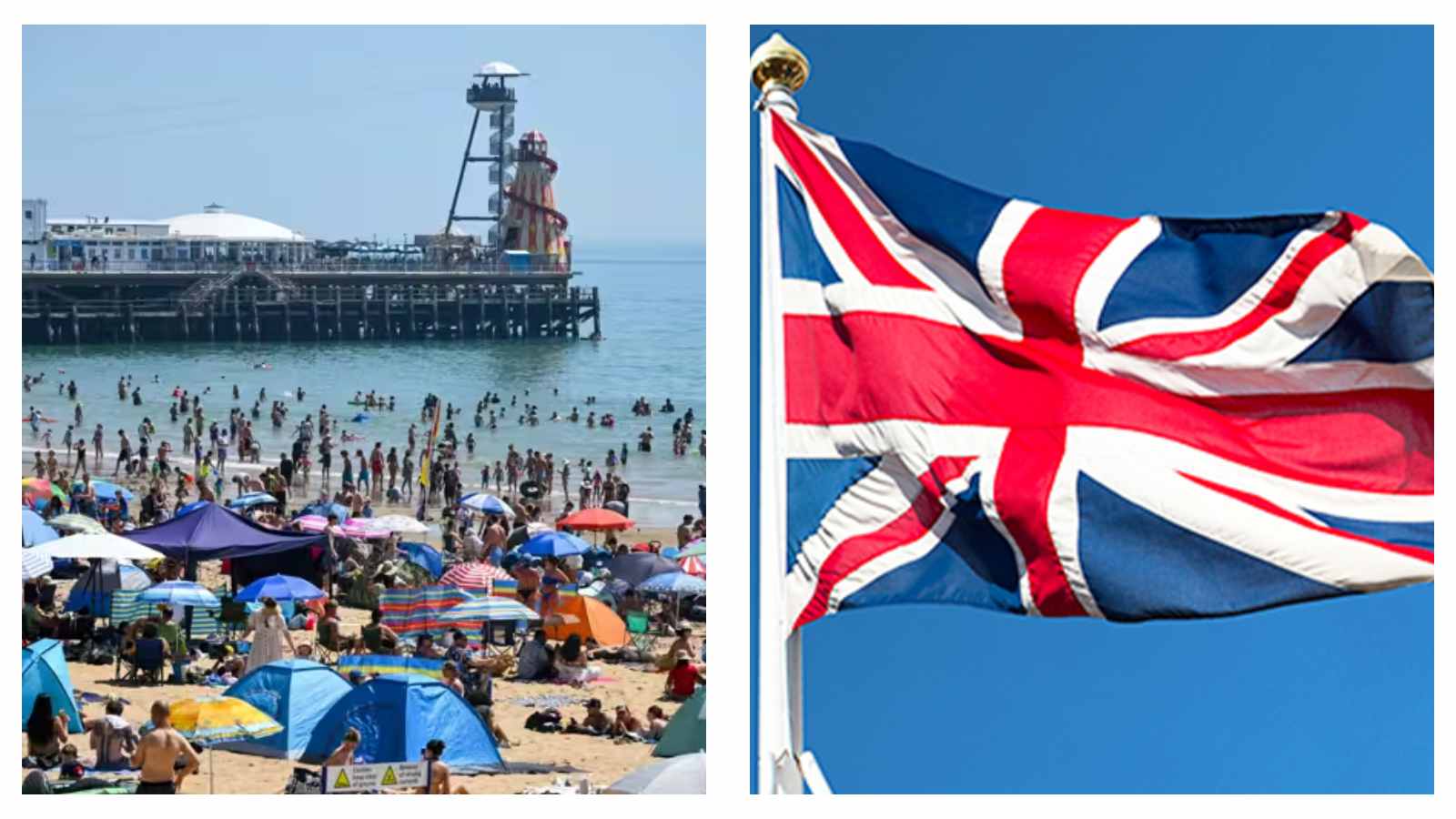
The latest UK heatwave – which saw the record for highest temperature in May exceeded for two days in a row – has ignited discussion about how the country’s infrastructure, built to withstand the cold, can cope in a heating climate.
For the first time during the month of May, a temperature of 35.1 degrees celsius was recorded at Kew Gardens in London on Monday, May 25.
It came just a day after 34.8 degrees celsius was detected, smashing the 32.8 degrees celsius record previously set in 1944.
The current heat wave is also linked to at least six deaths.
Is air conditioning banned in the UK?
During the last major heatwave in 2022, where temperatures reached over 40 degrees celsius, it is estimated that over 3,000 people died directly or indirectly as a result.
Studies show air conditioning can cut down heat-related deaths by up to 75 per cent – despite this, less than 5 per cent of homes in the UK have air conditioning.
Britain’s Conservative Party this week announced they would overturn an effective ban on AC units in new-build homes, with shadow energy secretary Claire Coutinho pledging to axe “outdated building regulations” which force people to “sweat it out”.
Introduced in 2021, current regulations for building new homes means air conditioning may only be installed “as a last resort” to help meet Britain’s ambitious net-zero target.
AC units use a considerable amount of electricity and can exacerbate heatwaves in cities due to the urban heat island effect, creating a feedback loop where more people use and turn up their air conditioning.
Green campaigners point to the transition to renewable energy, particularly solar, as a possible solution.
MORE FROM ADAM PEAKER: ‘Timmy’ the whale meets tragic end despite rescue efforts

Minimum – but no maximum working temperature
On the other side of the political spectrum, last week unions began calling for a maximum working temperature after a report by the Climate Change Committee (CCC) outlined its recommendations to the government for managing heatwaves, floods, and droughts.
GMB says it makes “no sense whatsoever” that the UK has a minimum, but not a maximum temperature limit for workers. The current minimum is 16 degrees celsius, or 13 degrees celsius for physical work.
“Being too hot at work puts people’s health at risk and leads to poorer performance and lower productivity,” added Unison assistant general secretary Jon Richards.
The CCC did not specify a limit, but pointed to Spain, where the heat ceiling is 27 degrees celsius for office work and 25 degrees celsius for light physical work.
Adapting to the changing climate
The CCC says it also considers the rollout of air conditioning and other ways of cooling in schools and hospitals the “highest priority”.
“We need to recognise that there are aspects of our British way of life which are now really under threat from climate,” says Baroness Brown, chair of the CCC’s Adaptation Committee.
It argues that the “UK was built for a climate that no longer exists today” and that the government should “prioritise adapting to the change of climate”.
Much of Britain’s housing stock is over a century old and was built to retain heat.
More contemporary schemes have also focused on insulation to bring down heating bills in winter – but there has been little to help cool them down during summer.
The latest record-breaking heatwave will certainly leave many with pause for thought – although it is unclear whether this will change the trajectory of government policy designed solely to combat climate change, not adapt to it.
READ NEXT: Chances of ‘super’ El Nino increase as experts urge world to prepare
 Ciara Mina
  Rosemarie Zamora
  Jacinth Banite