
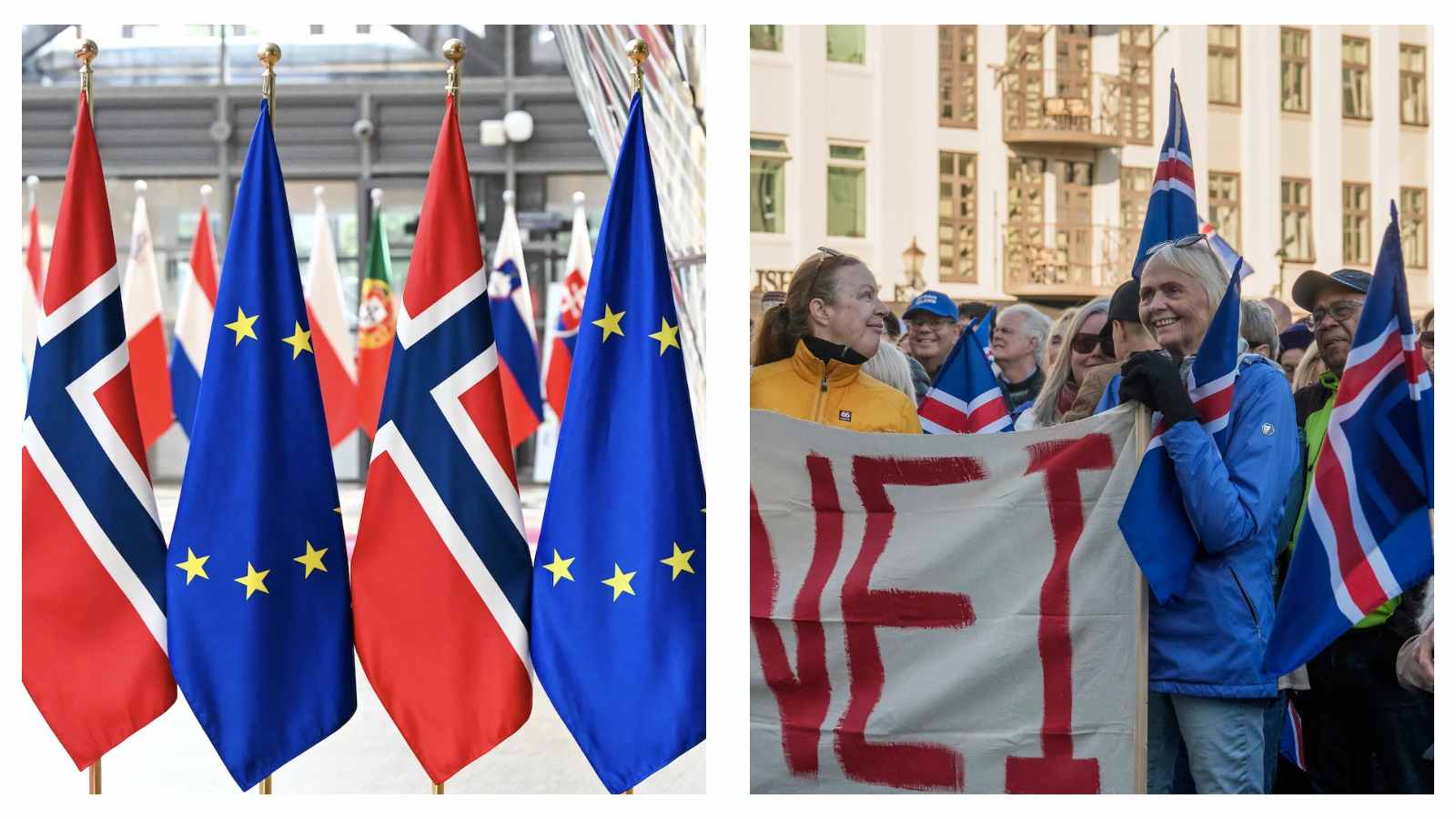
Iceland will remain outside of the European Union for at least until 2028, as its citizens voted to reject the resumption of membership talks in a weekend referendum.
Voting took place in all six constituencies of Iceland on Saturday, August 29, surrounding a government proposal to restart the negotiation process on Reykjavík’s accession to the EU, which has been on pause since 2013.
The development comes against the backdrop of rising geopolitical tensions and economic challenges.
The poll on Saturday zeroed in on one simple, yet crucial question: “Should Iceland resume accession negotiations with the European Union?”
Official results showed on Sunday that nearly 53 percent of the voters answered “No”, while some 47 percent said “Yes”, a telling sign that the Nordic country of 400,000 people is still not ready to talk about joining the political and economic alliance of 27 nations.
‘Victory for democracy’
Prime Minister Kristrun Frostadottir, who favoured the proposal to resume talks with Brussels, told reporters on Sunday that she did not see the referendum’s outcome as a “setback” for the government, but rather as “a victory for democracy”.
The premiere pointed to the high voter turnout on Saturday, which was at 82.5 percent, the highest since the country’s parliamentary elections in April 2009.
Despite the non-binding nature of the referendum, Frostadottir vowed to respect the citizens’ decision, noting that her government “will not go forward” with EU accession talks.
The PM, however, did not rule out future attempts to re-open the issue under her term, which is bound to end in two years.
“Something big has to change in the next 24 months for this to be at the top of the agenda,” she said.
Frostadottir reportedly exchanged messages with European Council President Antonio Costa regarding the result of Saturday’s referendum.
Costa’s spokesperson said “both leaders expressed their desire to continue to strengthen the relationship between the EU and Iceland,” as quoted by Euro News.
In a brief statement on Sunday, the European Commission said “it takes note of the outcome of Iceland’s referendum,” adding that it “respects the choice of the Icelandic people”.
“Iceland remains a close partner of the European Union,” it said.
YOU MAY ALSO LIKE: Kuwait faces backlash after barring naturalised citizens from voting
For liberty and fish
Brussels has for more than a decade eyed Iceland’s membership for layers of reasons, with wanting to expand its list of ultra-wealthy member states and presence in the strategic Arctic region being the most apparent.
Taking in another rich nation would make it more palatable for the bloc to take in less wealthy countries, thus having Iceland as a member would provide the EU a greater avenue for positive enlargement, according to political analysts.
On the flipside, EU integration would bring Reykjavík a thick security blanket in the face of escalating the Russia-Ukraine war, and US President Donald Trump’s threat to take over neighbouring Greenland.
But joining the block would also entail major changes in various policy areas, including economic and legislation, which is widely seen by the people of Iceland as a threat to the country’s sovereignty.
Another point of contention is the threat to the country’s fishing industry, as joining the EU might undermine autonomous control over national waters, as implied in the bloc’s governance framework.
Fishing is one of Iceland’s biggest industries, accounting for 15 percent of gross domestic product (GDP) in direct and indirect contributions, and some 40 percent of export revenue, according to government data.
Despite earlier offers of compromise from Brussels, stakeholders of Iceland’s fishery sector remained strongly opposed to the idea of joining the EU, with 90 percent of the companies rejecting the proposed integration, according to an earlier poll.
READ NEXT: Cameroon welcomes Paul Biya back after prolonged absence
 Ciara Mina
  Rosemarie Zamora