
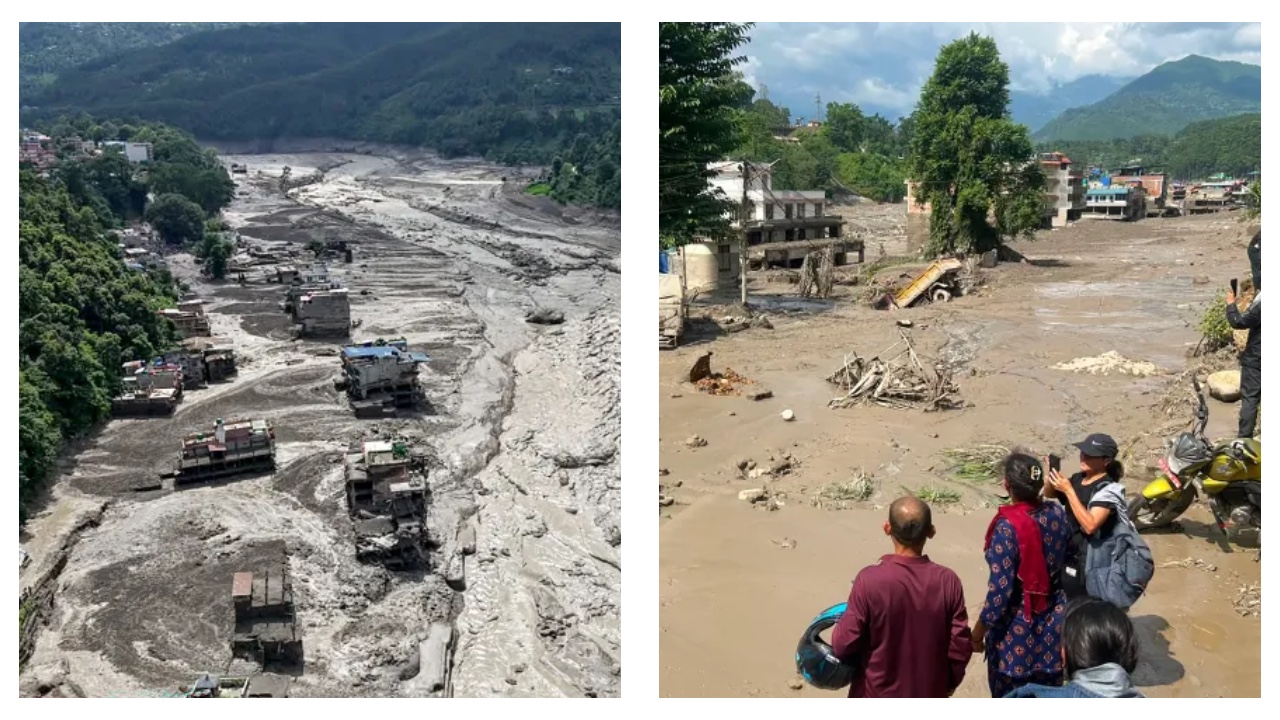
The latest flooding along the Nepal-Tibet border has raised a troubling question for disaster planners: are existing warning systems equipped to detect disasters that begin with a collapsing mountain rather than rainfall?
What initially appeared to be another catastrophic flood may have involved a far more complicated chain of events – including the collapse of rock and glaciers high in the mountains, followed by a torrent of water, mud and debris that raced downstream into settlements and infrastructure.
Bedrock failure caused disaster
Scientists examining satellite imagery after the August 26 disaster said that the destruction may have been triggered by a large-scale collapse of rock and ice near Langtang Lirung, rather than a conventional river flood alone.
Satellite images showed that part of a glacier had broken away along with a much larger section of underlying mountain bedrock.
“It looked like there was not only a glacier that had failed, but a much larger chunk of bedrock of the mountainside itself that had given way,” geomorphologist Dan Shugar told the Associated Press.
“You have the big bedrock failure that took part of the glacier with it,” he explained.
The collapse sent massive quantities of rock, ice and debris into a steep valley.
Resulting water and mud accelerated downstream, flooding communities and infrastructure along the Bhotekoshi and Trishuli river systems.
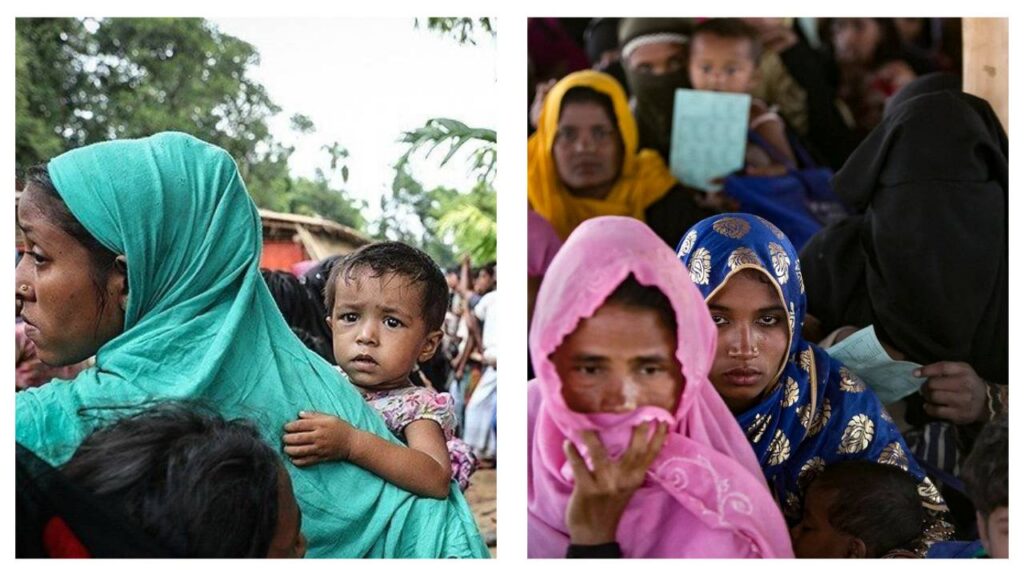
READ MORE: Rohingyas urge world to ensure security in Myanmar’s Rakhine
Experts urge new risk strategy
The findings are adding urgency to calls for Nepal to overhaul its hazard monitoring system in the rapidly changing Himalayas.
It renewed warnings from Himalayan experts that disasters can no longer be assessed through isolated hazards such as rainfall or flooding.
“Ground-level information on glacier melt, glacial lake conditions, landslide risk and extreme rainfall impacts must be available,” disaster management expert Basanta Adhikari told Nepali daily My Republica.
Adhikari said that cameras, seismic sensors, satellite data and other observation technologies shall be utilised to collect critical clues before a major collapse reaches downstream settlements.
Additionally, continuous monitoring of glaciers, unstable slopes, permafrost and river systems in high-risk areas should be practised to help mitigate such disasters.
“Climate change mitigation is beyond Nepal’s immediate control. But preparedness, monitoring and adaptation are areas where Nepal can act now,” he said.
MORE INTERNATIONAL NEWS: Falsified missing-persons case fuels rumours, rattles Jeju tourism
Warming climate poses potential risks
Climate change is complicating the picture.
Rising temperatures are melting glaciers and weakening permafrost that can help stabilise high-altitude rock and ice.
Mountain geographer Alton Byers said that warming trends are increasingly creating conditions for cascading disasters.
“In this case, the permafrost that for millennia has helped to hold together high-altitude rock and ice and soil and glaciers is now weakening and becoming unstable,” he told AP.
Scientists, however, caution against drawing a direct link between climate change and this specific collapse.
Slopes can fail naturally, although warming is expected to increase the likelihood of such events.
“While we cannot at this point directly link this collapse to climate change, it is not unexpected to see more events of this type with a warming climate,” said geomorphologist Kristen Cook.
READ NEXT: Philippine EVolution: ‘E-trike’ promise meets supply chain reality as EV industry grows
 Ciara Mina
  Rosemarie Zamora
  Jacinth Banite