
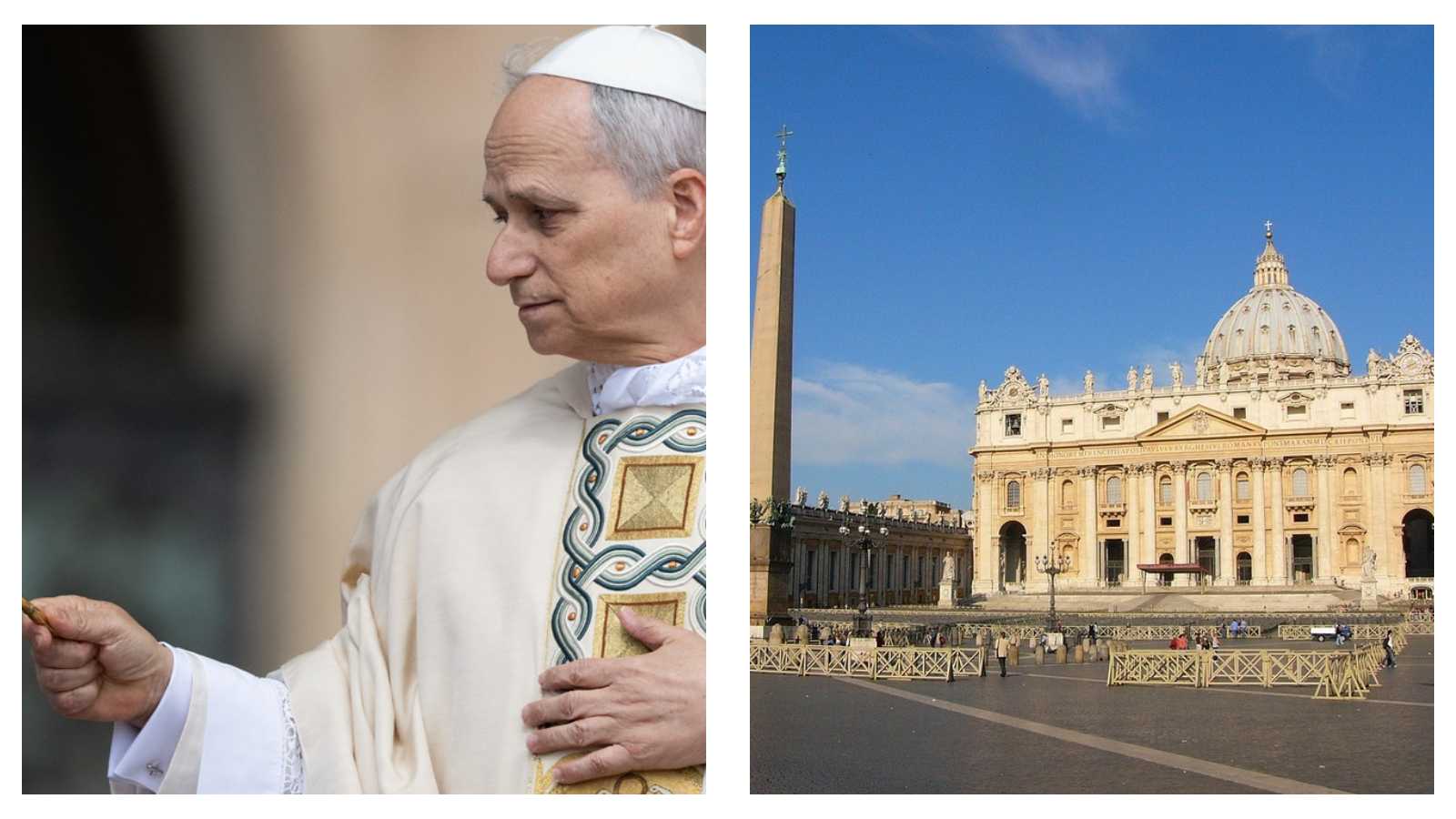
The Vatican hosted a roster of seasoned and award-winning writers from across the globe on June 24th to commemorate the 100th founding anniversary of the Liberia Editrice Vaticana, the Holy See’s publishing house, which was established 1926.
The commemorative ceremony saw Pope Leo XIV reflect “on the importance of books and of writing,” which he described as “a form of human expression,” in which writers “serve as teachers and as role models.”
“Writing, as you know, is an act of truth, of revelation, for it reveals who we are, what we believe and hope for, the world we strive toward and the future of which we dream,” the head of the Roman Catholic Church told the gathering inside the Capitolare Hall of St. Peter’s Basilica on Wednesday.
Literature, the Pope underscored, “encompasses the full spectrum of human experience,” and the consumption of which allows the development of “imaginative empathy that enables us to identify with how others see, experience and respond to reality.”
“Without such empathy, there can be no solidarity, sharing, compassion, or mercy,” he said, citing a previous remark from Pope Francis.
‘We need you’
In his message to the guests, Pope Leo quoted another late Catholic pontiff, Saint Paul VI, who told all the artists in a May 1964 homily: “We need you.”
“We need your imagination, your narrative creativity and your lively thinking,” Pope Leo continued.
“We need these to create spaces of freedom and authenticity, within which divine grace can make the promise of consolation and peace resound,” he said.
Concluding his speech, the Bishop of Rome thanked the writers “for every time you have sown seeds of reconciliation, of encounter and of friendship.”
“For this reason, I encourage you in your work and gladly invoke the Lord’s blessing upon you and your loved ones. Thank you.”
READ ALSO: Norway tightens AI use in schools as learning concerns grow
The guestlist
Among those in attendance during Wednesday’s ceremony were Nobel Prize laureate Jon Fosse, a Catholic convert and one of Norway’s most decorated writers, along with Pulitzer Prize winners Elizabeth Strout and Marilynne Robinson of the United States, according to National Catholic Reporter news agency.
Another American novelist Jonathan Safran Foer, who wrote “Everything Is Illuminated,” which is now a motion picture, and Ireland’s Colum McCann, winner of the US National Book Award for Fiction, were also among those who met the Pope.
Speaking with OSV News, Strout, who won the 2009 Pulitzer Prize for Fiction for her novel “Olive Kitteridge,” described the Vatican experience as “absolutely lovely.”
She validated Pope Leo’s observation about the connection of writing and sense of humanity.
“Only through writing are we ever allowed into somebody else’s head,” Strout said.
“That’s the only way we can ever know what it’s like to be another person. And in that way, we can feel a lot less lonely,” she added.
‘Magnificent Humanity’
It has been Pope Leo’s latest effort to acknowledge the significance of human creativity and authenticity in art — consistent with his stance against artificial intelligence (AI), which is widely considered a major threat not only to one industry but to humanity as a whole.
In his first encyclical published in May, Pope Leo took aim at the deepening integration of AI into people’s daily lives, and drew distinction between human beings and machines.
“So-called artificial intelligences do not undergo experiences, do not possess a body, do not feel joy or pain, do not mature through relationships and do not know from within what love, work, friendship or responsibility mean,” the 200-page document, entitled “Magnifica Humanitas” (Magnificent Humanity), reads.
Pope Leo therefore lamented a “special appeal” to AI developers, underlining the “ethical and spiritual responsibility,” they bear, “for every design choice reflects a vision of humanity.”
“To disarm does not mean rejecting technology, but preventing it from dominating humanity,” he said.
READ NEXT: ‘Ratatouille’ sequel off the table, director Brad Bird says
 Elan Castanares
  Newsjustnews writers
  Mary Mae Balasanos