
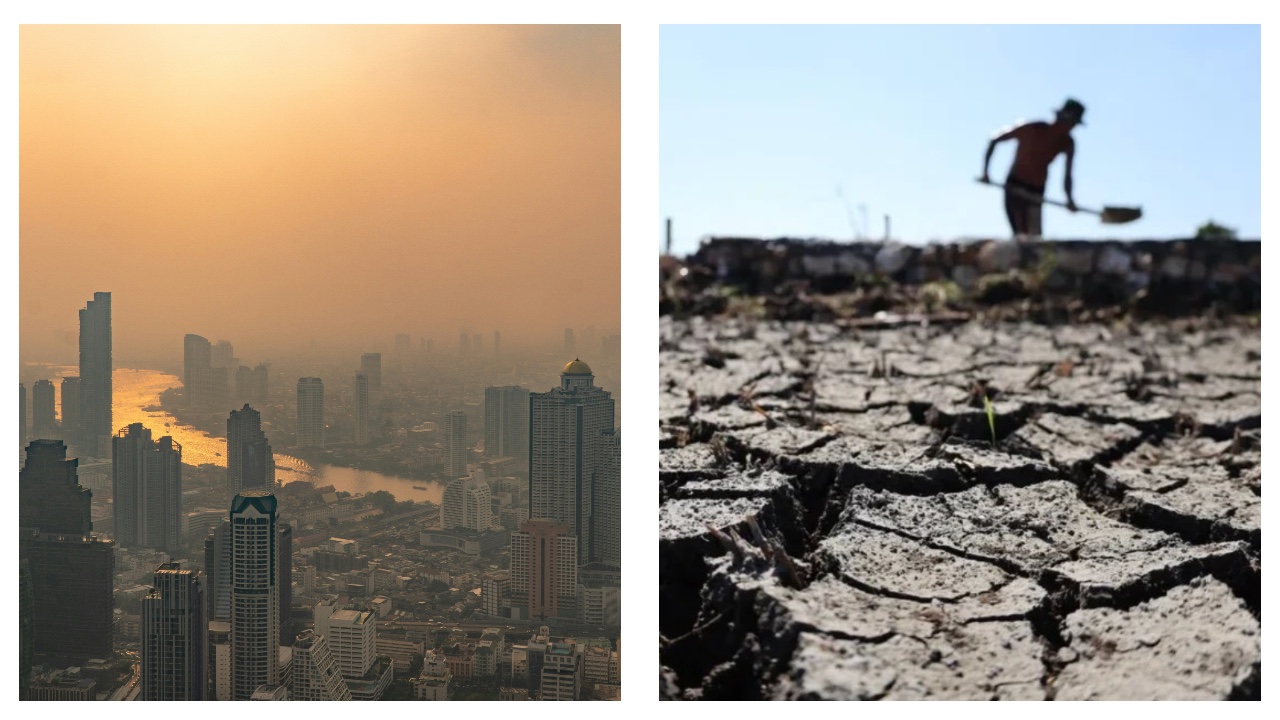
The scorching heat of El Niño is expected to strengthen from August to October, according to the ASEAN Specialised Meteorological Center (ASMC) on Tuesday.
Living in Southeast Asia means being used to the sweltering weather.
However, the threat of a “super” El Niño is requiring the member states to be prepared.
“El Niño conditions tend to lead to an increased chance of below-normal rainfall for much of the southern ASEAN region during August-October,” said ASMC in a statement, as quoted by The Star.
ASMC’s recent seasonal outlook reported that the conditions of El Niño are currently happening, and the forecast shows that it will be much more intense in the following months.
Warnings for plunged dryness, along with stronger southeasterly and southwesterly winds that cause heightened hotspot activity and transboundary haze risk, were raised by the center.
YOU MAY ALSO FIND INTERESTING: Europe scorches under relentless heat

El Niño’s domino effect
Research institution ISEAS – Yusof Ishak Institute recommended the ASEAN member states (AMS) to have a “different” approach to the looming heat, as the domino effect can easily impact both the micro and macro levels of economies.
Elyssa Kaur Ludher and Paul Teng of ISEAS’ publication, Fulcrum, warned that “the old single-hazard El Niño playbook” will not work if AMS wants to stay food secure.
While Southeast Asia is rich in food resources, the warning lies within the affordability and access.
Beyond scarcity alone, it was highlighted that price surges will be fueled by climate emergencies, unstable input costs, supply chain disruptions, trade restrictions, hoarding, or panic.
The Philippines was an example where the country declared a national food security emergency in February 2025, due to extremely high food prices and despite a good amount of global supply.
READ MORE: Philippines news: Filipinos remain divided over Pax Silica project

An ASEAN-wide impact
Among the countries listed as the most vulnerable are the Philippines, Indonesia and Malaysia, where currencies are weak and dependency on imports, especially rice, is sky high.
Although Southeast Asia is traditionally equipped to handle the effects of an El Niño event, thorough preparation remains crucial to mitigate compounding food shocks.
Teng and Ludher recommended that ASEAN should collaborate to help each other, giving light to the new ASEAN Food, Agriculture and Forestry Sectoral Plan 2026-2030, as a valuable framework in times of need.
READ NEXT: Floating igloo sets sail to unlock Arctic’s secrets
 Carmela Calling
  James Mario Ajero