
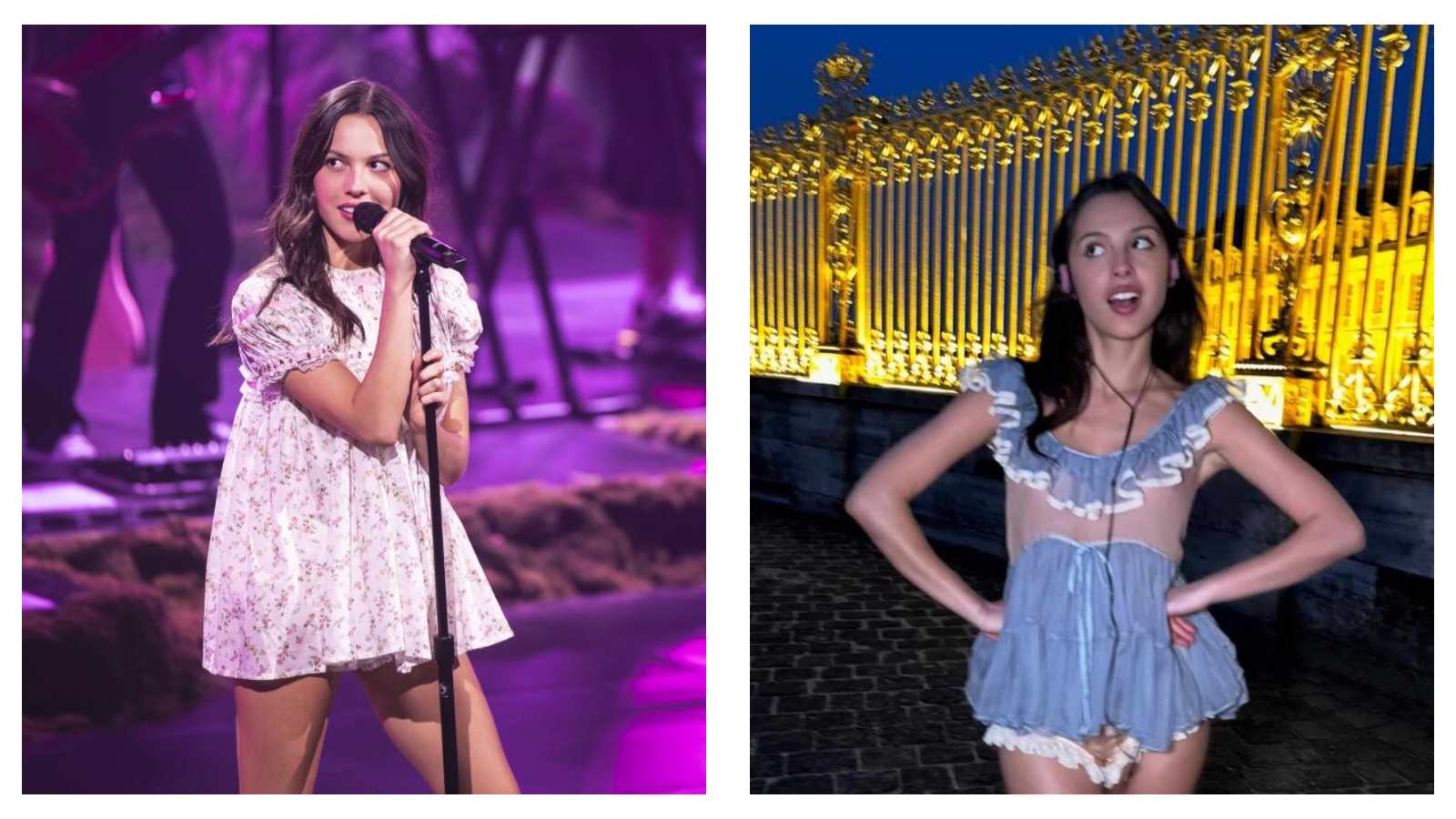
Pop star Olivia Rodrigo recently spoke out against the controversial babydoll dress backlash in a candid interview with The New York Times’ Popcast podcast, highlighting that outrage over a fully covered dress exposes how culture normalises pedophilia and blames girls for male desire.
The “Driver’s License” hitmaker released the music video for her latest single “Drop Dead” in which she runs through the Palace of Versailles wearing a pink-and-blue ruffled babydoll set.
Then on May 8, she wore a similar dress with knee-high boots during a live performance in Barcelona ahead of her upcoming album set for release in June.
Babydoll dress backlash reflects normalisation of ‘pedophilia culture’
Rodrigo was drawing inspiration from subversive feminist and punk fashion from the 90s, however, internet critics were quick to slam the stylistic decision on the basis of sexualising child-like imagery.
Critics in comment sections accused the 23-year-old of performing the Lolita trope and infantilising herself for the male gaze. Several comments even referred to her as ‘pedo bait’.
In an interview with The New York Times Popcast on May 28, she defended the dress, calling the criticism disturbing.
“I have worn outfits that are maybe revealing on stage, like I’ve been on stage in a sparkly bra and little shorts – which is my right – that’s fun,” she said.
“I felt cool and comfortable in that, and that wasn’t inappropriate, but me fully covered up in a dress that people deemed to be, like, childlike was inappropriate, and I think it shows how we really normalise pedophilia in our culture.”
Rodrigo further decried the criticism as rhetoric that girls are fed from a young age, “which is ‘don’t wear that, because then a man is going to sexualise your body, and it’s your fault’ – it’s so weird.”
YOU MAY ALSO LIKE: Spotify, Universal Music Group announce AI-powered covers and remix feature

The 1990s kinderwhore style
Rodrigo said she didn’t think she looked ‘sexy’ in the babydoll dress; she was going for a cool look drawing from icons such as Kathleen Hannah or Courtney Love, musicians whom the pop star said are her heroes.
Rodrigo’s babydoll ensemble was reflective of the kinderwhore aesthetic of the 1990s, popularised by punk girls like Bjelland, Courtney Love and Allison Wolfe, who took clothing items perceived as innocent – puffy sleeves, Peter Pan collars, the babydoll and pop socks – and transformed them into symbols of rebellion.
They tore up and defaced the fabric, paired outfits with smeared red lipstick and smudged mascara while playing music characteristic of “angry girl music of the indie rock persuasion”.
The kinderwhore style was deliberately provocative and inherently political, crushing hyper-feminine fragility by removing the babydoll dress from its domestic context and transfiguring it into the “wayward woman’s uniform”.
“I just think if we start dressing in a way that’s like, ‘Oh, I don’t want some f***ing freak to think that I am sexy like a baby’ or some crazy thing like that, I think it’s losing the plot a little bit,” Rodrigo continued.
“I’m very protective of younger women and girls, and I don’t ever want them to be fed that rhetoric.
“You shouldn’t be responsible for some guy sexualising you in a way that was never your intention.”
Her third studio album, “You Seem Pretty Sad for a Girl So in Love”, which features hit singles “Drop Dead” and “The Cure”, is set for release on June 12.
READ NEXT: TV news: The Testaments season 2 officially confirmed by Hulu after breakout debut
 Ciara Mina
  Rosemarie Zamora
  Jacinth Banite