
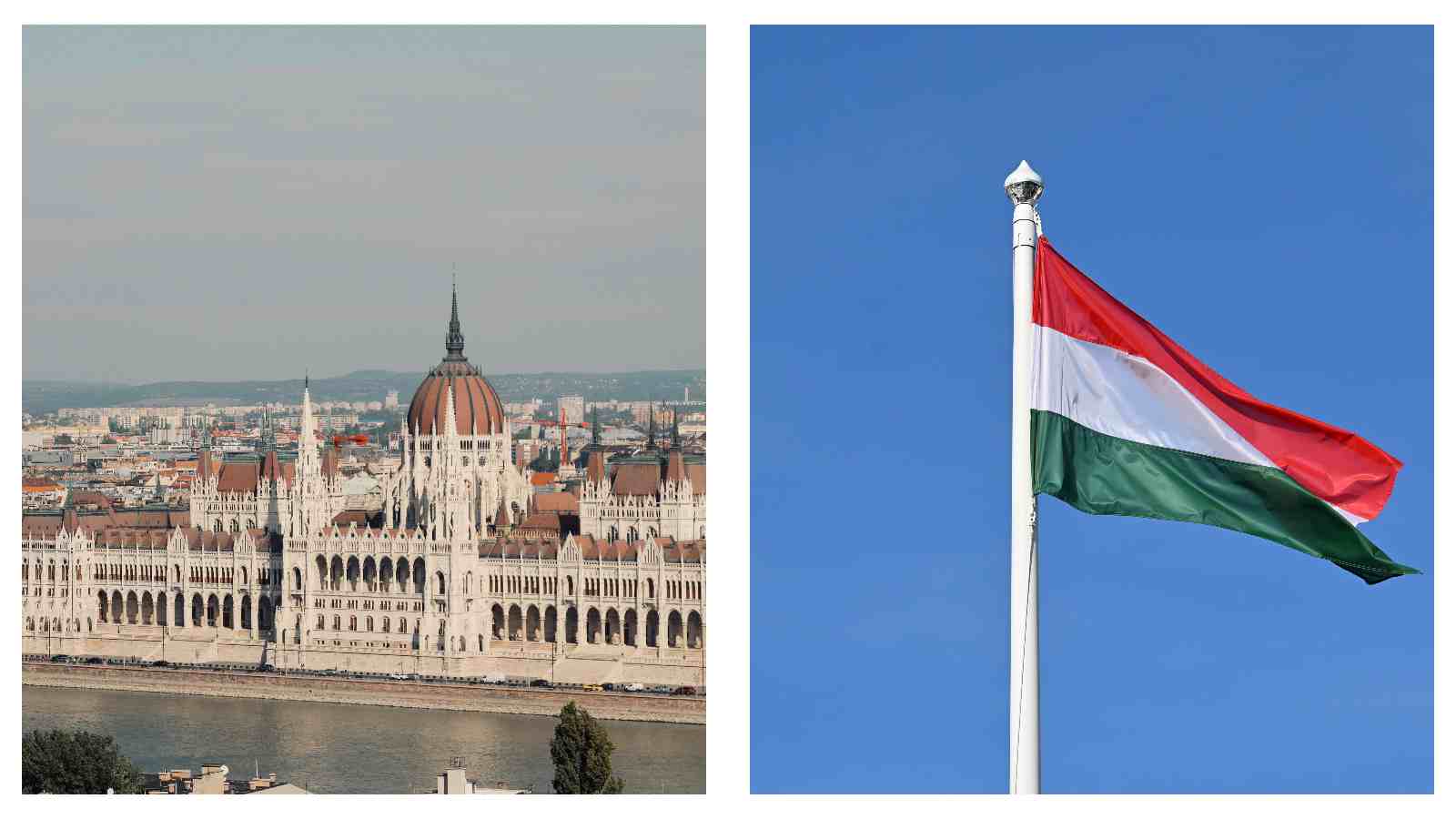
Hungary’s parliament on Monday passed the 16th constitutional amendment, limiting a prime minister’s tenure to two terms or eight years in office in a major political reform.
The amendment passed with 135 votes in favour, 50 against and six abstentions in parliament, where pro-European Union Prime Minister Peter Magyar’s centre-right Tisza Party holds a two-thirds majority, Budapest Times reported.
Under the amended Fundamental Law, a person cannot be elected prime minister if they have already served a total of at least eight years in office, including non-consecutive terms.
The new rule also has a retroactive effect, with all prime ministerial mandates held on or after May 2, 1990, taken into consideration.
The amendment could prevent nationalist Viktor Orban from returning to power while also limiting Magyar’s own authority by allowing him to serve as prime minister only until 2034.
However, the reform is not absolute, as any future leader with a two-thirds or supermajority could still amend the constitution to extend their tenure.
YOU MAY ALSO LIKE: US faces authoritarian warning as global democratic decline reaches 40-year low

Fulfilling Magyar’s electoral promise
The passage came after a draft amendment was submitted in mid-May, days after Magyar was sworn in as the new prime minister following a decisive victory in April’s parliamentary elections that ended Orban’s 16-year rule.
The move marks Magyar’s first step in revising a constitution that critics say benefited Orban and his Fidesz party, which they described as turning the Central European country into a “petri dish for illiberalism,” the Guardian reported.
The amendment fulfils Magyar’s key campaign promise to prevent Orban’s potential return to power as part of broader efforts to restore democratic checks and balances.
“In any democratic system, power exercised without a time limit leads to a loss of self-restraint. At some point, there’s no longer a distinction between the interests of the state, the party, and the personal power interests of the leader,” Magyar previously said, as quoted by Budapest Business Journal.
Orban, Fidesz party criticise the two-term limit
While the two-term limit marks a significant victory for the 45-year-old Magyar, it represents another political setback for Orban, who sharply criticised the amendment shortly after the vote.
The 63-year-old, who was re-elected as Fidesz’s party leader, described the term limit as “pretty funny” and a “ridiculous” attempt by the Magyar-led government to keep him away from Hungarians.
“The idea that anyone in Hungary – for example, me – could be kept away from the people is pretty funny…They’ve only been in power for a month. They shouldn’t be dreaming of eight years – that’s a fallacy,” he said, as quoted by Telex.
Fidesz party MEPs such as Laszlo Andras also criticised the amendment, accusing liberals of excluding political rivals through term limits despite promoting democracy.
MEP and Patriots for Europe vice president Kinga Gal shared similar views, warning that the amendment could undermine democratic competition in the country.
“Democracy is about free choice and fair competition, not eliminating rivals by changing the rules. Hungarian voters have the right to decide who governs them. No two-thirds majority should be allowed to take that choice away from them,” she said, as quoted by Hungary Today.
Mixed reactions over the reform
Some critics and experts have questioned whether the amendment can apply to prime ministers who held office before it was passed, meaning Orban could still attempt to run for the country’s top job.
Constitutional lawyer Peter Stanicz told Telex that the amendment only applies to the future and can only affect former premiers once it takes effect.
He added that the amendment would only qualify as retroactive legislation if an individual was stripped of the title of prime minister retroactively, causing them to lose the benefits and rights associated with the position.
Despite these concerns, some citizens viewed the reform positively, saying that limiting a prime minister’s tenure could serve as a safeguard against autocracy.
“A two-term limit is a basic democratic countermeasure against autocracy rearing up its head…The only people in Hungary who are against the limit are the people who want to see him in power forever,” a Reddit user said.
Others, however, remain unconvinced that term limits are an effective tool to prevent authoritarian rule or another Orban premiership.
Nevertheless, this reform marks a significant change in Hungary as the new government aims for a complete regime change and restore liberal democracy.
READ NEXT: EU eyes further membership expansion
 Carmela Calling
  James Mario Ajero