
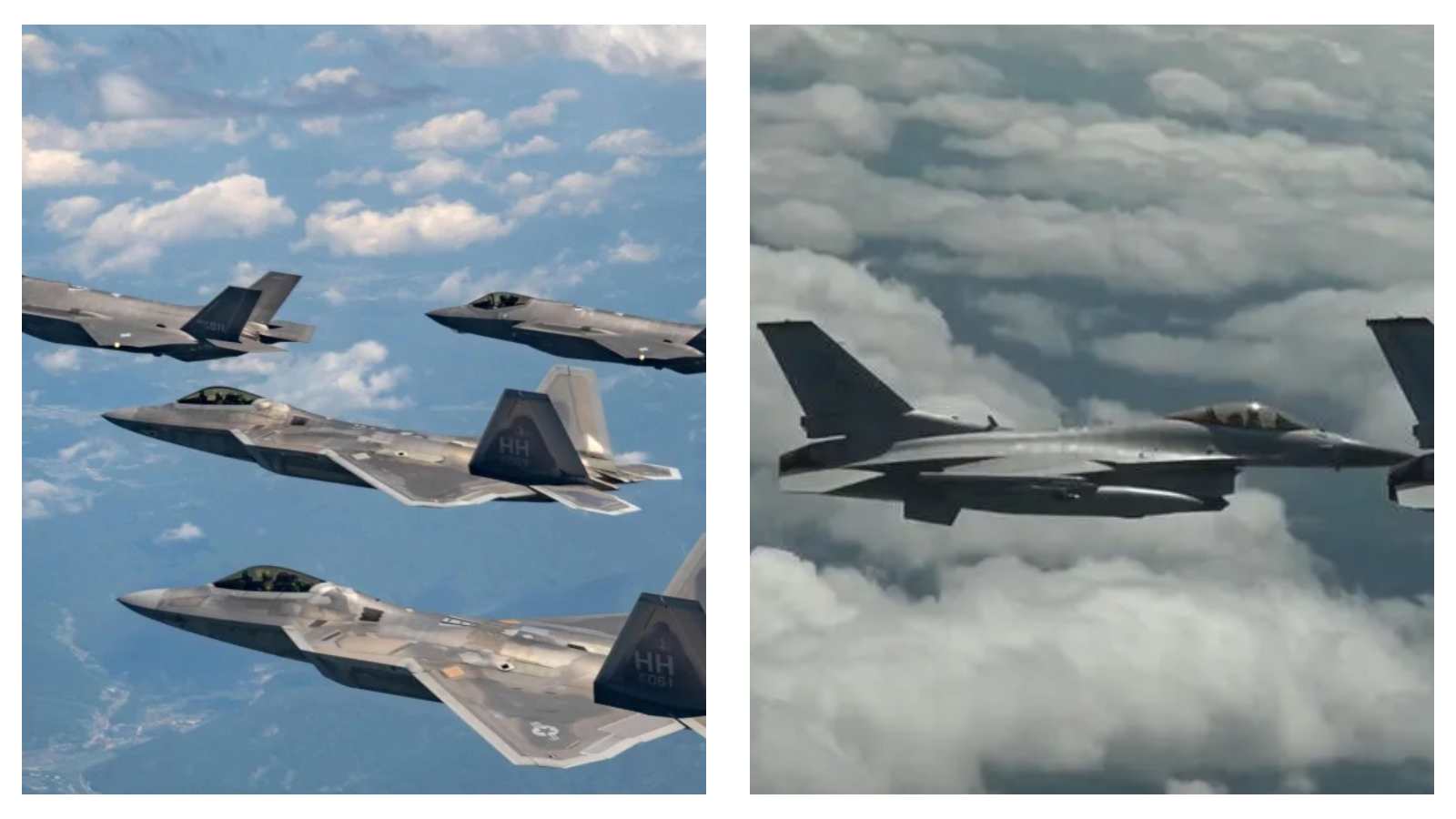
The South Korean Air Force scrambled fighter jets after several Russian military aircraft entered the country’s Air Defence Identification Zone (KADIZ) over waters near Dokdo and Ulleung Island.
According to South Korea’s Joint Chiefs of Staff last Wednesday, the Russian aircraft entered the identification zone without prior notice but did not violate South Korea’s sovereign airspace.
South Korean fighters tracked the aircraft as they moved through the area before they eventually exited the zone.
The latest incident comes after a similar joint air patrol in late June involving roughly 10 Chinese and Russian military aircraft.
That operation also prompted South Korea to scramble fighter jets and lodge diplomatic protests.
Russia testing South Korea’s readiness
An air defence identification zone is a designated area extending beyond a country’s sovereign airspace where foreign aircraft may be required to identify themselves for monitoring and collision-prevention purposes.
Entry into such a zone does not, by itself, constitute a violation of international airspace.
Military analysts view such unannounced flights as a potential means of testing regional air defences and gathering intelligence.
By operating aircraft near established defence corridors, foreign militaries can observe how quickly opposing forces detect and respond to their movements.
Repeated incursions can also provide information about radar coverage, interceptor response times and the broader organisation of regional air defence networks.
READ MORE: Taiwan eyes $6 billion budget for military drones as tensions with China heighten
Security challenges for Seoul
For South Korea, maintaining a rapid-response capability is therefore critical even when foreign aircraft remain outside sovereign airspace.
The incident also highlights growing security tensions between Seoul and Moscow.
South Korea has joined Western sanctions against Russia following its invasion of Ukraine, while closer military co-operation between Russia and North Korea has raised additional concerns among South Korean officials.
Russian aerial activity near South Korean waters provides Moscow with an opportunity to demonstrate its military presence and freedom of movement in Northeast Asia.
Such operations also occur against the backdrop of expanding security cooperation among Russia, China and North Korea, which Seoul views as an increasingly important regional challenge.
From a force-planning perspective, recurring air defence alerts place demands on South Korea’s fighter fleet.
READ NEXT: Report urges container shipping industry to identify cargo risks from early stages
 Ciara Mina
  Rosemarie Zamora
  Jacinth Banite