
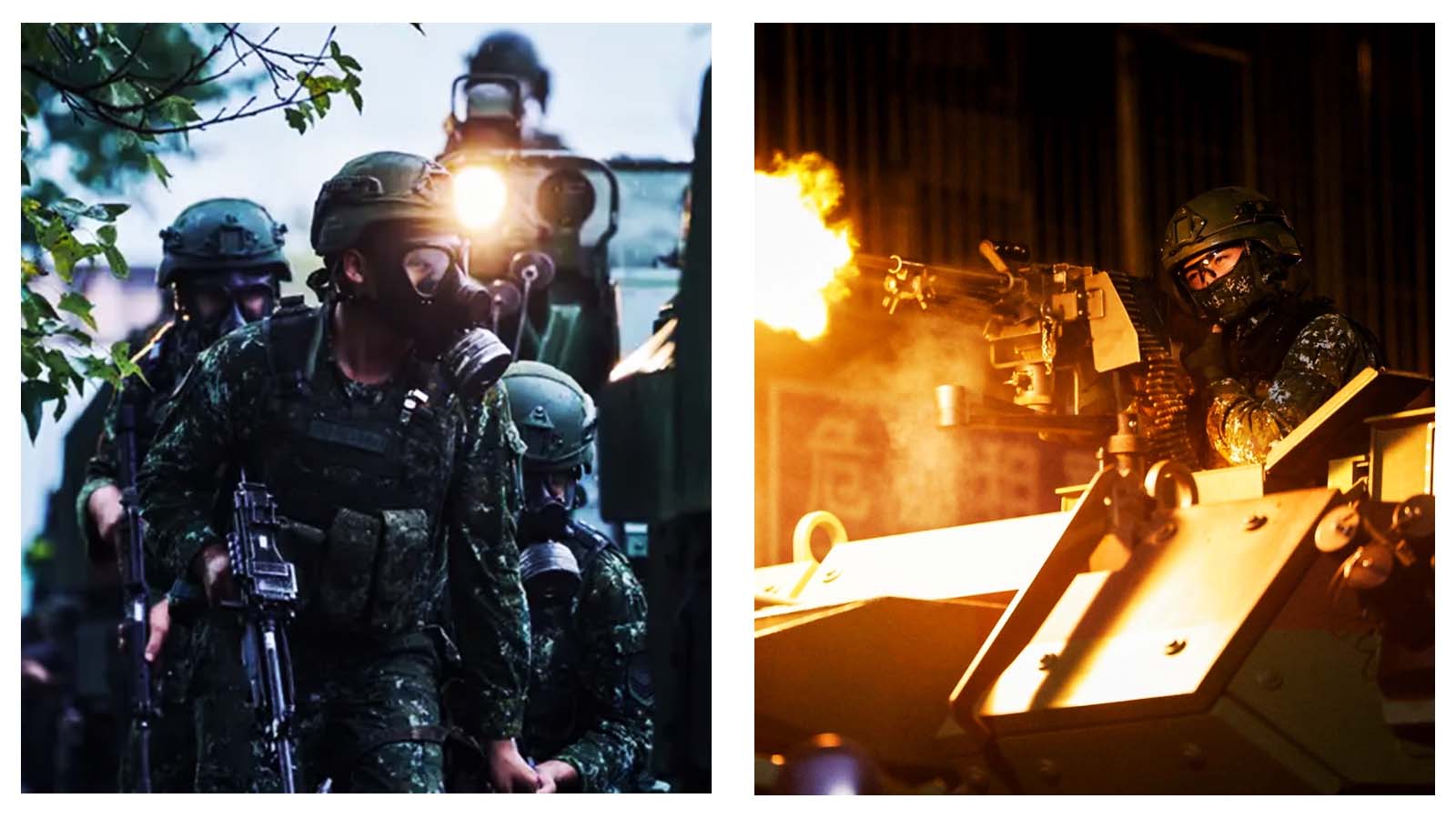
Taiwan President Lai Ching-te is urging lawmakers to approve a six-year, $6.6 billion special military budget aimed at rapidly expanding the island’s fleet of uncrewed aerial systems as tensions with Beijing continue to shape Taiwan’s defense strategy.
The proposed package would fund the acquisition of more than 210,000 drones, including short-range reconnaissance systems, loitering munitions and medium-altitude surveillance platforms.
The initiative is designed to build Taiwan’s capacity to detect, track and strike potential threats while strengthening its ability to withstand a large-scale military attack.
Proposal faces political opposition
The proposal faces significant political hurdles in Taiwan’s opposition-controlled parliament.
Opposition lawmakers have called for annual spending to be capped at roughly $1.25 billion and for oversight of the program to be transferred from the defense ministry to the economy ministry.
Defense officials have warned that such restrictions could interfere with large-scale production schedules and slow the integration of autonomous systems into frontline military units.
From a procurement perspective, the plan reflects Taiwan’s growing emphasis on high-volume, relatively low-cost autonomous weapons rather than relying primarily on traditional platforms such as warships and manned aircraft.
Such major systems can take years to acquire and represent potentially lucrative targets for an adversary’s long-range missiles.
READ MORE: Sri Lanka launches international licensing for offshore energy blocks
Bolstering self-reliance
The drone initiative also seeks to strengthen Taiwan’s domestic defence industry by developing manufacturing capacity and supply chains that are less dependent on Chinese components.
Building a resilient production base would allow Taiwan to replace losses and sustain drone operations during a prolonged conflict.
Strategically, the proposal aligns with Taiwan’s focus on asymmetric warfare, in which relatively inexpensive and widely distributed weapons are used to complicate the operations of a larger military force.
Recent conflicts have demonstrated how networks of reconnaissance and strike drones can provide persistent surveillance while threatening ships, vehicles, logistics hubs, and other high-value targets.
YOU MAY ALSO LIKE: Report urges container shipping industry to identify cargo risks from early stages
Drones and reconnaissance systems
For Taiwan, deploying large numbers of drones could help create a layered defensive network across the island and surrounding waters.
Reconnaissance systems could provide early warning and identify potential landing forces, while armed and loitering systems could target amphibious vessels and supply lines.
At the tactical level, decentralized drone units could give frontline commanders real-time intelligence and additional strike capabilities while allowing personnel to remain concealed from enemy fire.
Networked autonomous systems could also help maintain surveillance and targeting capabilities even if individual platforms or communications nodes are destroyed.
READ NEXT: Philippine defence chief calls for lifting of loan cap to fund military modernisation efforts
 Ciara Mina
  Rosemarie Zamora
  Jacinth Banite