

The South Korean government is in full force in establishing green corridors after unveiling further legislative steps ahead of the enforcement of its act for maritime sustainability.
These government interventions aim to cement the country’s commitment to cutting greenhouse gas (GHG) emissions in its robust maritime sector.
The implementation of green corridors focuses on prioritising hygiene and cleanliness across ships and ports, as well as minimising the effects of maritime action on climate change.
Prioritizing clean ships, environmentally friendly ports
The country’s Ministry of Oceans and Fisheries has proposed legislative rules that would bolster the scope of the South Korean Special Act on Support for the Establishment of Green Shipping Routes, set to come into force by April 1, 2027.
Among the highlighted rules proposed by the ministry are limiting access to green corridors to vessels utilizing sustainable fuels, connecting “environmentally friendly” ports and allowing passage for ships whose primary fuel is methanol, hydrogen, ammonia, biofuel and renewable synthetic fuel.
The maritime route will also be opened for vessels powered by battery or fuel cell power.
Apart from allowing convenient sea routes for vessels utilizing clean fuel, the move was also intended to further transform South Korea’s booming shipbuilding sector
South Korea’s implementation of green corridors improves shipping by capturing 50% of the global zero-carbon vessel market by 2035.
MORE FROM EUGENE NICKLAUS S. LAQUI: Panama Canal confirms new transit plan for all vessels amid low water levels
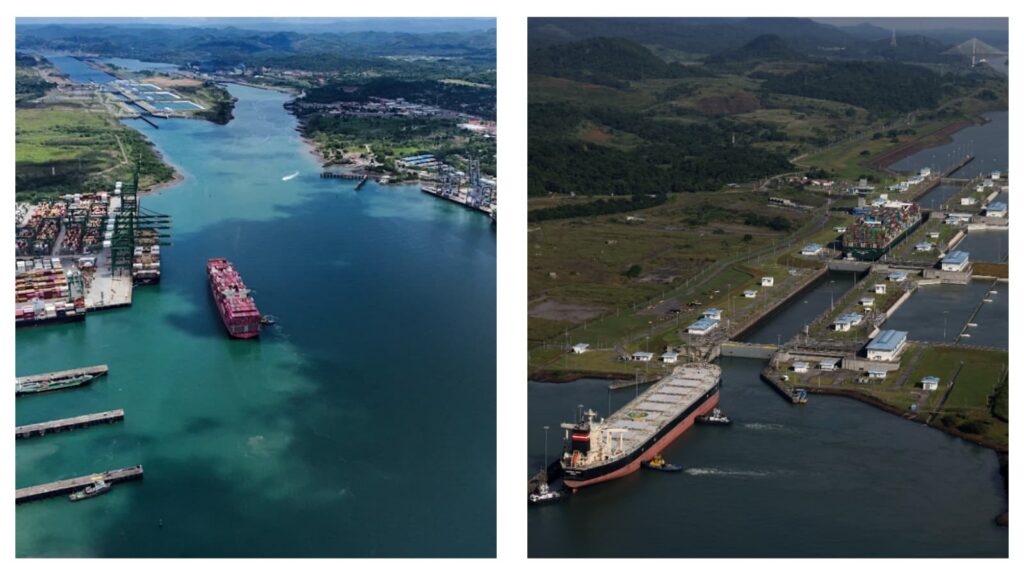
What is a green corridor and how does it work?
Green corridors have become a trend since the early 2010’s as the world recognizes the linkage of excessive human activities to climate change, with the shipping industry seen as among the major sources of GHG emissions.
Green corridors are sea routes established to promote the sustainable use of clean sources of energy for ships to adopt low-carbon and zero-carbon fuels.
Apart from prioritizing clean fuels, green corridors are also meant to include ports and other industries to join the movement to revolutionize the shipping industry without compromising the movement of millions of cargoes globally.
A green corridor often consists of ports, ship operators, fuel suppliers, verifiers and regulators or public bodies.
The concept was formally introduced during the landmark signing at COP26 in 2021, where at least 24 countries expressed their support for the creation of a maritime system fitting to the sustainable efforts of the international community.
MORE INTERNATIONAL NEWS: Iceland voters opt for independence by rejecting EU accession talks

Huge increase on numbers of green corridors
The construction of green corridors has increased over the years; there are 84 confirmed active green corridors worldwide, 25 of which were relatively new.
According to the 2025 edition of the Annual Progress Report of Green Shipping Corridors of the Global Maritime Forum, the introduction of green corridors is expanding.
Most of the emergence of the green corridors is led by major developing countries, including China, India, Brazil, South Korea and Singapore.
Other nations have also placed their bets on construction, such as Chile, Ghana and Kenya.
These nations share a similarity that makes their green mission feasible: easy access to seas and oceans.
The creation of green corridors has also led to global port alliances that connect nations across multiple continents.
Some of the renowned green corridors include the Rotterdam-Singapore corridor, the North Sea-Baltic corridor, the Port of Antwerp-Bruges and the Port of Gothenburg
Another example of green corridors include China’s massive plan to connect some of its major ports to its European counterparts, including in Spain and Belgium.
READ NEXT: Naomi Osaka pays homage to ‘trailblazer’ NBA icon Allen Iverson in 2026 US Open first round
 Ciara Mina
  Rosemarie Zamora
  Jacinth Banite