
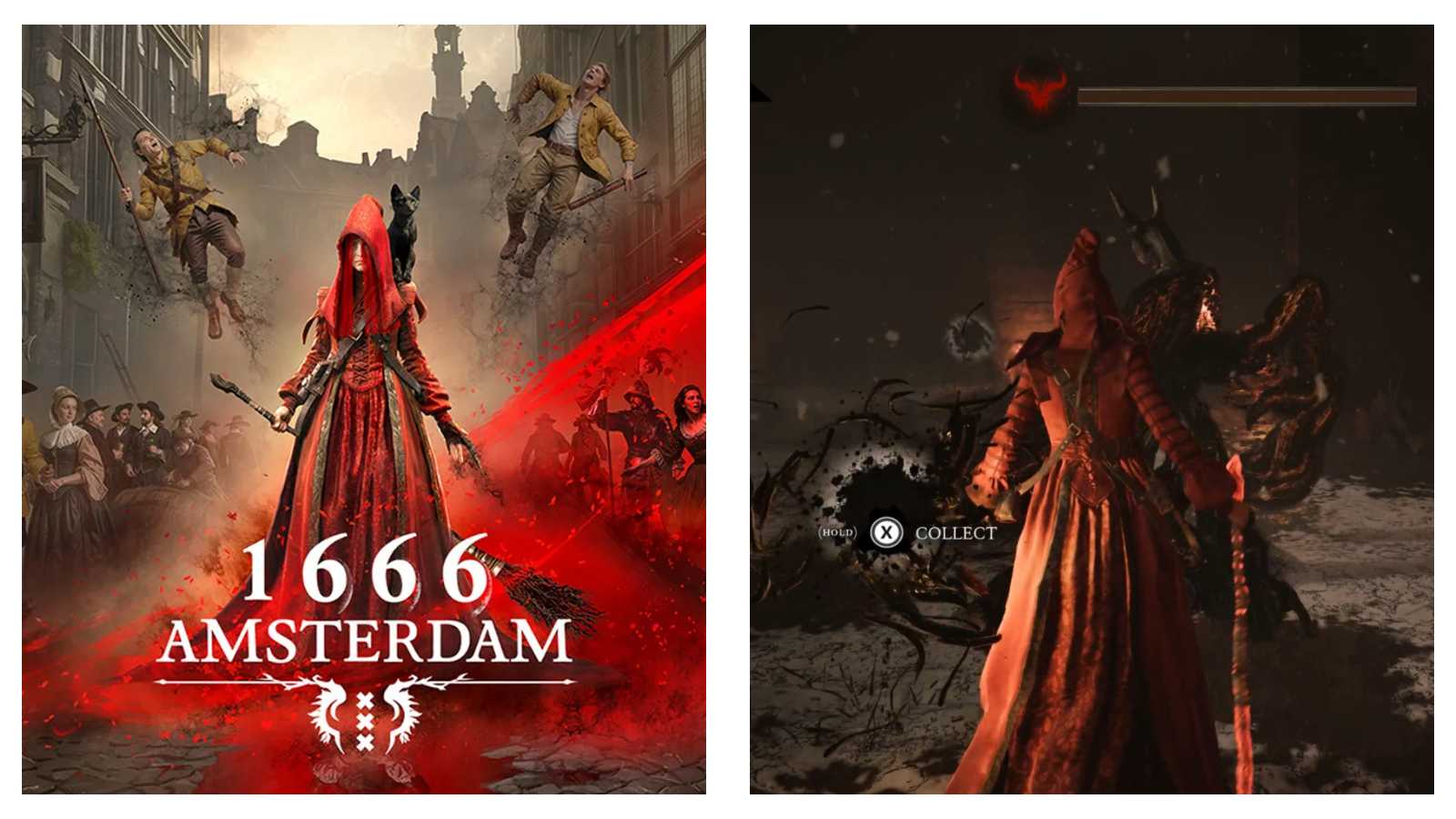
Mysterious, dark, witchy – if you are into storylines like that, then “1666 Amsterdam” is the game for you.
In this action-adventure title developed and published by Panache Digital Games and directed by Patrice Désilets, the director of the early titles of the “Assassin’s Creed” game series, you play as a witch who is exploring 17th century Amsterdam in disguise by day, and hunting and battling demons at night, or even as her companion, a human trapped inside a cat’s body.
“1666 Amsterdam”, which has been in development for approximately 16 years, was highly anticipated by many avid gamers since its official announcement during the Summer Games Fest at the beginning of June.
A prologue demo version has first been released to give people a little taste for the game, but now, on August 25 an early access version of the title has been made available on Steam with roughly 15 hours of gameplay, with additional content being planned for the game’s full release.
1666 Amsterdam reception
Whereas many enjoy the game, its switchable players and the story which allows you to jump back and forth in time as you discover secrets from the present and the past, others believe that the game is “too basic” for something that has been in development for so long.
Some gamers say the fights are too simple as the main character has limited ability in combat, and others say the “back and forth” of the story is a little “too much” and confusing.
Whereas the gameplay and the title’s features and contents are currently people’s main concerns, the use of AI has caused doubts for many players who tried and tested the game.
YOU MAY ALSO LIKE: Film news: Hunt for ‘National Treasure 3’ set, director says

Players responds to AI use
Following the release of the “1666 Amsterdam” prologue at the beginning of June 2026, many players had questions and were worried about the amount of AI used during the development of the game.
Players claimed the public demo and associated marketing materials featured content which have “obvious tells” of being generative AI.
Given the number of accusations regarding this topic, Panache addressed the public, stating that they have a team investigating the matter.
“A number of people have raised questions or concerns to us about whether assets in our marketing and game use generative AI,” he said.
“We have a dedicated team of over a dozen talented and experienced artists. With them, we looked into the assets in question and found that there were indeed some early versions of assets that made their way into the prologue. This includes some in-game portraits and external marketing assets.”
Recently, however, the game’s creative director and studio’s cofounder Patrice Décilets confirmed that AI was used at the beginning of the game’s creation, but that he was stunned by the number of false reports made regarding the use of generative AI in the game.
This indicated that the developers are used to using AI so much that they cannot distinguish between machine-made and human-made creations.
Décilets stated: “Yes, I was a bit [thrown] by those reports. Yes, we use some AI in the process, mostly at the beginning in conception and pre-production. It’s been totally removed, and we won’t be using any AI anymore.”
READ NEXT: ‘God of War Laufey’ backlash: Why a lack of Kratos divided the fanbase
 Ciara Mina
  Rosemarie Zamora
  Jacinth Banite