
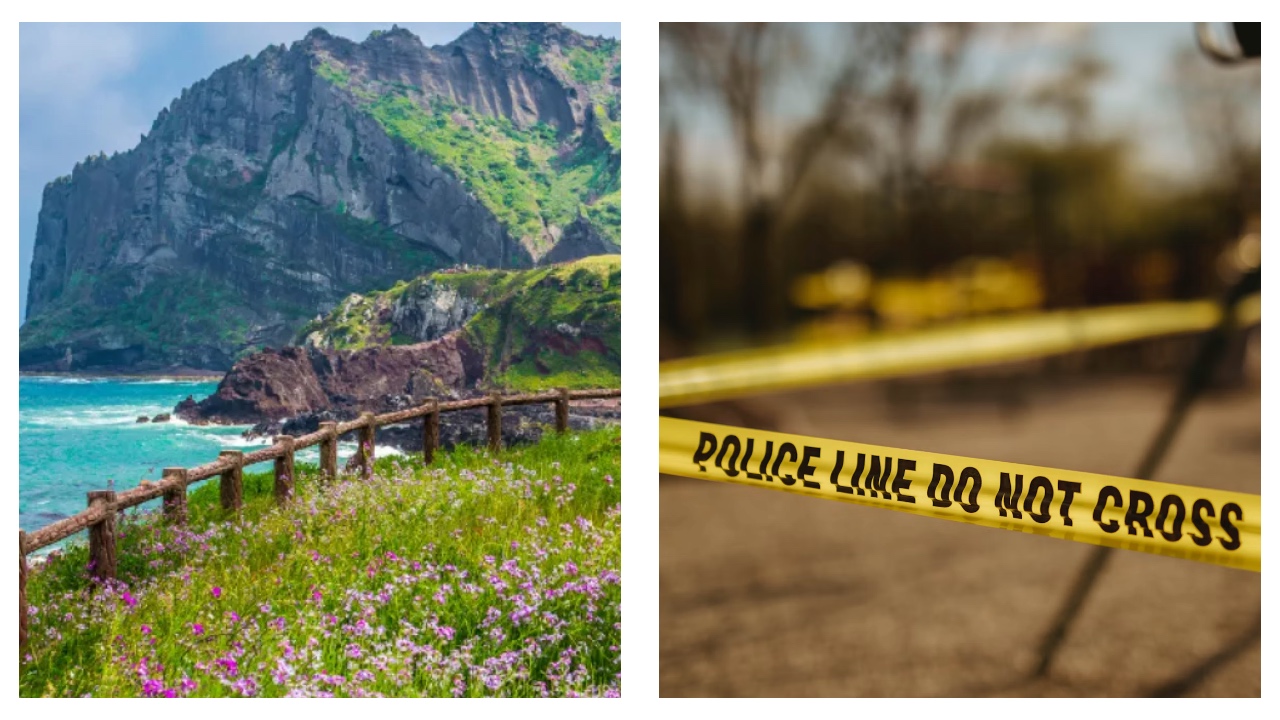
Jeju Island, popular in South Korea for its breathtaking volcanic landscapes and distinct island culture, is currently battling a serious threat to its tourism economy due to the rise of public safety concerns linked to the emergence of a falsified missing-persons case.
The issue centres on circulating rumours of unverified organ trafficking and crimes against foreign tourists, which have led locals to question the credibility of Jeju authorities despite the insufficient evidence to support such claims.
Officer accused in falsified case closure
Police officers on the island have been under fire since the lifeless body of 37-year-old Jang Mi-ran was discovered this month, over a hundred days after she was reported missing on May 15.
Specifically, an officer who handled the initial report allegedly informed her family that she didn’t want to be found after his recent contact with Jang.
He then closed the case despite the nonexistent call log history confirmed by the police.
An autopsy result cited by The Korea JoongAng Daily found that Jang had likely been deceased for three days already when the officer claimed he spoke with her.
The death of a man in his 60s, reported missing in July, was also connected to the same officer.
He remains in custody and has maintained innocence over the allegations.
READ MORE: Taiwan eyes $6 billion budget for military drones as tensions with China heighten
Rumours spread faster than official response
The evident failures in these cases have since sparked online discussions speculating that all 298 cases the officer previously handled have not undergone any investigation and were improperly closed.
Furthermore, many alleged that the deaths were motivated by organised crime targeting visitors.
Police have yet to confirm either claim, and investigators say Jang’s case shows no signs of a struggle and undisturbed jewellery – details suggesting the death wasn’t the result of violence.
Provincial officials say they count these cases as two separate problems.
On the procedural side, a meeting chaired by Jeju Governor Wi Seong-gon on Thursday formed a joint response team across police, the Coast Guard, fire authorities and autonomous police as part of the island’s finalised comprehensive safety plan.
It also included the extension of closed-circuit retention from 30 to 60 days, expansion of foot patrol deployment and introduction of new reporting guidelines for hotels and rental car firms.
No comparable mechanism exists yet for the rumours themselves, which officials acknowledge are shaping tourists’ perceptions of the island’s safety faster than the facts of the case can be established.
READ NEXT: South Korea deploys fighter jets as Russian aircraft enter country’s airspace
 Ciara Mina
  Rosemarie Zamora
  Jacinth Banite